How to Stop Writing Release Notes Nobody Reads


The engineering team ships the feature. The product manager closes the Jira ticket. Someone drops a bulleted list at the bottom of a documentation page under the heading "Version 4.2.1."
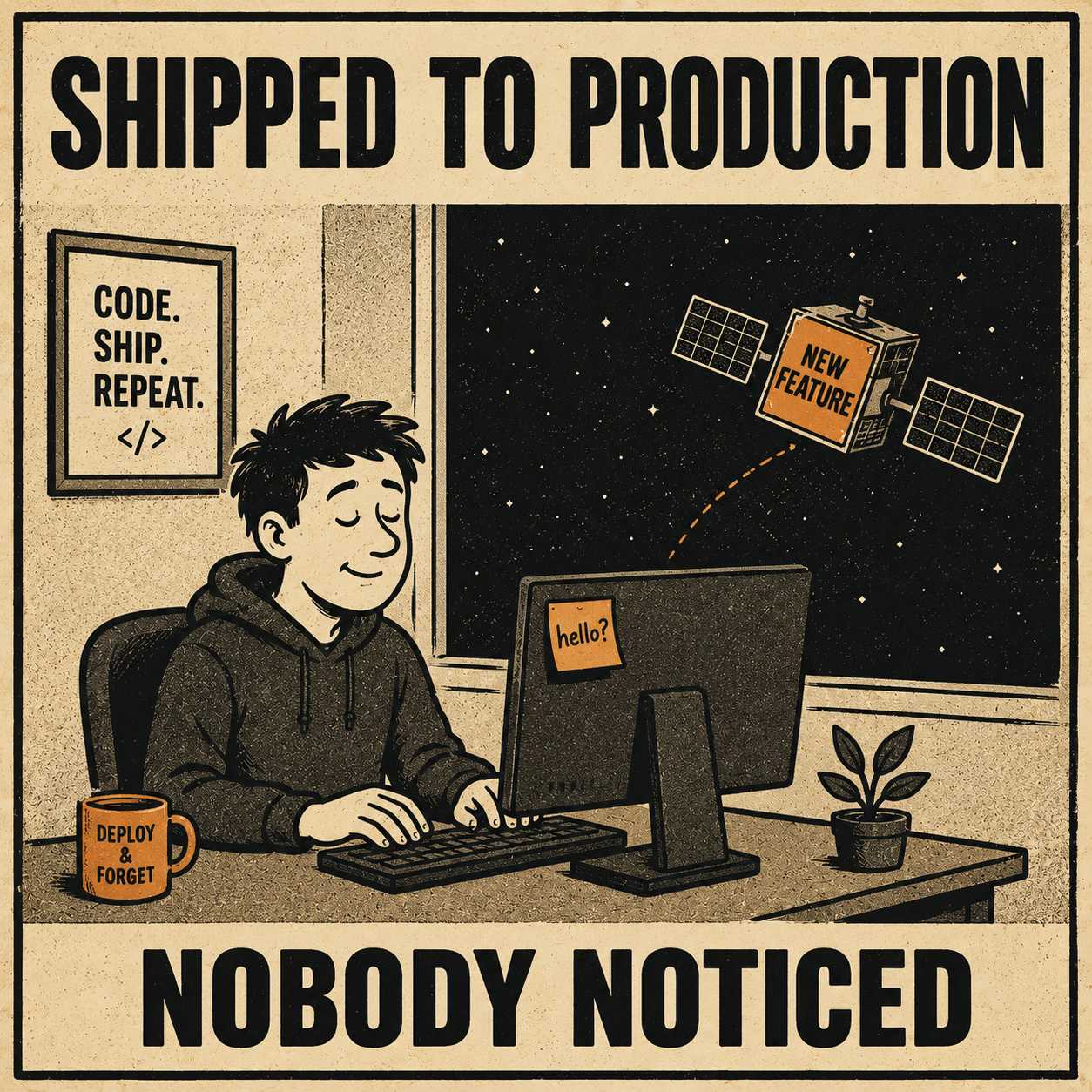
And then, nothing happens.
No uptick in usage. No replies from customers. No confirmation that anyone outside the building even knows the code made it to production. A customer who asked for this specific fix six months ago continues to experience the problem because they have no idea it was solved. The feature just sits there, quietly collecting dust.
Closing the feedback loop is not about getting a reply to every release note. It is about proving to customers that you heard what they asked for, shipped it, and are still listening. The loop only closes when a customer who submitted feedback sees that feedback reflected in what you built, and feels confident their voice shaped the product. Most release notes fail at this because they are written as an archive of engineering activity, not as a channel for customer communication.
The Sound of a Feature Dropping in an Empty Forest
The typical release note is written in engineering syntax. Ticket IDs, internal feature names, and vague references to "improvements and bug fixes."
To a developer reviewing a pull request, "Fixed race condition in async handler" makes perfect sense. To a customer wondering whether the reporting dashboard is finally usable, it is total noise. The customer who filed the original feature request has no idea their request was addressed. The loop stays open.
There are a few structural reasons this keeps happening. Release notes are often the last thing written before a sprint closes, which means they get the least attention. They are usually written by the person closest to the code, who has the hardest time remembering what it was like not to understand the code. And they are published somewhere customers do not monitor, which means even a well-written note can disappear without a trace.
Research on release note production across thousands of open-source projects found that most release notes list only a fraction of the addressed issues in any given release, and the selection criteria are rarely driven by customer relevance. The result is a document that reflects what the engineering team thought was worth mentioning, not what the customer actually needed to know.
Who Are We Writing This For, Exactly?
Not every release item matters to every customer. When an enterprise user wades through updates about the starter plan, they learn to ignore the channel. When a mobile-only user gets a wall of API changelog entries, they stop reading.
Tagging or sectioning notes by persona, use case, or plan tier lets readers scan for what applies to them. If a feature was built for a specific cohort—API customers, enterprise accounts, mobile-only workflows—say so upfront. This is not extra work; it is the difference between a note that gets read and one that gets ignored.
The same logic applies to attribution. When a feature or fix originated from customer requests, name that fact. Not with customer names, unless you have permission, but with context: "Based on feedback from teams using the approval workflow" or "Requested by several enterprise accounts." This proves you are listening. It lets the people who asked feel seen.
Customers who feel heard are more likely to stay. Closing the loop within a reasonable timeframe has been shown to increase customer retention meaningfully, because it transforms a frustrating one-way street into a productive, two-way dialogue. The release note is one of the few places where that dialogue can happen at scale, without a customer success call.
What Customers Actually Want to Know
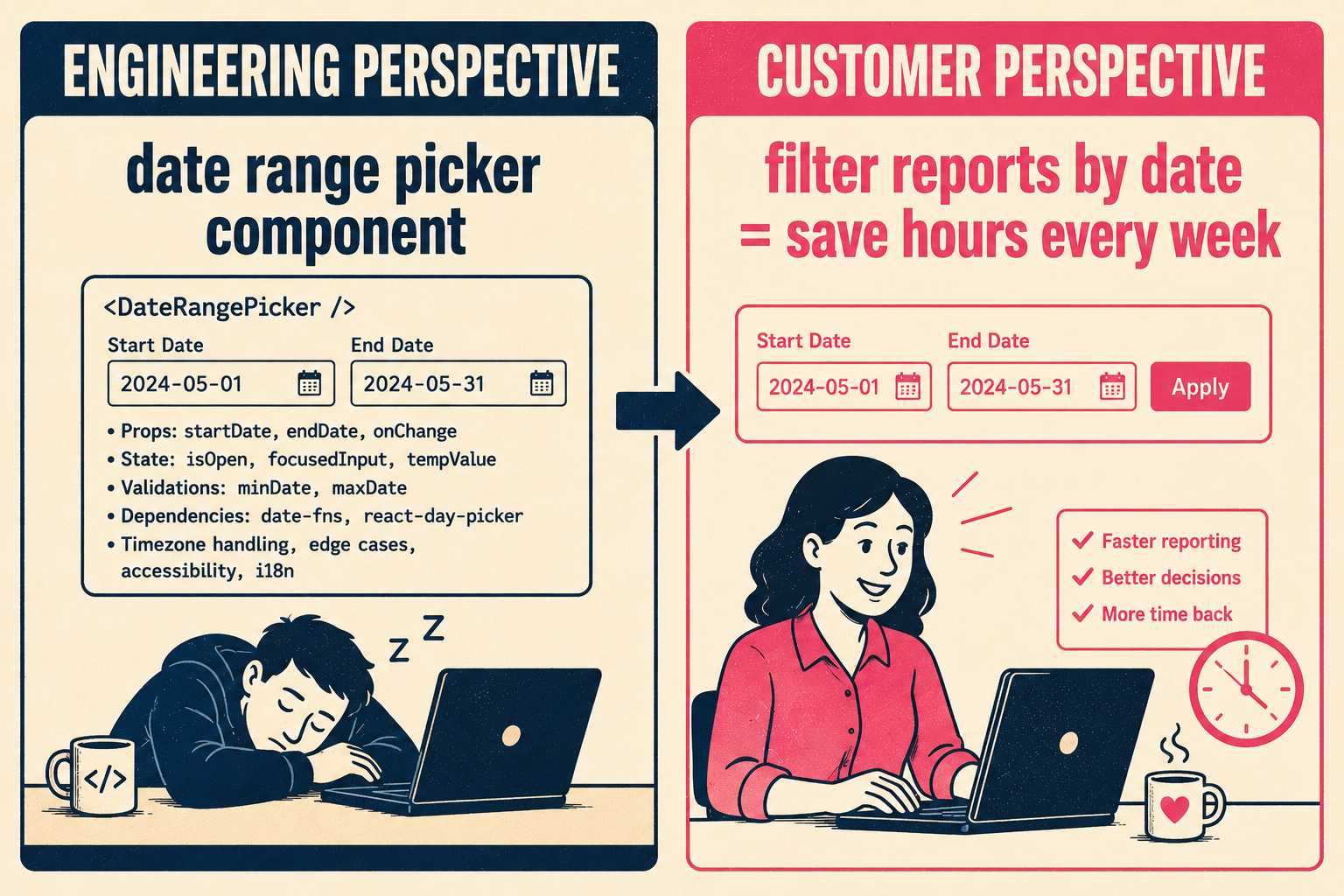
There is a framing problem at the core of most release notes. Teams describe what they built. Customers want to know what they can now do.
"Added date range picker to reporting UI" is a UI component. "You can now filter reports by date range" is a capability. The former is written for the engineer who built it. The latter is written for the person who has to use it. Lead with the outcome, follow with the mechanism. This is not a copywriting trick; it is the difference between a note that changes behavior and one that gets skimmed.
A related problem is the absence of a response channel. Every release note should include a low-friction way for customers to reply—a reply address, a feedback form link, a Slack channel, a comment thread. If you do not create the channel, customers assume you do not want to hear from them. The note becomes a broadcast, not a conversation. The loop stays open.
Consistency matters too. Customers will not check release notes if they do not know when to expect them. Weekly, biweekly, monthly—pick a cadence and hold it. Irregular updates train customers to ignore the channel. The Aha! team publishes release notes every Friday; their customers know when to look. That predictability is itself a form of trust.
Why Email Still Wins the Distribution Game
Even a well-structured, customer-friendly release note fails if it lives somewhere customers do not go.
In-app notifications get dismissed because they interrupt workflows. Changelog pages get bookmarked and forgotten. If you are not emailing release notes to active users, you are not closing the loop with the majority of your base.
Email is still the highest-reach channel for most B2B products. It is regarded as the best channel for reaching prospects by 73% of B2B marketers, outperforming other methods. Product update emails typically see open rates in the 15–25% range, which means a meaningful share of your base is still reachable through email even when other channels fail.
The most effective approach layers channels. Publish detailed release notes on a dedicated page, push a summary in-app, send a digest via email. Each channel catches a different audience segment. But if you have to pick one, email is where the majority of your customers are still reachable.
The Translation Problem in the Middle
Most engineering teams do not have the bandwidth to rewrite every release note in customer-friendly language.
The output from the issue tracker is engineer-to-engineer. The translation step—from internal ticket to customer-facing explanation—is where things break down. This is a real resourcing issue, not a laziness issue.
The people closest to the code are the least equipped to explain it in customer terms. Technical writers can do this translation, but most startups and mid-sized product teams do not have dedicated technical writers. Product managers are often the default owner, but they are also the people with the least available time at the end of a sprint. The result is that the translation either does not happen, or it happens badly and quickly.
Making the translation step sustainable requires choosing a model. You can assign a dedicated owner—product marketing, technical writing, or customer success—who is responsible for the customer-facing version. You can use templatized formats that make rewriting faster by giving the engineer a structured input form and the writer a structured output template. Or you can use automation that generates the first draft from structured engineering input and hands it to a human for refinement and context injection.
The automation path is increasingly viable. K15t's team found that AI tools can generate a usable first draft of release notes from existing issue data, which the human editor then refines for customer relevance and tone. The Aha! team uses their own AI-powered tooling to generate rough drafts from completed features, which their knowledge base team then polishes before publishing. The pattern is consistent: automation handles the aggregation, humans handle the translation into customer value.
When release notes consistently close the feedback loop, customers stop feeling like they are shouting into a void. They see their requests reflected in the product. They trust that future requests will be heard. The release note stops being a compliance document and starts being a trust-building artifact. The team that does this well turns their changelog into a retention driver.
Doc Holiday generates structured release note drafts directly from repository activity and ticketing systems, then provides a validation layer for the human editor to add customer context, outcome framing, and feedback attribution before publication. The translation step happens without rebuilding a whole documentation team to do it.