How to Turn Sprint Reviews Into Customer-facing Changelogs


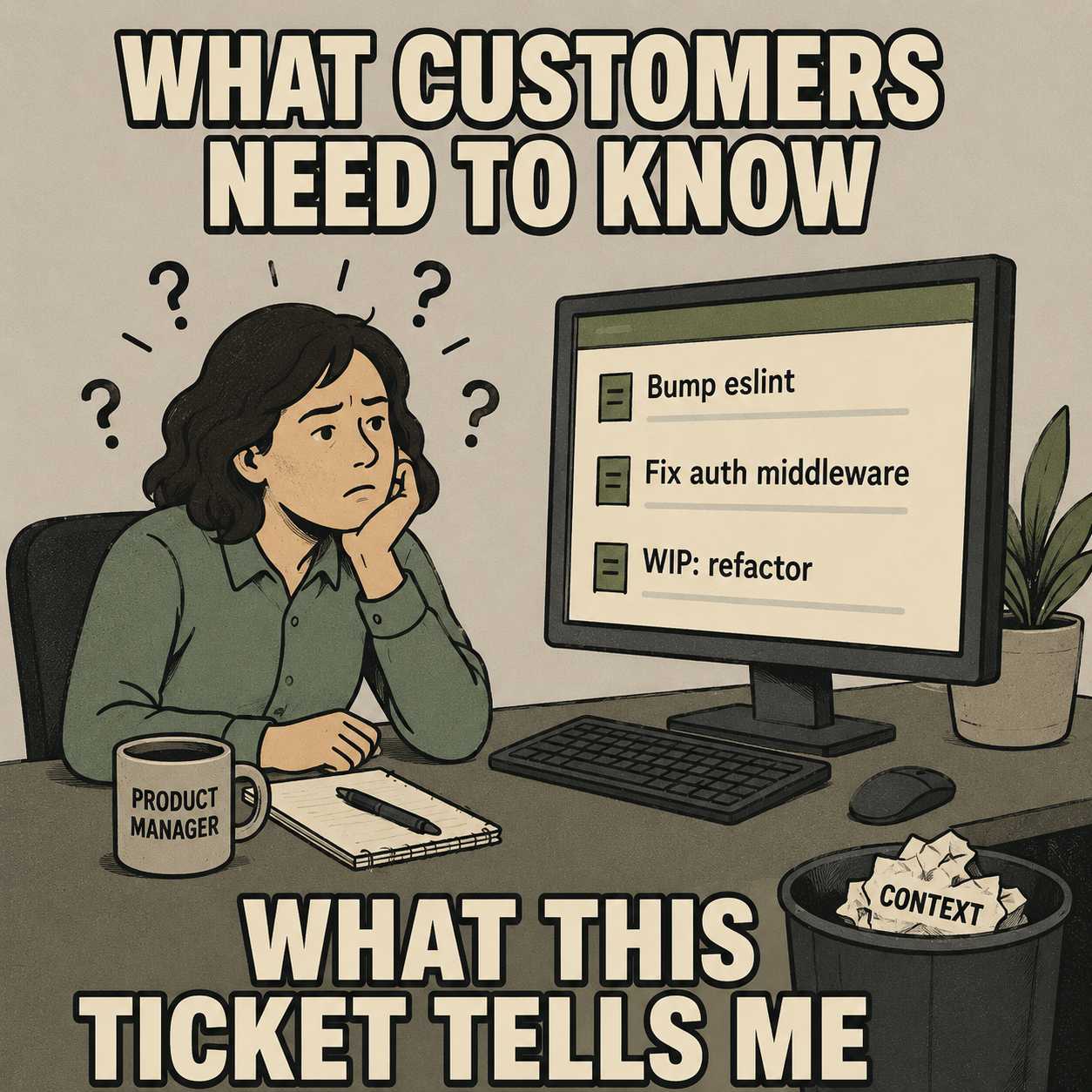
The sprint review just ended. The team logged off Zoom. The product manager opens a blank document, pulls up Jira in another tab, and stares at the tickets.
"Bump eslint to 8.57."
"Fix auth middleware."
"WIP: refactor data pipeline."
Somewhere in that list is the answer to a customer's question: what changed, and why does it matter to me? The product manager knows this. They have done this before. They will spend the next hour trying to remember what "fix auth middleware" actually means for the end user, why it took three days, and whether anyone outside the engineering team cares.
By the time the changelog ships, the context is gone. The phrasing is generic. The update feels disconnected from what actually happened in the sprint. The result is either no public changelog at all, or one that customers ignore because it reads like an internal ticketing system.
The fix is not to add a documentation phase after the sprint. The fix is to treat the sprint review itself as the first draft of the changelog, and to capture the right material while everyone is still in the room.
What the Sprint Review Already Contains
The Scrum Guide describes the sprint review as the event where the team inspects the outcome of the sprint and determines future adaptations. That is a formal way of saying: the team demos what shipped, discusses what didn't, and explains the decisions they made along the way.
That conversation contains everything a changelog needs. The engineer explaining why a refactor took three days is also explaining what the system does differently now. The product owner describing the edge case they decided to defer is also describing what the feature currently doesn't support. The debate about whether a behavior change is a bug fix or a feature is exactly the kind of context that makes a changelog entry useful instead of confusing.
The problem is that none of it gets written down in a form that's useful to customers.
A 2024 study in Empirical Software Engineering analyzed 1,529 release note-related issues from GitHub repositories and found that the most common failure mode is omission, not inaccuracy. Teams tend to overlook information rather than include wrong information, particularly for breaking changes. The context that would have prevented those omissions was available during the sprint. It just wasn't captured.
The Translation Layer
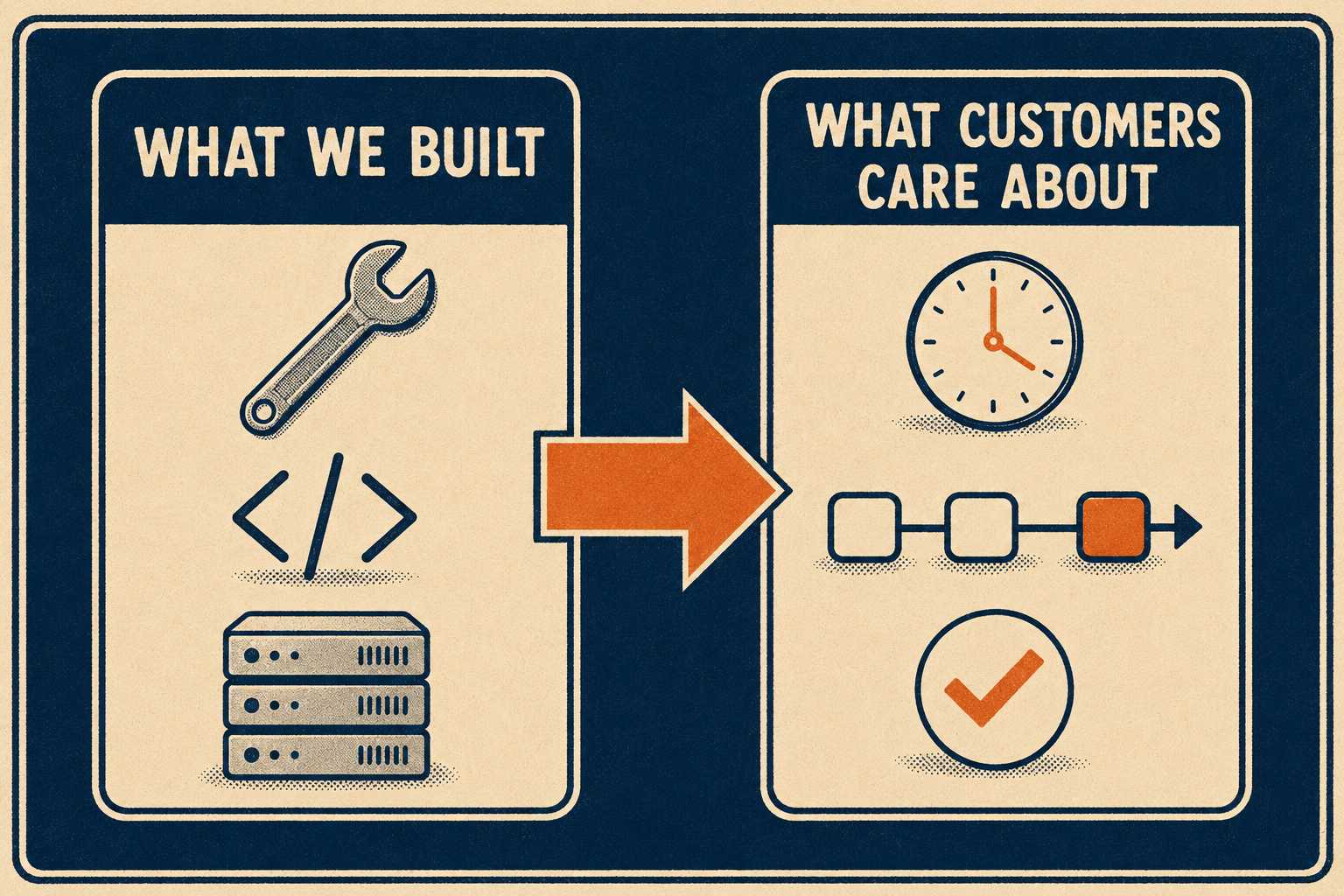
Even with good notes from the sprint review, there is still a translation step. Internal tickets describe the implementation. Customer changelogs describe the outcome.
The New York Times Reader Experience team ran into this directly when they tried to automate their release notes from GitHub pull requests. The automation gave them what was in the commits. That turned out to be the problem: "fix auth middleware" is not a release note. "bump eslint to 8.57" is not a release note. Between extraction and publication, something needs to happen to the data.
That something is a perspective shift. Here is what it looks like in practice:
| Internal ticket | Customer-facing entry |
|---|---|
| "Migrated legacy auth tokens to JWT" | "You will no longer be logged out unexpectedly when switching between browser tabs" |
| "Added rate limiting to the export API" | "API exports are now limited to 1,000 records per minute to ensure stability during peak hours" |
| "Fixed null pointer exception in the billing module" | "Fixed an issue where invoices with missing tax IDs would fail to generate" |
| "Refactored data pipeline for async processing" | "Large report exports no longer block other activity in your account while they run" |
The pattern is consistent: the internal ticket names what the team did; the customer entry names what the user can now do, or what they no longer have to deal with. The Keep a Changelog specification puts it plainly: changelogs are for humans, not machines. Commit log diffs are full of noise. The purpose of a changelog entry is to document the noteworthy difference, often across multiple commits, and communicate it clearly to end users.
Structuring the Update So It Works For Everyone
A changelog that works for power users and casual users at the same time requires a specific structure. Group updates by feature area, not by ticket type. "Reporting Dashboard" is a useful header. "Enhancements" is not.
Separate fixes from new features. If a user reported a bug, they want to see that it was fixed. They do not want to hunt for it inside a list of new capabilities.
Call out breaking changes at the top. If an API endpoint changed, or a workflow that customers relied on now behaves differently, that belongs in the first section, not buried at the bottom. The Empirical Software Engineering research found that breaking changes are the most commonly omitted category. They are also the most consequential to miss.
Link to deeper documentation when a new feature requires setup. The changelog entry is a summary. The full guide lives somewhere else. The link is what connects them.
The Conventional Commits specification takes a related approach at the commit level: it enforces structure at write time, so the type prefix (feat:, fix:, BREAKING CHANGE:) is already in the message when you go to generate notes. If your team follows it consistently, the categorization problem mostly solves itself. But even with perfect commit hygiene, the translation from implementation language to customer language still requires a human decision.
The Mindset Shift is the Hard Part
Survey data from research on Agile and Scrum release note practices shows that around 80% of Agile teams recognize the significant impact of release notes on stakeholder communication, with about 45% using them to communicate directly with their customer base. The gap between recognizing the importance and actually doing it consistently is where most teams get stuck.
The reason is structural. Sprint reviews are optimized for the team. The audience is internal. The language is internal. The decisions being discussed are about implementation. Switching from that mode to customer communication mode, in real time, while also running the meeting, is genuinely hard.
The solution is not to do the translation during the sprint review. The solution is to capture the raw material during the review, and do the translation immediately after, while the context is still fresh. The Department of Product's guidance on release notes makes a useful distinction: the product manager rarely writes the final release notes, but they feed into a wider content strategy that includes a regular cadence of updates. The sprint review is the feed. The changelog is the output.
Ownership matters here. If everyone is responsible for the changelog, no one writes it. The product manager is usually the right owner: they understand both the technical implementation and the customer impact. The engineering team provides the raw material during the sprint review. The product manager translates it. A technical writer or marketing lead reviews it for tone and clarity before it goes out.
The information needed to write a good changelog is generated during every sprint review. The question is whether anyone captures it in a form that survives the translation.
Doc Holiday generates customer-facing release notes and changelogs directly from the engineering workflow (sprint reviews, PRs, commit history) and provides structure for teams to validate and publish updates without rebuilding the writeup from scratch.