How to Build a Developer Changelog That Actually Earns Trust


It usually happens on a Tuesday afternoon. A developer runs a routine dependency update, pulling in the latest minor version of your library. Their CI pipeline immediately turns red. They spend the next three hours digging through stack traces, only to discover that an API endpoint they rely on was quietly renamed.
They check your changelog. The entry for that release reads, in its entirety: "Bug fixes and performance improvements."
In that exact moment, you have lost them. They will never trust your release notes again. They have learned that your documentation is not a reliable map of the territory, but a cosmetic exercise in update-theater.
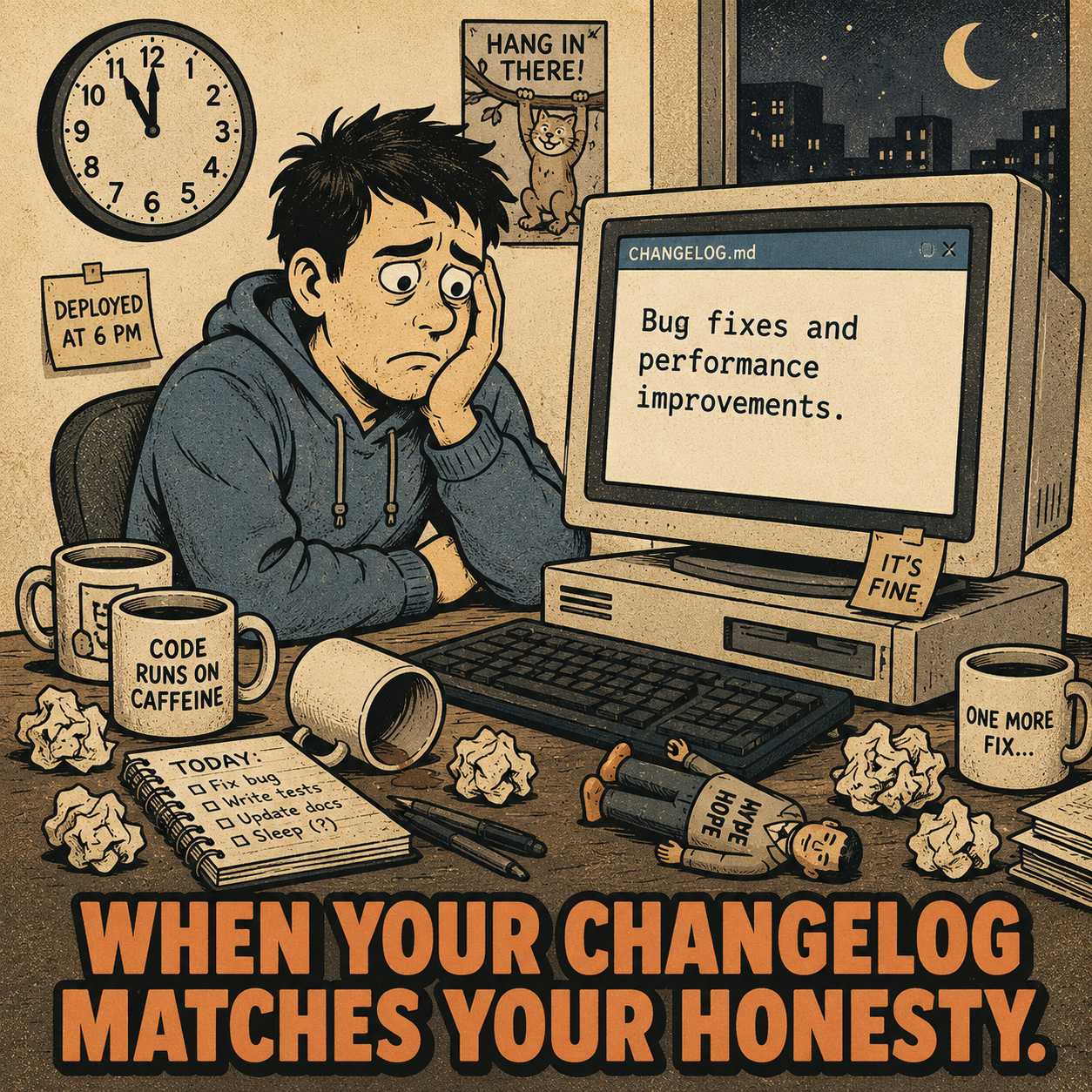
Most changelogs are broken because they are treated as an afterthought, a box to check before hitting publish. They lack versioning discipline, they omit breaking changes, and they are written in vague marketing copy that obscures the actual technical reality. When developers learn that the information isn't reliable, they stop reading. Teams miss critical security updates, integration breaks happen in production, and trust erodes. Research shows that trust is the most frequently expressed emotion in commit messages regarding documentation, highlighting how heavily developers rely on accurate records. A changelog that doesn't earn trust is worse than no changelog at all, because it actively trains your audience to ignore you.
The Anatomy of a Broken Promise
Consistency is the baseline. Developers need to know where to look and when to expect updates.
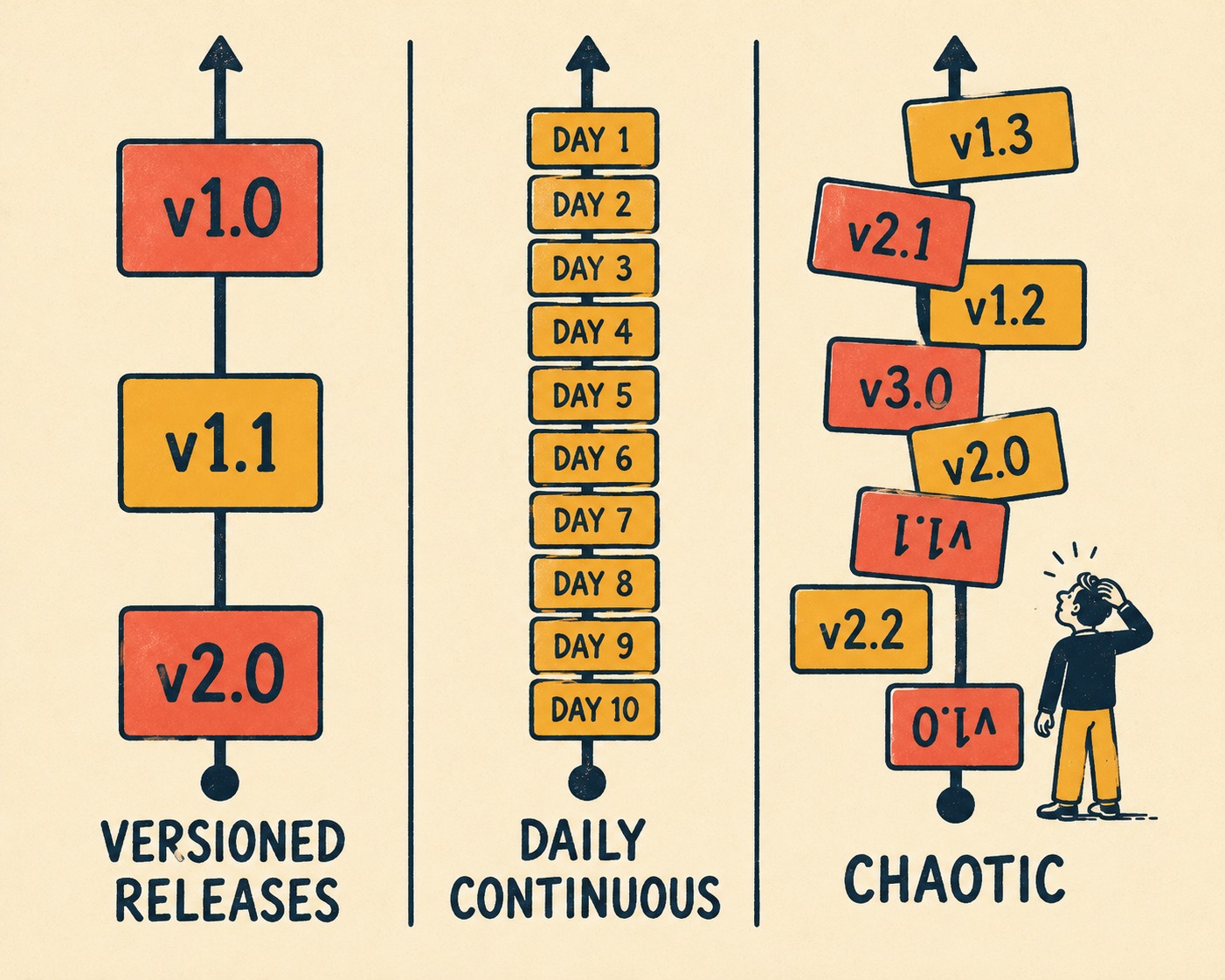
If your releases are versioned, your changelog must match that versioning exactly. If you ship continuously, the publication cadence should reflect that reality, whether daily or weekly, but it must be predictable. Inconsistent publication destroys the habit of checking.
Granularity matters just as much. The detail in your updates must match the reader's mental model. Generic summaries don't cut it for a technical audience. API changes require endpoint-level detail. Infrastructure updates need region and service-level breakdowns. Security patches need CVE references so teams can assess their exposure, a practice heavily emphasized in vulnerability disclosure guidelines. The changelog should map directly to how the developer actually thinks about and interacts with your product.
Keep a Changelog formalizes this with a simple principle: every release should categorize changes under headings like Added, Changed, Deprecated, Removed, Fixed, and Security. That taxonomy exists because it matches the questions developers are actually asking when they open a changelog.
The Part Where You Have to Be Honest
Explicit callouts for breaking changes, deprecations, and required actions are non-negotiable.
If an update requires a developer to change their code, migrate a configuration, or take manual action, that requirement must be surfaced immediately and unambiguously. Burying a breaking change in prose kills trust faster than anything else.
Technical accuracy must always win over marketing polish. Developers can smell spin. If you are renaming a field, say so. If you are deprecating an endpoint, provide the exact timeline and the migration path, as effective deprecation policies typically include clear removal dates and comprehensive migration guides. Clarity beats elegance every time.
There is also a structural reason to be precise about versioning. Hyrum's Law observes that with a sufficient number of users of an API, all observable behaviors of a system will be depended on by somebody, regardless of what the contract says. This means every undocumented change carries the risk of breaking someone's integration in a way you did not anticipate. The changelog is your best tool for managing that surface area.
Trustworthy changelogs give developers control through versioning and rollback information. They need to know which version introduced a change. If something breaks, they need to know if they can pin to the previous version. They should be able to see the delta between two specific releases. This is why Semantic Versioning is the lingua franca of software releases, providing a contract about what kind of changes to expect and ensuring that the impact of changes matches the version number.
And don't make them hunt for the next step. The changelog is often the entry point. Provide direct links to relevant documentation, API references, migration guides, and issue trackers.
Why Your Team Can't Do This By Hand
The problem is operational. Most companies simply cannot sustain this level of rigor manually. Studies indicate that developers can spend up to 25% of their time debugging and searching for information due to unclear or missing documentation, a massive hidden cost for engineering teams.
Engineering teams ship too fast. Product managers do not have the time to write detailed technical summaries for every minor release. Technical writers are stretched thin, or in many organizations, those roles have been cut entirely. Yet, teams with high-quality documentation are 2.4 times more likely to experience better software delivery and operational performance, making this an operational bottleneck that cannot be ignored.
When teams try to bridge this gap manually, the process breaks down. Engineers put it off. When they finally do it, they copy and paste raw commit messages that lack context. Or someone from marketing tries to translate the commits and loses the technical accuracy in the process.
A 2022 study of nearly 1,600 commit messages across five highly active open source projects found that an average of 44% of messages could be improved. That is the raw material a manual changelog process is working with.
Trust comes from reliability, specificity, and respect for the reader's technical context. If your changelog doesn't consistently deliver those things, developers will stop reading it. And when something actually breaks, you'll find you have lost the channel you need most to communicate with them.
The fix is building a system, not hiring more people to do it by hand. Doc Holiday generates changelog entries directly from the sources developers already trust: pull requests, commit histories, API diffs, and engineering metadata. A technical lead reviews the structured output, makes editorial calls about what to surface, and publishes with confidence. The system does the extraction and formatting; the human ensures it is accurate and complete. That is the structure lean teams need to produce trustworthy changelogs without rebuilding headcount.