How to Write Release Notes for CI/CD Pipeline Changes


An application developer’s build fails on a Tuesday morning. They check their recent commits. They check their dependencies. They spend three hours pulling apart application code that worked perfectly on Friday, only to learn that the platform team changed the container registry over the weekend.
That is the peculiar trouble with CI/CD changes. They alter workflows rather than features, so the people affected often assume the breakage belongs somewhere else. A useful release note makes the impact legible before anyone reaches for a debugger: it names who is affected, what changes in their day-to-day work, what runs automatically, when the rollout happens, and where to go if it goes sideways.
This deserves more than a polite announcement. Binary pushes trigger 37% of outages and configuration pushes another 31%. Pipeline configuration is operational surface area. Treating it as invisible housekeeping is an expensive way to learn that fact.
The Blast Radius of Invisible Infrastructure
The people reading a CI/CD release note are rarely a single audience. The platform team may understand the YAML diff line for line. Developers, QA, security, and on-call teams need the consequences of that diff, and each group has a different reason to care.
This is the blast radius, and it is more important than the name of the tool. A migration from Jenkins to GitHub Actions matters because it may change who can trigger a deployment, where logs live, or how an artifact gets promoted. New scans, signing, and secrets controls also deserve an explicit audience and owner. Supply-chain security measures belong in the DevSecOps pipeline, and because CI/CD steps often run with high-privilege identities, they require secure configuration, approvals, visibility, and credential hygiene.
This is not a once-in-a-blue-moon problem. Workflow files are updated every 159 days on average, with 7.3% changing in a typical week. Teams need a normal way to communicate pipeline updates, rather than treating every one as an exception.
What to Write When the Code Didn’t Change
Start with plain language. “Updated CI tooling” tells readers almost nothing. “We migrated staging deployments from Jenkins to GitHub Actions; PRs tagged deploy-ready will now deploy to staging” tells them both what happened and why they might encounter new behavior.
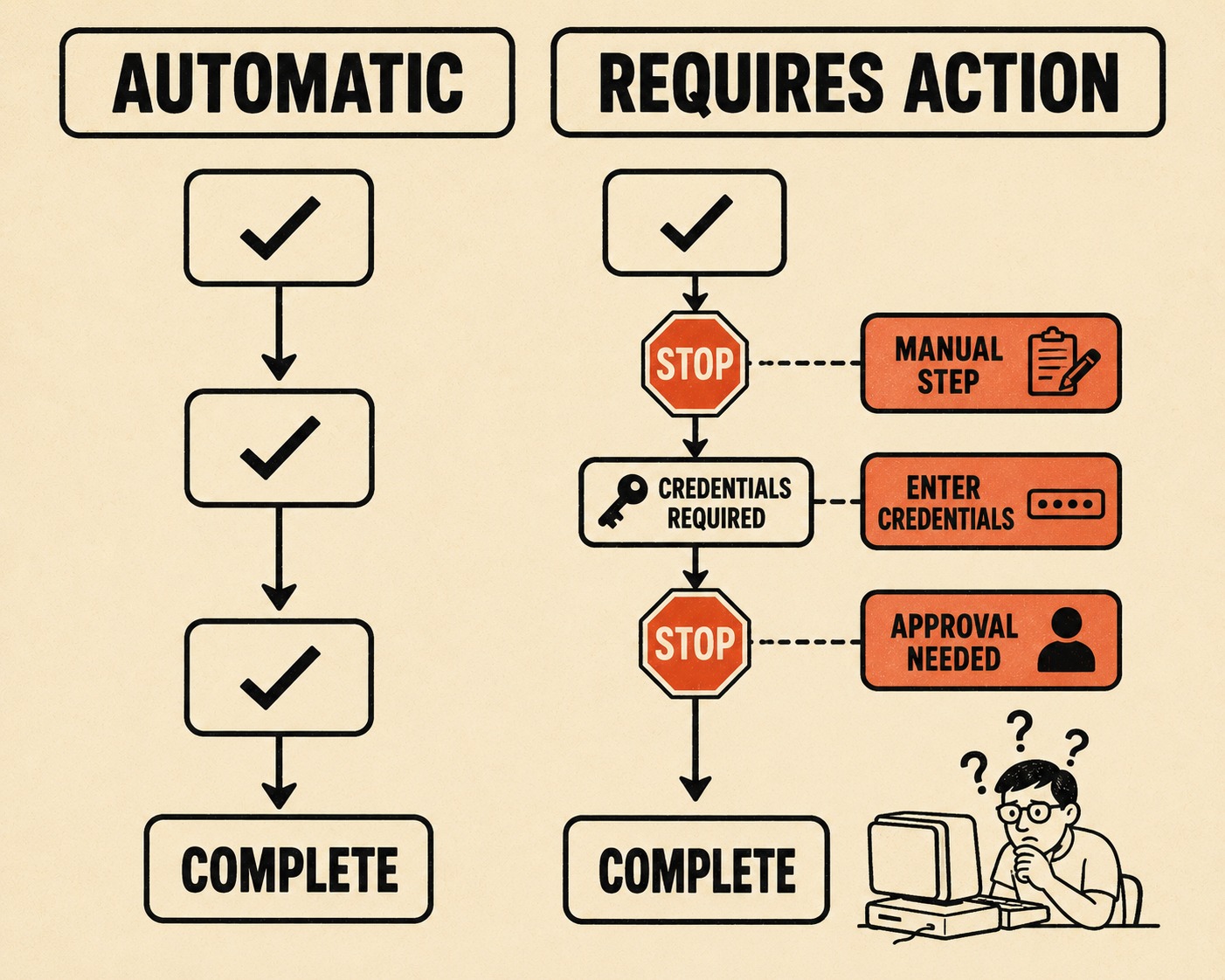
Then separate automatic behavior from required action. If every pull request will now run a security scan before merge, say that it happens automatically. If developers must install a CLI, change a local script, re-authenticate to a registry, or add a label before staging can start, say so in a sentence that cannot be mistaken for background reading.
A compact release note can do the job:
Change: Staging artifacts now publish to the new registry.
Your workflow: Builds will push there automatically; local image pulls require registry-login. Rollout: Opt-in for Team A this week, default for all teams on May 20.
If it fails: Use the prior registry with REGISTRY=legacy, then post the build URL in #platform-eng.The last line, the escape hatch, earns its place. Reliable releases depend on repeatable processes, which means changes to build and configuration must be intentional, versioned, and reportable. A release note should give people a short route back to a known-good path, along with the owner who can decide whether to roll back or roll forward.
Timing belongs in the note as well. Is the change live now, gradually rolling out, or opt-in first? Canarying works by exposing a change to a limited, time-bound slice of production and using the result to decide whether to proceed. If a deployment gate, environment structure, or registry move follows that model, say who is in the first wave and what signal advances the next one.
Security changes need the same operational clarity. Build provenance is an attestation of how a build platform produced artifacts, and collecting and sharing this data is increasingly required for release components. A note about artifact signing should therefore state where provenance is generated, whether verification is automatic, and what a team should do when verification fails. “We added signing” is the beginning of that explanation, not the end.
Where Release Notes Actually Get Read
A good note placed in the wrong channel is a private diary entry with better punctuation. Do not bury a platform change in a general engineering changelog and hope the right people happen to find it.
Put it in the places the affected teams already watch: #engineering for broad workflow shifts, #deploys for changes that affect release execution, #on-call for changes in detection or recovery, and a targeted message for teams facing a breaking migration. For a compulsory change, acknowledgment is reasonable. A banner on the next deployment, an explicit flag, or a direct message to affected owners may be less elegant than a quiet documentation update, but it is considerably cheaper than a surprise failure.
Pair major changes with a short walkthrough or office hour. Adoption of a new deployment process improves significantly when teams can see the release status, receive training, and learn from early adopters. A thirty-minute demonstration can eliminate several days of “why is staging stuck?” after the cutover. That is an excellent trade.
Follow up when patterns appear. If three teams hit the same snag, send a brief update with the fix. Safe deployments rely on incremental rollout, health checks between phases, and immediate recovery when a problem appears. The communication should be just as iterative as the rollout.
The Things You Should Stop Doing
Do not assume everyone understands the pipeline well enough to infer its impact. Most application developers should not need a mental model of every runner, registry, and gate to ship their code safely.
Do not write an internal release note in platform-team shorthand. The reader needs a behavior change, an action, a date, and a help route. They can inspect the configuration diff if their afternoon is going especially well.
And do not ship a consequential pipeline change on Friday afternoon without communication. The best time to discover an undocumented rollback path is almost never while the team that knows it is eating dinner.
When pipeline changes arrive without proper release notes, teams burn time on phantom debugging, builds fail mysteriously, and confidence in platform engineering slowly drains away. The release note is the small piece of operational infrastructure that keeps an upgrade from becoming a week of Slack firefighting.
Doc Holiday generates release notes directly from engineering workflows, including infrastructure and pipeline changes, then gives platform teams a structured way to validate the draft against rollout plans, runbooks, and the edge cases automation cannot infer on its own. That workflow turns updates into well-communicated deployment changes before they become surprise breaking changes.