How to Build a Documentation Process for a 10-Person Startup


The weak spot shows up fast after a new person joins a ten-person company. The answer to a question about the product sits partly in the code, partly in a pull request, and partly in somebody’s memory of why a decision was made three months ago. Last week’s release was explained in Slack, where it made perfect sense for about six hours.
No one chose this system. It is what happens when everyone is busy shipping and no one has been given formal ownership of preserving what shipped. Research on continuous software development describes the same pattern: informal material becomes hard to interpret, documentation drifts from the software, and short-term delivery wins the resource-allocation argument.
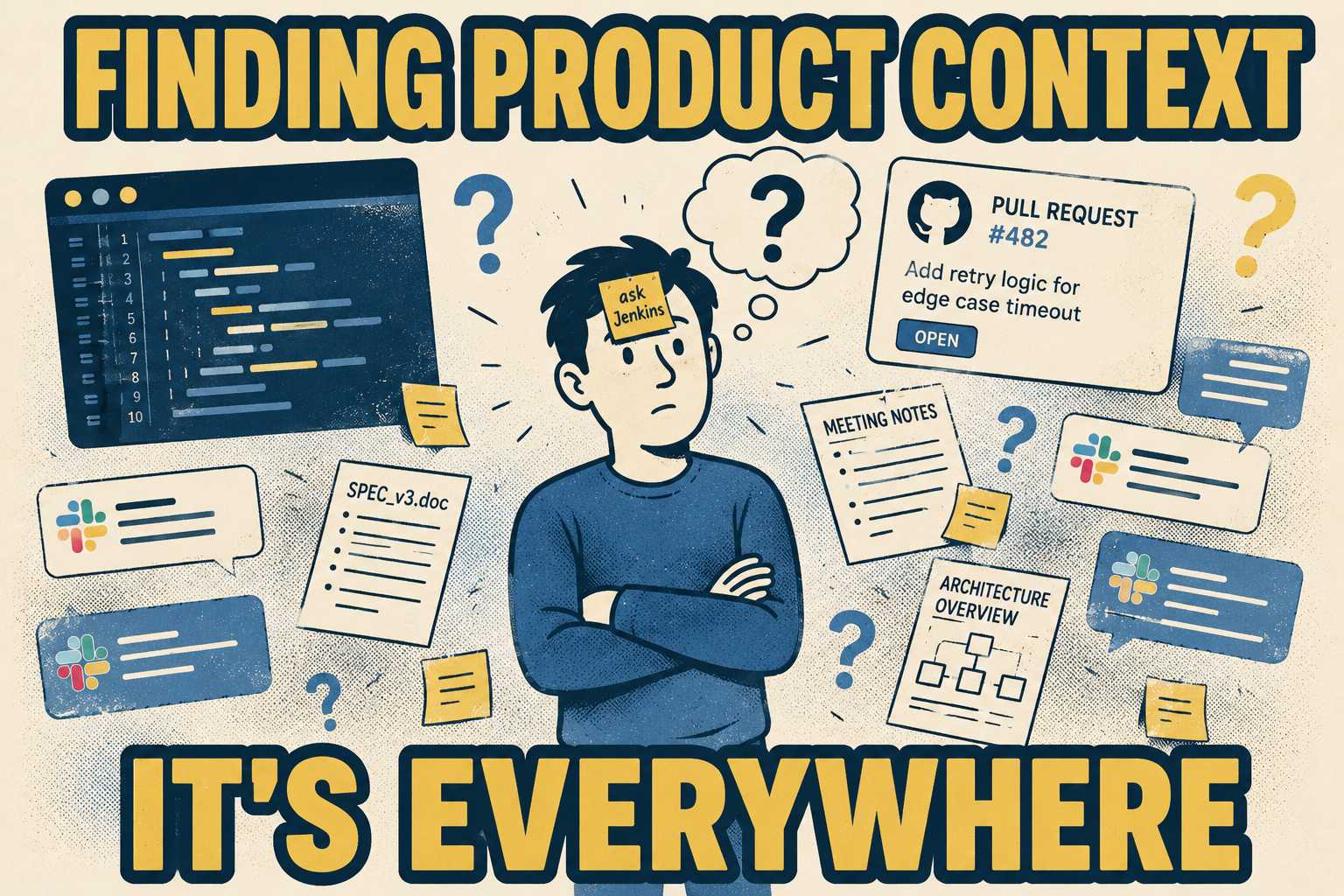
A workable documentation process for a 10-person startup starts with a smaller promise. Do not try to capture everything. Capture the few things that other people need in order to use, support, operate, and join the company without finding the one engineer who remembers the answer.
That is why the “hire a technical writer” advice tends to land badly at this stage. A full-time role rarely fits the budget, while a contractor needs enough product context to be useful that someone on the team becomes their translator. The question has always been how much documentation helps development and maintenance, not how much documentation can be produced. At ten people, the answer is usually a compact set of artifacts that arise from work already happening.
At Ten People, the Gaps Show Up Everywhere
The cost of missing documentation is mostly paid in interruptions. Support cannot explain a customer-visible change. An engineer repeats a decision in a direct message. A founder joins an incident because the recovery steps were never written down. Onboarding turns into oral tradition, which loads context into the heads of the people who have the least spare time.
New developers already encounter substantial cognitive load while learning an unfamiliar system; poor onboarding can delay a developer’s productivity for months. A tiny team does not need a handbook that explains its values in 48 different ways. It does need an answer when a new hire asks what the service does, how to make a safe change, and where the production levers are.
Documentation also decays differently depending on how it will be used. Technical documentation is often outdated, incomplete, or unhelpful, with usefulness depending on the task and information need. That is a good reason to stop treating “the wiki” as one unit of work.
Start with the Documents That Stop Interruptions
For a team of ten to fifteen, five artifact types usually carry most of the load. They give every recurring question a home without creating a small library system that nobody will maintain.
Release notes are the visible boundary between engineering and the people who depend on the product. GitHub’s generation flow can build a release overview from merged pull requests, categorize changes through labels, and prompt a team to check the draft before publication. That is roughly the right relationship between automation and judgment for a small company.
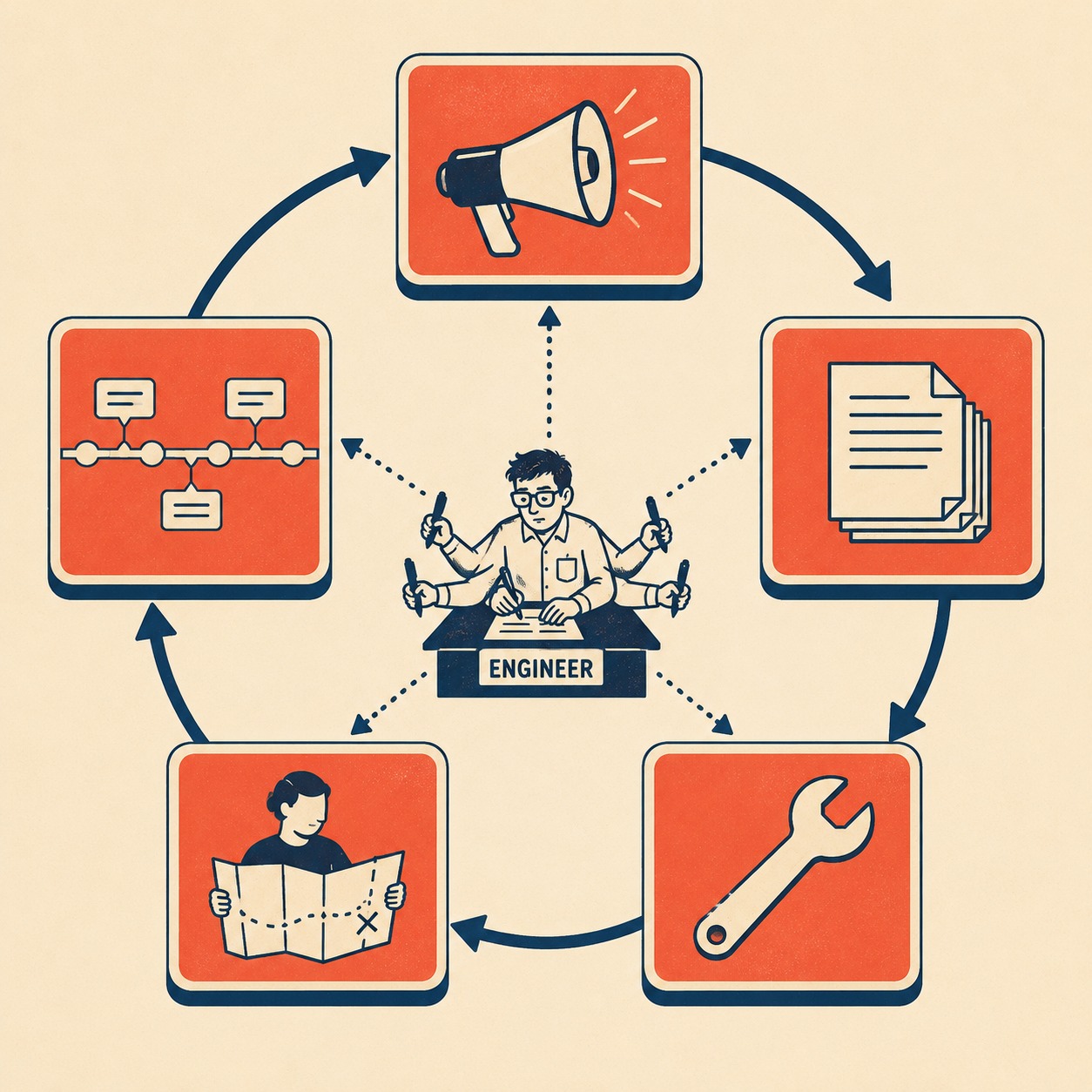
An internal changelog is less polished and more useful than it sounds. It creates the trail that turns a customer question into an answer without an archaeological dig. Minimal documentation up front, followed by detailed knowledge transfer, can draw on development artifacts themselves as source material.
API references deserve a separate lane because they can be generated from a structured contract. An OpenAPI description can drive documentation-generation tools. Runbooks deserve one because the person on call needs something action-oriented, not a postmortem written after the adrenaline wears off. Documenting incident procedures in advance and keeping a functional, templated incident record makes the next response easier to coordinate.
The Process Lives Where the Feature Does
The rule is simple: capture information at the point of creation. If documentation waits for a separate phase at the end of a sprint, it competes with the next sprint and usually loses.
Give every product issue or pull request a tiny “docs impact” template. Three fields are enough: what changed, who will notice, and what they need to do. An engineer writes those fields while the decisions are still fresh. They should take two minutes, not an afternoon.
When the change is ready to ship, the engineer is responsible for technical accuracy. A peer, PM, or support lead checks whether the explanation uses the words a new hire or customer would understand. The quality bar is practical: could someone outside the implementation use this safely, and could support answer the first obvious follow-up? Grammar can wait. Missing behavior cannot.
This is already how mature engineering organizations treat documentation when it changes a user experience, API, process, or feature. Developers can author the initial material, pair documentation with the code change, and include technical review in the merge-request flow. A small startup can keep the same principle while dropping the dedicated-writer dependency.
The tooling question is mostly a friction question. Use the systems where work is already named: GitHub or GitLab for code and review; Linear or Jira for intent; the documentation destination where customers or the team already look. Choose tools that ingest those signals, keep a template consistent, create a reviewable draft, and publish to the existing home. A new editor with its own taxonomy and publishing ritual will become the next graveyard.
At this size, a release should leave one connected trail: issue, pull request, internal changelog entry, customer note when relevant, and API or runbook update when the change touches either. Platforms such as GitLab treat a release as a durable snapshot of code, documentation, and release notes, with an option to create that record from CI/CD. The underlying idea works even if your release process is less elaborate.
The process scales cleanly to thirty people because the artifacts and capture rule stay the same. The first addition is usually an assigned documentation steward for taxonomy, templates, and quarterly gaps, rather than a full rewrite of the stack. Hire or dedicate a documentation owner when changes routinely span several teams, product and API material need editorial coordination, or customer-facing release communication has become a weekly job that no shared reviewer can reliably absorb.
A concrete release makes the whole system less abstract. An engineer merges a feature that adds export filters. The pull request template already says who sees it and the one constraint: exports retain the existing permission model. The engineer spends two minutes confirming that note, a support teammate rewrites one phrase for customer clarity, and the same source information produces an internal changelog entry and a customer release-note draft. The reviewer approves both with the code. Five minutes of deliberate work leaves behind an answer that survives the engineer who wrote the feature.
Doc Holiday generates release notes, changelogs, and API references directly from the commits, pull requests, and tickets your team already produces, then sends the output through a reviewable workflow so validation, approval, and publication stay attached to the release instead of becoming another project.