How to Write Release Notes for a New Pricing Model


The new pricing page is live. The design is clean. The tiers make sense. The marketing team is celebrating in Slack.
Then the support queue starts lighting up.
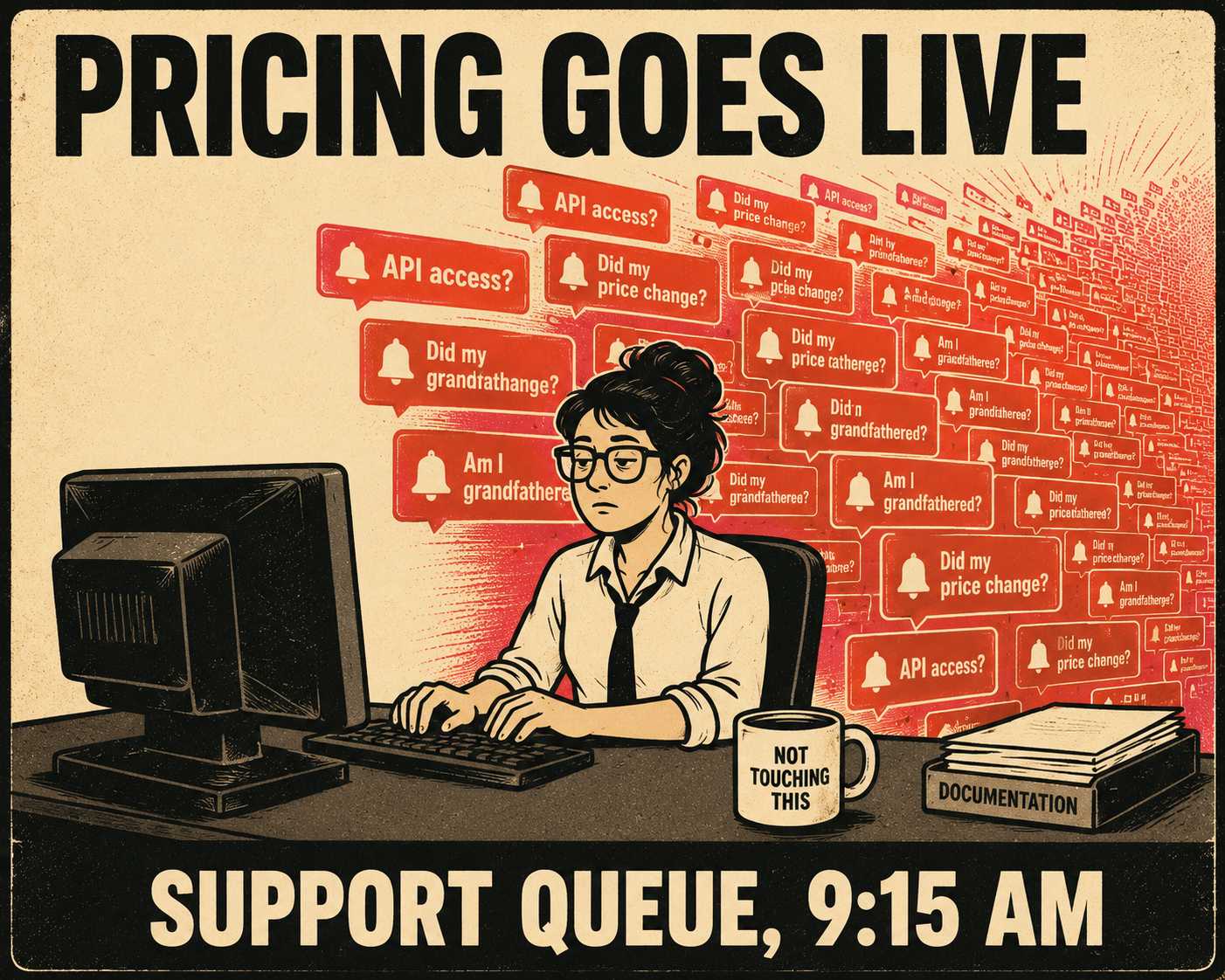
It is 9:15 AM, and a customer who signed up three years ago wants to know if they are losing their API access. A user mid-contract is asking if their renewal rate just doubled. Another customer is furious because a feature they use daily is now listed under an "Enterprise" tier they do not pay for.
You documented the new pricing perfectly. The problem is that you documented it for people who do not use your product yet.
When a pricing change goes live, existing users do not read the announcement to find out what new value they are getting. They read it to find out what they are losing. They scan for the catch. A feature update they can ignore; a price increase they cannot. The release note for a pricing change is not just informing. It is managing a relationship moment.
Writing release notes for a new pricing model requires a different playbook than a standard feature launch. You have to answer the hard questions first, clearly, and without spin.
How They Read the News
Anyway. When you change pricing, you are fighting the status quo bias. Users prefer things to stay exactly as they are.
If you send an email pointing to a new pricing page, existing users have to map their current plan to a new tier. If they cannot figure it out immediately, they assume they are being forced into an expensive upgrade or losing features they depend on.
This means your release note cannot just be a list of new prices. It has to be a translation layer.
Lead with the what and when, in plain language. No burying the lede. "Starting March 1, our Standard plan will increase from $49 to $59/month." If there are grandfather clauses, early renewal discounts, or grace periods, state them upfront.
Explain the why, briefly and without spin. Users respect honesty. "We've added X capability, expanded infrastructure to support Y, and this pricing reflects the platform you're now using." If it is purely a cost adjustment, say so. Do not invent feature justifications that feel manufactured.
The Anatomy of a Good Pricing Note
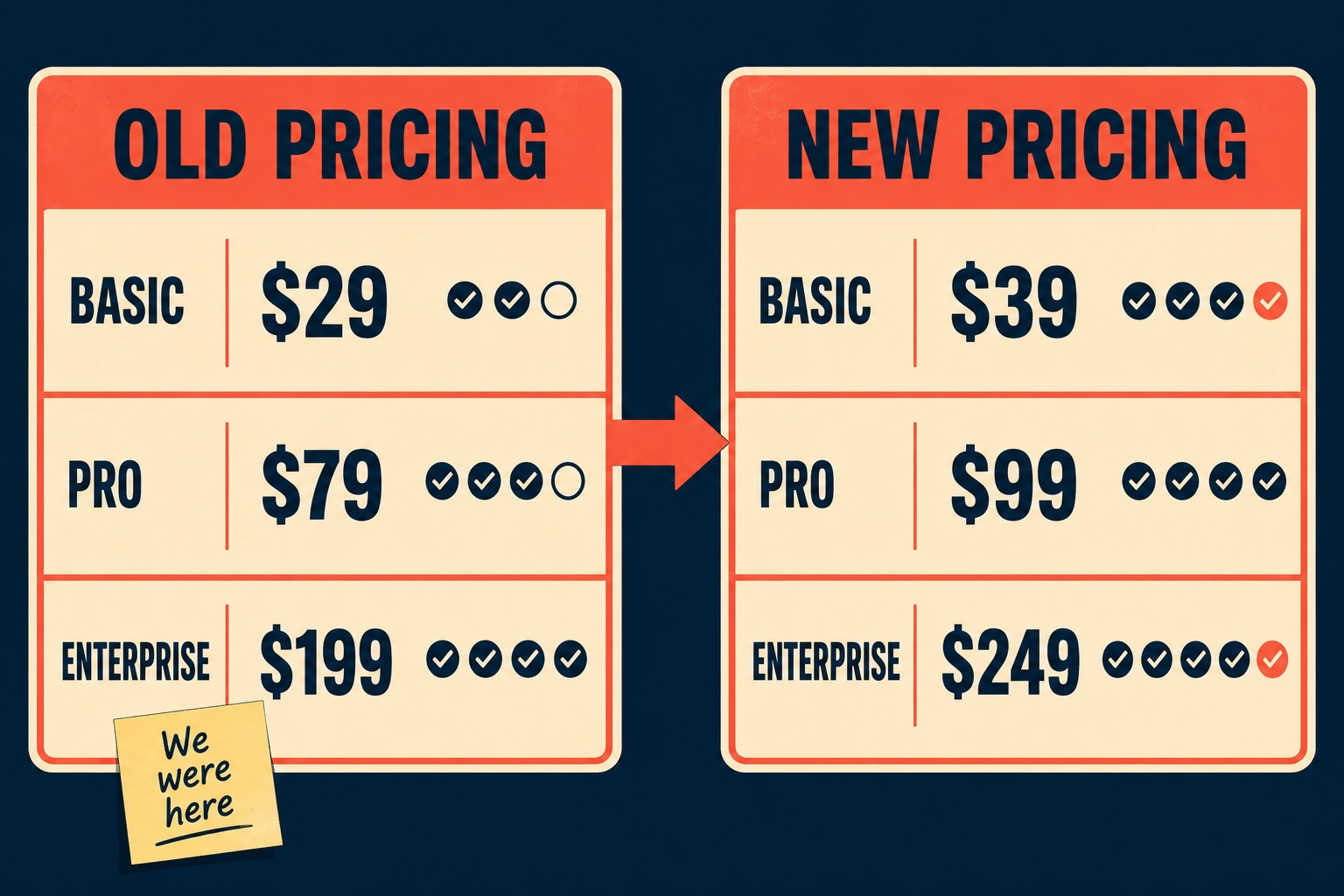
A good pricing release note does not leave room for interpretation.
Make the comparison crystal clear. Show old pricing, new pricing, and what is included in each tier. If you are changing tier structures or bundling features differently, a side-by-side comparison is non-negotiable. Users should not have to guess whether they are being moved or grandfathered.
Address the "what do I need to do" question directly. Are existing customers auto-migrated? Do they need to opt in? Can they lock in the old rate? Give them the action path.
Provide a direct link to an FAQ. Pricing questions cascade. What about annual contracts? What if I prepaid? What about add-ons? The release note itself should stay tight, but it must link out to answers for every edge case your customer success team can anticipate.
Where the Tone Goes Wrong
Pricing announcements often fail because the language is either too defensive or too breezy.
Defensive language justifies the increase at length. It sounds like an apology. Breezy language acts like a price hike is exciting news. It sounds like a marketing pitch.
The right tone is calm, factual, and respectful. Treat it like you are informing a peer, not managing a PR crisis or hyping a launch.
There are also structural mistakes that compound the tone problem. A bad tone makes users suspicious. A bad rollout structure makes them angry.
Announcing via release notes when the change actually requires direct outreach is a common failure. If this affects contracts, enterprise customers, or anyone with custom terms, a release note is not sufficient. Those conversations happen first. Many enterprise SaaS contracts explicitly require written notice of pricing changes, with some agreements mandating 60 to 90 days' advance notification before a renewal.
Timing the announcement too close to the effective date creates resentment. Give users at least 30 days if possible (ideally 60–90 for annual contract holders). Springing a pricing change creates frustration even if the increase is small. They need time to adjust their own budgets, run the new numbers past their finance teams, and update their mental model of what your tool costs them.
Hiding the news in a changelog or burying it mid-paragraph signals that you are embarrassed by the change. Pricing changes deserve a dedicated communication.
Overloading the note with upsell language is not the move. This is not the moment to pitch premium tiers. Users are processing a cost change. Let them do that without feeling sold to.
What Happens After You Hit Publish
Release notes are static. The conversation is not.
Monitor support channels closely. If the same question comes up repeatedly, update the FAQ or add a clarifying edit to the note. Pricing confusion compounds fast, so catch it early. A quick edit to the release note clarifying a grandfathering policy on day one can save your team from fielding two hundred identical tickets on day three.
Most teams do not have a repeatable process for high-stakes release notes, so every pricing change feels like starting from scratch. The structure provided here is reusable, not just for pricing, but for any change that affects user costs, access, or expectations. Stripe's guidance on pricing migrations makes the same point: the quality of your communication assets before launch determines how much support volume you will need to absorb after it.
If you are generating these notes programmatically or using a documentation system, the workflow must include room for review by someone who understands customer sentiment and contract implications.
Doc Holiday generates structured release notes from engineering output, which solves the scaling problem for standard updates. But pricing announcements sit at the intersection of product, finance, and customer success. The system provides the structure to validate and manage the output, ensuring that the human oversight required for a complex pricing change is a clear, repeatable step in the workflow, not an afterthought.