How to Write General Availability Release Notes


You are staring at a blank document. You are trying to figure out how to explain that the feature your team has been tweaking for six months is now officially real.
The beta tag is coming off. The engineering team has declared it stable. The support team is ready to take tickets. Now you have to write the release notes.
The temptation is to write them like a standard changelog. You list the bugs that were fixed, the endpoints that were added, and the UI tweaks that were made. You hit publish. You miss the entire point of the announcement.
A General Availability (GA) announcement is a milestone, not just a changelog. It is a signal to the market that a product has passed rigorous testing, is fully supported, and is ready for production use. If you treat it like a routine update, you undersell the achievement and leave your users wondering what actually changed.
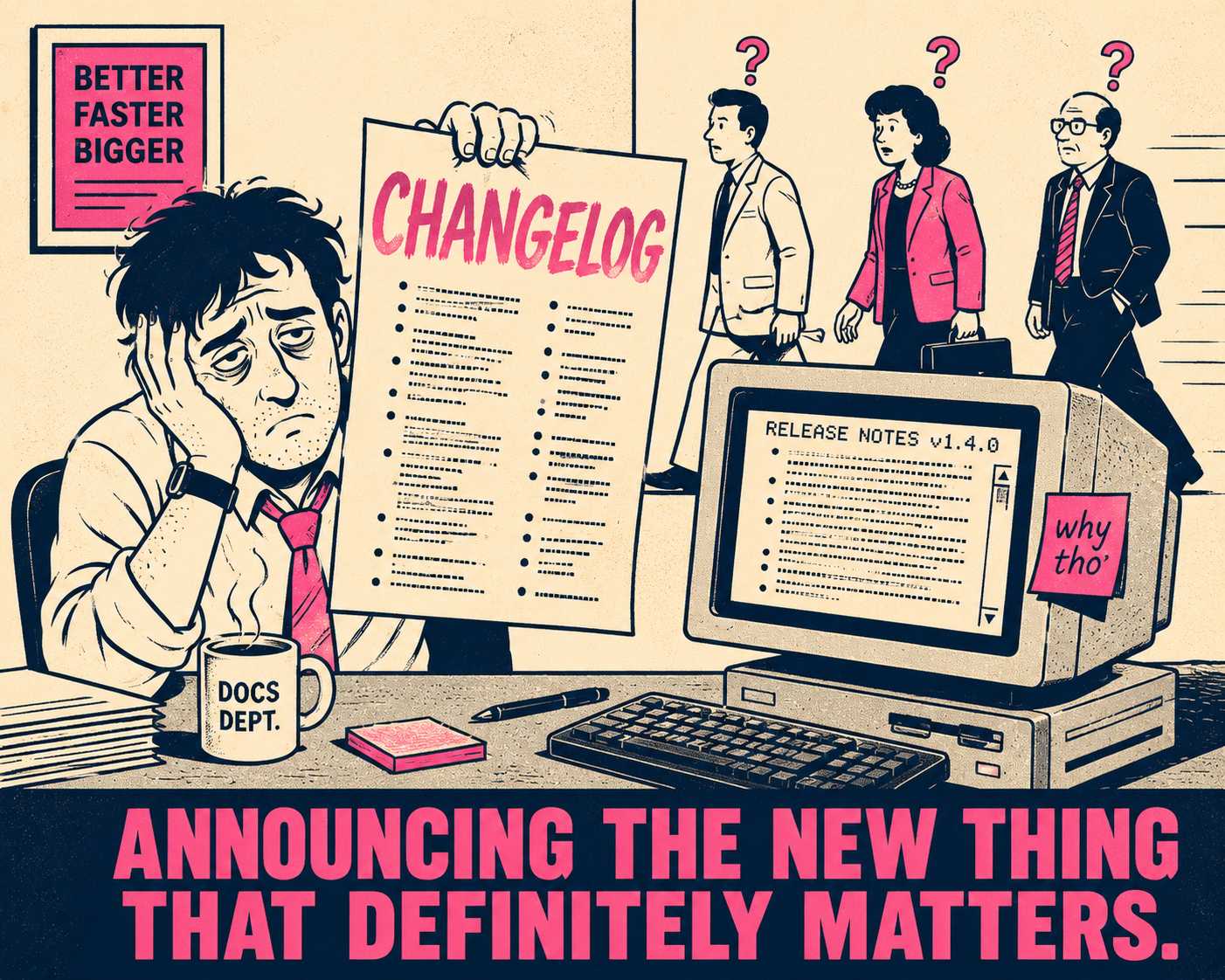
We have to write these differently.
Researchers looking at over 32,000 GitHub projects found massive discrepancies between how producers write release notes and how users actually perceive them. When the milestone is General Availability, that gap becomes a liability.
How to Tell the Market It's Real
The tone of the documentation has to shift the moment the beta tag comes off.
Beta releases are about experimentation. They are invitations to try something out, with the implicit understanding that things might break. GA releases are about commitment. They are declarations that the product is stable, reliable, and backed by service-level agreements (SLAs).
Your GA release notes need to communicate this shift immediately. You are not just announcing new features; you are announcing a new level of maturity.
You need to define what GA actually means in your context. Does it mean the feature is now covered by your standard enterprise SLA? Does it mean the API is stable and breaking changes will now follow a formal deprecation policy? Does it mean there is a new pricing tier?
State these things clearly. Do not bury them under a list of minor UI improvements.
The enterprise buyer who has been waiting for the GA release to adopt the feature does not care about the new padding on the settings button. They care about the uptime guarantee.
What to Say to the People Who Broke It First
You have two audiences for a GA announcement. The first is the broad market of users who have never touched the feature. The second is the group of beta testers who have been using it for months. They need different things.
The new users need confidence. They need to know what the feature does, why it matters, and that it is safe to use in production.
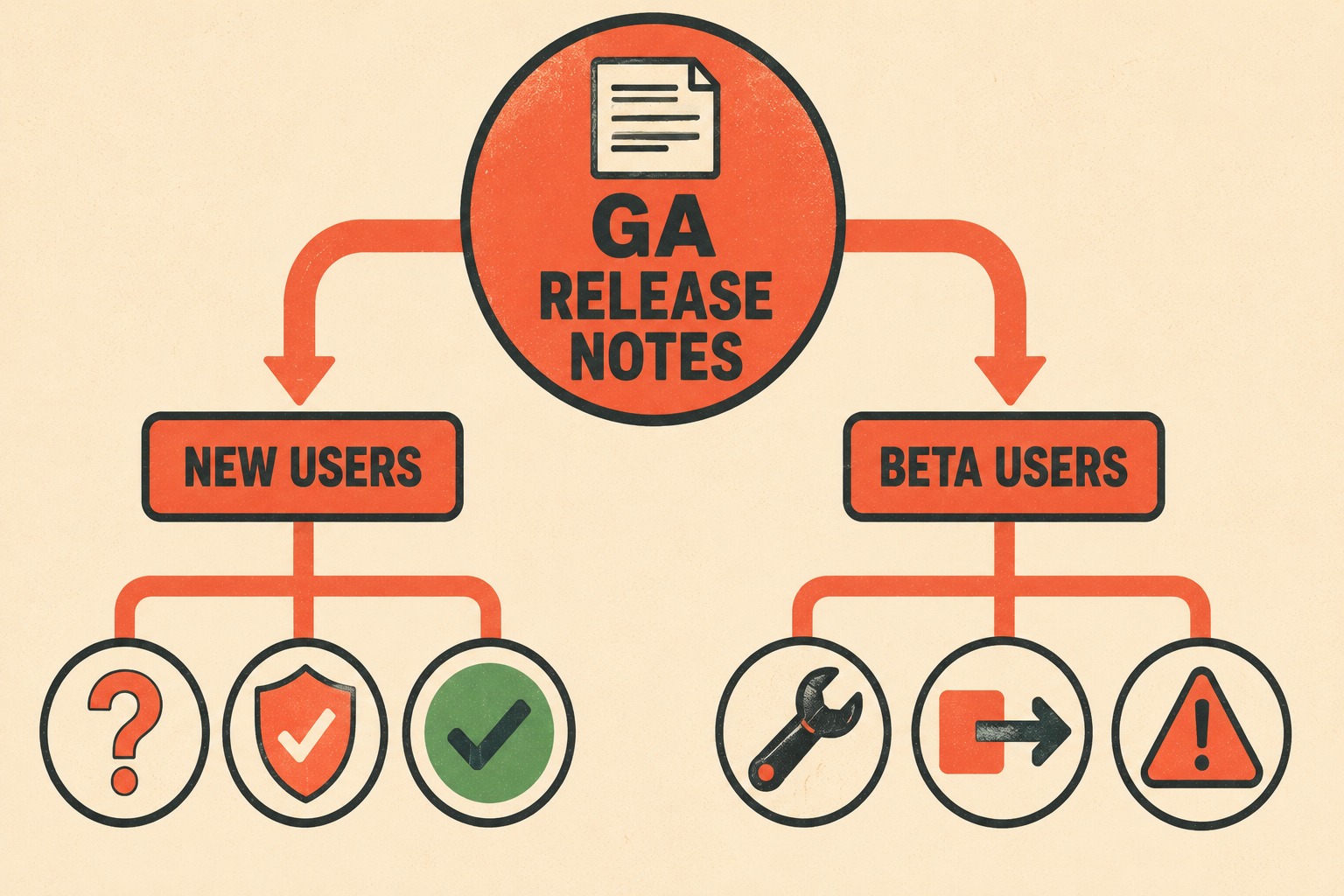
The beta users need migration guidance. They already know what the feature does. What they need to know is what changed between the beta version they are using and the GA version you just released. If you have been running an effective beta program, these users have invested their valuable time testing your unreleased, buggy software. You owe them clarity.
Did you deprecate a beta API endpoint? Did you change the data model? Did you remove a feature that didn't make the cut?
You have to tell them. And you have to tell them how to migrate. A good migration guide is not just a list of breaking changes. It is a clear, step-by-step path from the old way of doing things to the new way. If you deprecate an API, you provide a sunset period and a clear alternative.
The Structural Anatomy of the Announcement
There is no single perfect template for a GA announcement. There is, however, a reliable structure you can adapt.
Lead with the achievement. The first paragraph should state clearly that the feature is now generally available, what it does, and why that matters. Answer the core question immediately.
Follow with the maturity signals. Explain what GA means for this specific release. Mention the SLA, the support availability, and the stability guarantees. This is where you build trust with the enterprise buyers.
Address the beta users. Include a dedicated section for migration guidance. List any breaking changes, deprecated APIs, or structural shifts that occurred between beta and GA. Provide clear instructions on how to update existing implementations.
Close with the next steps. Tell the new users how to get started. Link to the getting started guide, the API reference, or the configuration documentation.
Why the Technical Details Still Matter
I am not suggesting that you ignore the technical details. The changelog still matters. The specific bug fixes, the new endpoints, and the performance improvements all need to be documented.
But they should not be the narrative focus of the GA announcement. They belong in the supporting documentation, linked from the main announcement. The release notes are the teaser; the documentation is the elaboration.
The problem is that compiling those technical details takes a massive amount of time. You comb through Jira tickets, track down pull requests, and translate developer shorthand into readable English. By the time you finish compiling the changelog, you have no energy left to write the actual strategic narrative of the GA announcement.
This is where the division of labor breaks down. The strategic framing (the narrative, the maturity signals, the migration guidance) requires a human writer who understands the market and the users. The technical changelog, with its list of endpoints added and bugs fixed, is mechanical.
When you use a documentation engine like Doc Holiday, you separate those two tasks. Doc Holiday generates the technical changelog directly from your engineering workflows. It pulls the commit history, tracks the API changes, and builds the foundational draft. You review it for accuracy in a dashboard, flag edge cases, and feed patterns back into the system to reduce hallucinations. The platform gives you the structure to validate and scale output without rebuilding a large headcount. And then you spend your time doing the work that actually matters: writing the narrative that explains why the release is important in the first place.