Documenting Data Model Changes for Everyone Who Cares


It is Friday afternoon. A backend engineer drops a message in the company Slack channel.
"Just merged the migration for the new billing model. Added a user_tier column to the accounts table. Fully backward compatible."
To the engineer who wrote it, this is a complete and reassuring statement. The database is safe. The old code still works.
Ten minutes later, the frontend lead asks if the user object returned by the API has changed. The product manager asks if this means the new enterprise features are finally live. The support team asks if they should tell customers why their dashboard looks different.
The database is safe, but the organization is confused.
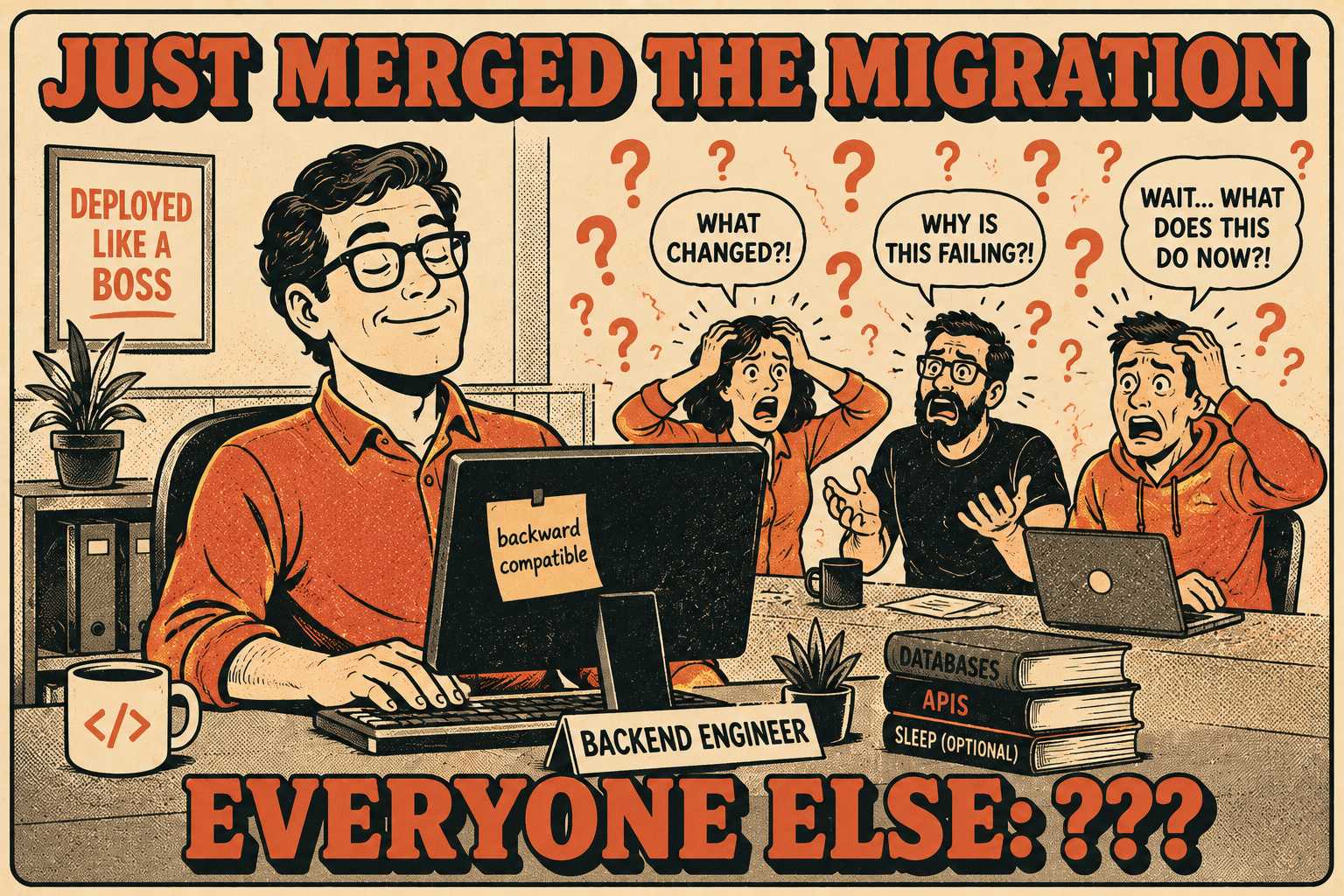
A data model change that makes perfect sense to the person who wrote the ALTER TABLE statement is often completely opaque to everyone else. Engineers tend to document what changed mechanically. They list the new columns, the dropped indexes, the modified foreign keys.
Non-technical readers get lost in entity-relationship diagrams and SQL snippets. The result is miscommunication, broken downstream dependencies, and a lot of repeated questions in Slack.
The Problem with One Big Changelog
Teams try to solve this by writing one comprehensive document. They put the business justification at the top, the API changes in the middle, and the database migration script at the bottom.
This serves no one well.
Backend engineers need migration scripts and rollback plans. Frontend engineers need to know if the API contracts changed. Product managers need to understand what features are now possible. Support teams need plain-language explanations of user-visible impacts. Compliance teams might need to know if the new fields contain personally identifiable information, which requires its own compliance risk assessment for the migration event.
The best approach is a layered documentation structure. You need an executive summary for non-technical readers, specific callouts for affected teams, and technical details for the engineers.
Why It Actually Matters
Most engineering documentation jumps straight into the schema diagrams.
Start instead with the problem. Why did this change need to happen? What was broken before? What becomes possible now?
"Added a user_tier column" means very little.
"Added user_tier so the billing system can support the new enterprise plan without requiring custom code for every account" gives the change actual meaning. Non-technical readers need this context to understand why the engineering team spent two weeks on a database migration instead of shipping new features.
Where to Put the Actual Schema
For technical readers, you do need to provide the full schema change. They need the before and after snippets, the SQL migration scripts, the new constraints, and the changes to foreign key relationships.
They also need to know about backward compatibility. Will the old code still work, or does this require a coordinated deployment? They need to know if the migration is a non-blocking schema change or if it will lock the table and cause downtime.
But for non-technical readers, you have to translate the schema change into plain language. Avoid jargon. Do not talk about denormalized join tables.
Instead of explaining a new many-to-many relationship, explain the impact: "Each order can now be linked to multiple shipments instead of just one, which means customers can receive partial orders."
Use progressive disclosure. Put the summary first, then link to the detailed schema documentation rather than embedding it in the main announcement.
When Refactoring Becomes Everyone's Problem
You have to distinguish between internal refactoring that is invisible to external systems and changes that affect API consumers or end users.
If an API endpoint now returns additional fields, returns data in a different structure, or requires new parameters, call that out explicitly. Show the before and after JSON examples.
If the change affects user-visible behavior, document those scenarios clearly. Maybe data now appears differently in the UI. Maybe new filters are available. Maybe previously allowed actions are now blocked.
Support teams need to know this before users start asking questions.
The Migration Is Never Instant
Non-technical stakeholders often assume that database changes are deployed instantly and can be rolled back just as fast.
Explain the migration timeline. Will there be downtime? Is there a maintenance window? Are you doing a phased rollout?
What happens if something goes wrong?
For the engineering team, document the rollback procedure. If the migration needs to be reverted, they need to know exactly how to unwind the data transformation logic without losing the writes that happened during the deployment window. This is especially critical for migrations involving business logic, where a simple schema revert will inevitably cause data inconsistency.
The Pictures That Actually Help
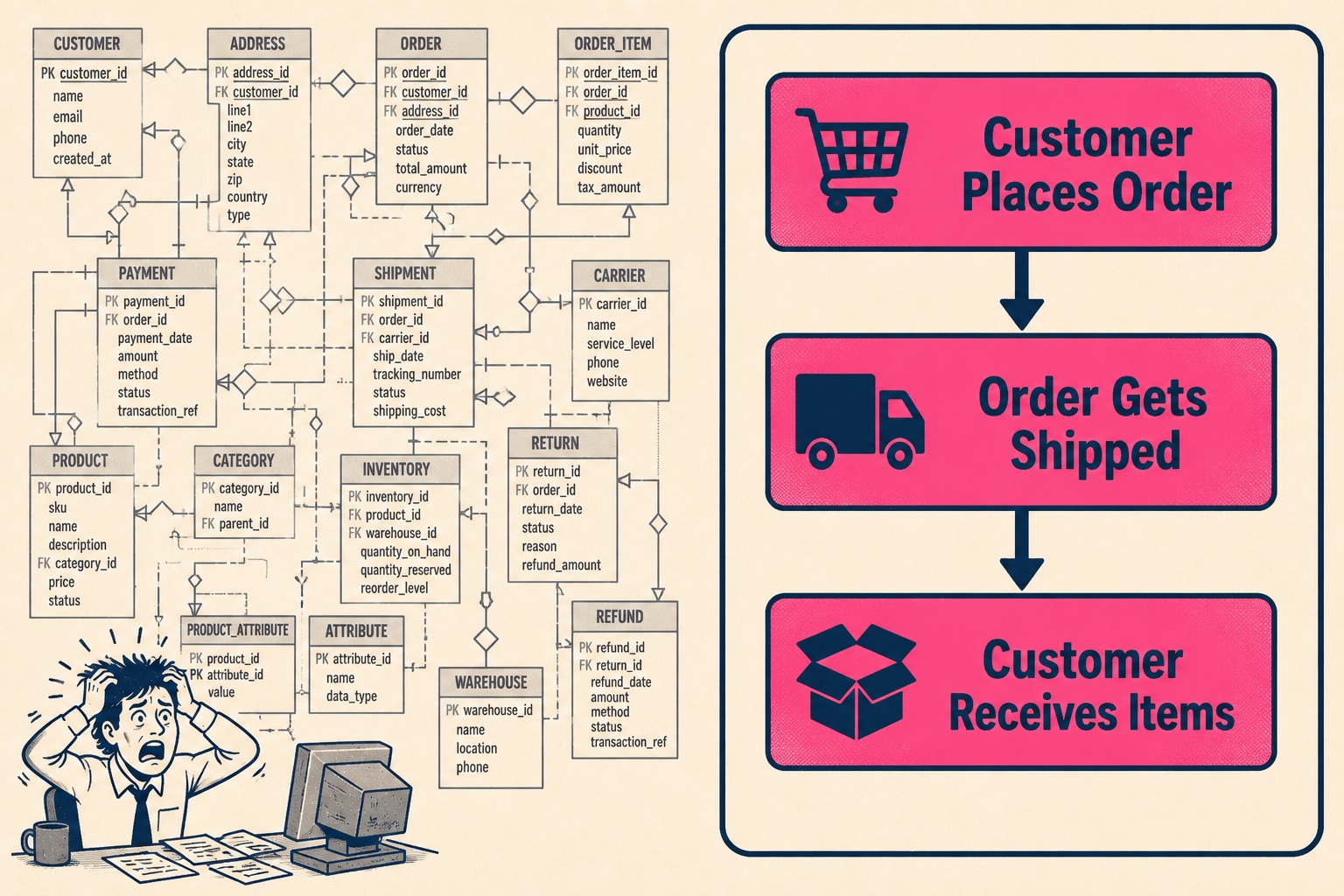
Entity-relationship diagrams are incredibly useful for backend engineers. They are meaningless to product managers.
For non-technical readers, use simplified visuals. A flowchart showing how data moves through the system is better than a database schema. A before and after comparison table is better than a SQL diff. Annotated screenshots showing the UI changes are best of all.
Save the actual ERD snippets and example queries for the technical audience.
How This Connects to the Release
A data model change rarely happens in isolation. It usually ships as part of a broader product release.
The technical schema documentation should not live in a vacuum. It should connect clearly to the release notes, the feature announcements, and the API changelog. It needs to answer what version introduced the change and what systems are affected.
This creates a structural problem. As systems scale, the gap between the code that changes the database and the documents that explain it grows wider. Engineering teams adopt data contracts to prevent schema drift from breaking pipelines, but those contracts rarely reach the non-technical stakeholders who need to understand the business impact. The result is a persistent misalignment between what the system actually does and what the organization thinks it does.
Keeping all these layers of documentation in sync manually across different audiences is nearly impossible when the schema is constantly evolving.
This is the operational reality of documentation drift. It is why Doc Holiday exists. It generates the necessary outputs directly from the engineering workflows, giving lean teams the structure to validate and scale documentation for every audience without turning engineers into full-time technical writers.