How to Stop Treating Release Notes Like a Compliance Checkbox and Start Driving Expansion


If you manage a SaaS platform, you know the routine. A product team ships a major update. The engineering lead drops a list of resolved tickets and dependency updates into a shared document. Someone, usually a product manager racing against a deadline, copies that list into a changelog, adds a vague headline like "May 2026 Updates," and publishes it.
The release goes live. And then, absolutely nothing happens. No spike in feature adoption. No sudden influx of upgrade requests. The only people who read the update are the developers who wrote it.
This happens because most organizations treat release notes as IT housekeeping—a compliance artifact designed to log engineering activity. But when you look at the mechanics of product-led growth, release notes occupy a unique position. They reach your most engaged users exactly when those users are looking for new capabilities. When structured correctly, release notes are not just a log of what changed; they are a direct channel for driving feature adoption, tier upgrades, and expansion revenue. The gap is not creative copywriting—it is operational structure: who writes them, what information they have access to, and whether the process allows for commercial context to be included.
The Structural Barriers to Commercial Release Notes
The failure of release notes as a commercial asset usually starts long before the text is written. It begins with how the information is sourced and who controls the process.
In most companies, engineering writes the initial release notes in isolation. They document the technical output rather than the commercial outcome. A developer will accurately note that they implemented an OAuth 2.0 protocol, but they will rarely translate that into the fact that users can now log in instantly with Google. Because this process happens at the very end of the release cycle, there is no time for cross-functional input. Product marketing cannot review the messaging. Sales enablement cannot prepare the account teams. Customer success cannot flag which specific accounts have been waiting for this exact feature to solve an open expansion conversation. This lack of cross-functional alignment is a primary reason product launches fail to deliver expected value.
The distribution is equally flawed. Updates are often dumped into a single, unsegmented changelog page. A free-tier user sees updates about enterprise SSO configurations, while an enterprise admin has to wade through notes about basic UI tweaks. When users are consistently presented with irrelevant information, they simply stop reading.
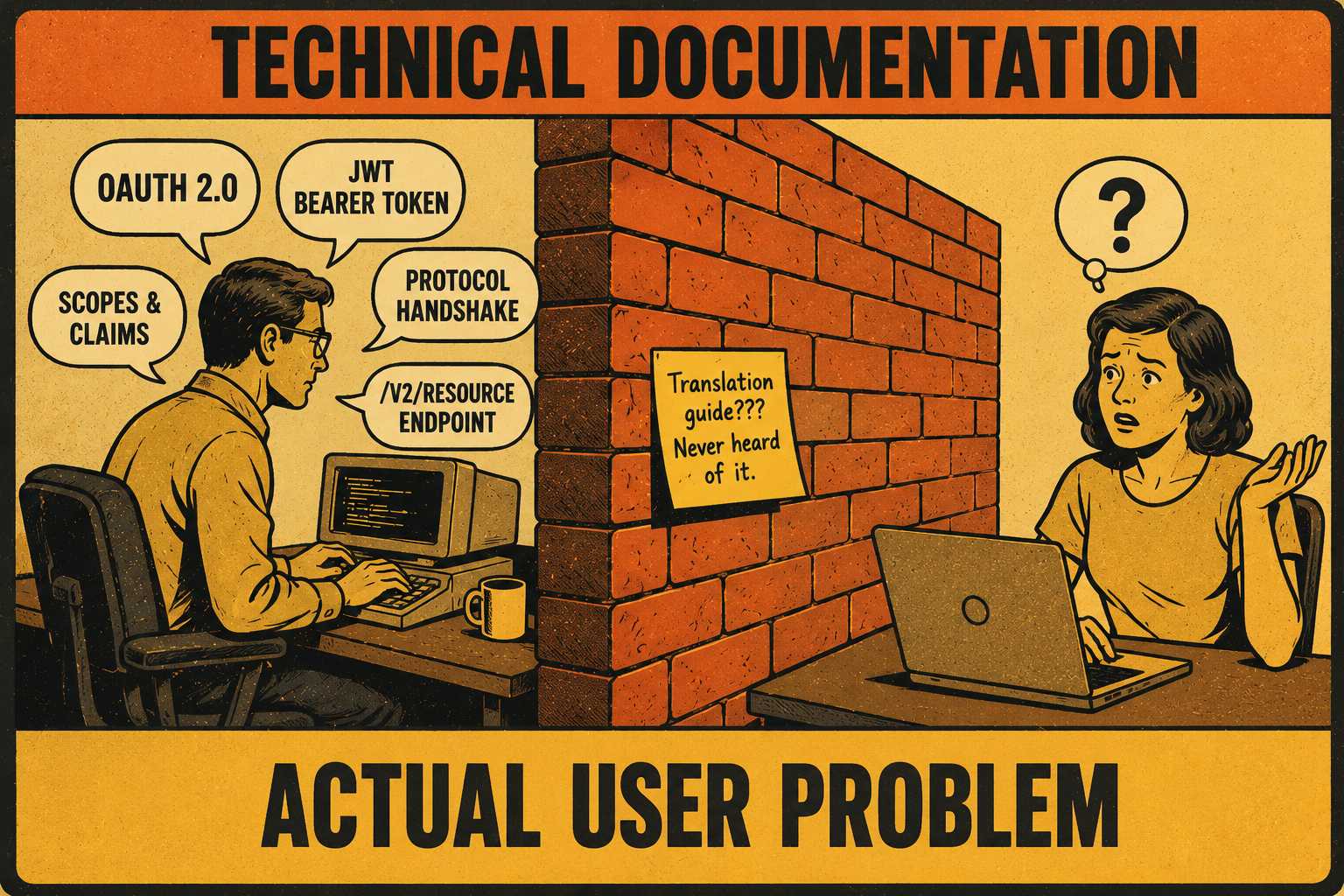
Finally, the timing is decoupled from the go-to-market strategy. Features ship when the code is ready, often before sales or customer success teams even know how to position them. Customer-facing teams end up finding out about new capabilities from support tickets rather than proactive internal communication.
Repositioning Release Notes as a Commercial Surface
To turn release notes into commercial assets, the process needs to move upstream and involve the teams responsible for revenue. The most immediate change is shifting ownership. While product managers and engineers provide the raw facts and technical context, product marketing should serve as the editor-in-chief. Their role is to translate technical achievements into user benefits and business outcomes.
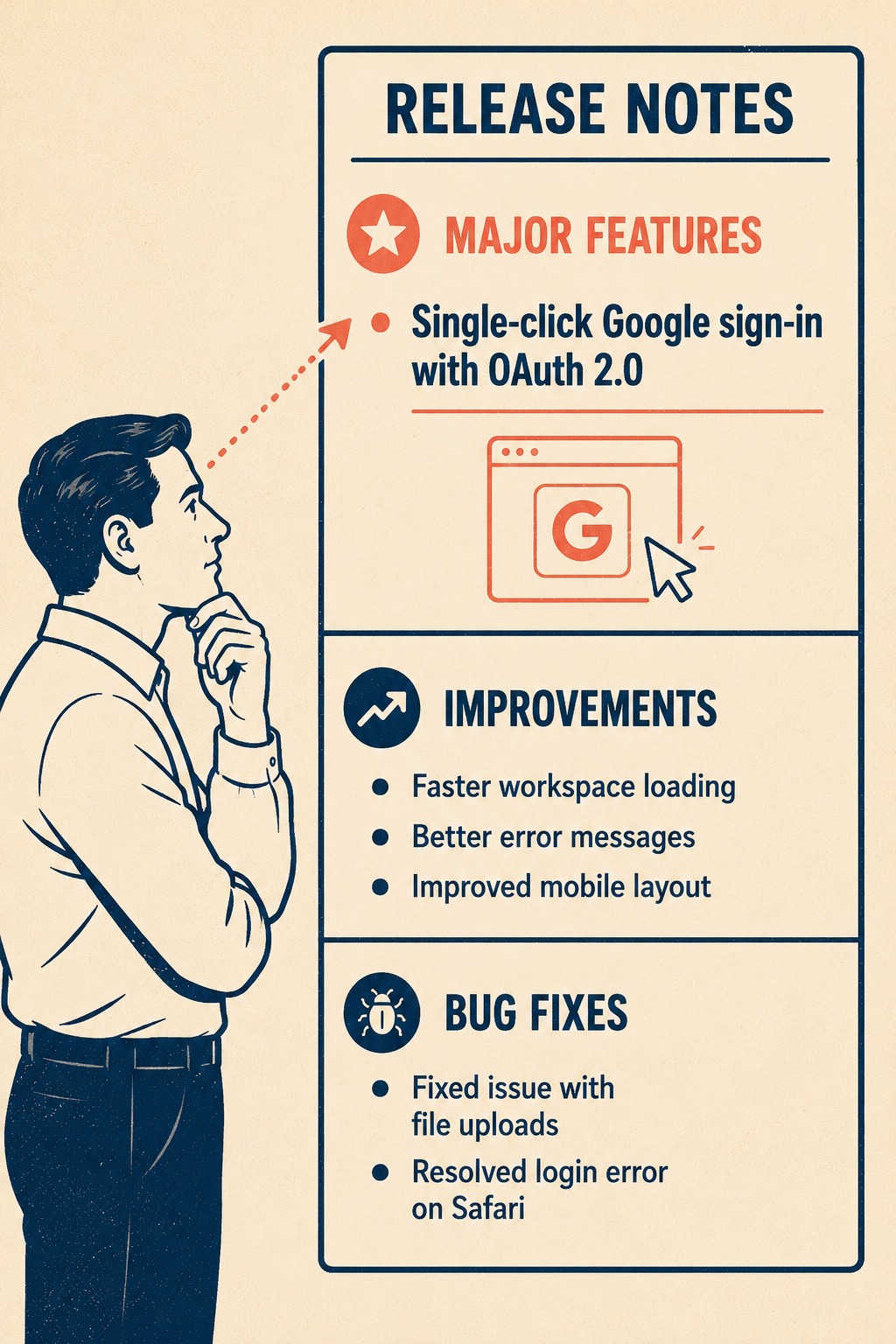
But translation is only the first step. The delivery mechanism must also change. Not every update matters to every user. Effective release notes are segmented by audience and use case. An enterprise administrator needs to know about security patches and compliance updates. A daily active user needs to know about workflow improvements. When release notes are categorized logically—separating major new features from minor improvements and bug fixes—users can quickly scan for what matters to them. This segmentation also allows for targeted distribution. Instead of a single blast, updates can be pushed contextually.
Passively hosting updates on a documentation site guarantees low visibility. The most effective distribution happens in-app, exactly where the user experiences the product. When a user navigates to a reporting dashboard, an in-app tooltip or modal can announce a new reporting feature right there, reducing the friction between discovery and adoption. For major releases, targeted emails can re-engage dormant users by highlighting a capability they previously requested. 74% of B2B buyers review user documentation as part of their purchase cycle, highlighting the critical role this content plays in decision-making.
Release notes should act as the starting gun for sales and customer success. When publication is synced with sales enablement, account teams can use the update as a touchpoint for expansion. A customer success manager can reach out to an account and say that a newly released feature solves an exact problem they have been struggling with, transforming a passive update into an active upsell conversation. Driving feature adoption requires this kind of targeted, contextual communication—feature adoption rates average around 24.5% across the industry, meaning the majority of your product's capabilities go unused, not because users don't want them, but because they never learned they existed.
What Upsell-Optimized Release Notes Look Like
When these structural changes are implemented, release notes look fundamentally different. Consider a SaaS analytics platform that segments its release notes by pricing tier. Instead of just listing a new advanced forecasting tool, the note includes an "Available on Enterprise Plan" tag, complete with a direct call-to-action to upgrade or contact sales. The release note acts as a targeted advertisement for a higher tier, delivered to users who are already engaged with the product.
Or look at a developer tools company that writes its release notes as use-case narratives. Instead of listing API endpoint changes, they explain how the new endpoints allow developers to automate a specific, painful manual process. By framing the update around the business problem being solved, they immediately demonstrate the value of adopting the new feature. Companies like Stripe and Twilio have built their growth strategies around providing clear, comprehensive, and accessible documentation that guides developers to value quickly. Their documentation is not an afterthought; it is a growth channel.
In B2B enterprise platforms, the most effective companies sync their release note publication with their account teams. Before the public changelog goes live, customer success managers are briefed on the updates and provided with a list of accounts that requested those specific features. The release note becomes the collateral the account team uses to lead an expansion call. Top-quartile SaaS companies achieve net revenue retention rates of 113%, demonstrating the power of effectively monetizing the existing customer base through structured expansion strategies. Release notes, when properly operationalized, are one of the most direct levers for moving that number.
The Execution Problem and the Role of Structured Tooling
Understanding what makes a good release note is easy. Executing it consistently is hard. Most companies fail at this because the information arrives too late in the cycle. If product marketing only gets the raw engineering notes hours before deployment, there is no time to segment the audience, craft the commercial narrative, or brief the sales team.
This is where AI-native documentation tooling changes the operational reality. When release notes are generated directly from engineering workflows—such as pull requests and issue trackers—the raw content exists earlier and in a more structured format. A strong product marketer or technical writer running the system can take that structured output and add the commercial context, tag it by plan tier, and prepare the targeted distribution long before the code actually ships. The translation step—from internal ticket to customer-facing explanation—is where most release note processes break down. Automation handles the aggregation; the human editor handles the translation into customer value.
This is the specific operational problem that Doc Holiday solves. It generates structured release note content early enough in the cycle that non-engineering teams can actually shape it for commercial use. It provides the segmentation and delivery infrastructure needed to get the right message to the right customer at the right time. The value of the platform is not automation for its own sake—it is giving commercial teams the structure to do work they currently cannot do because the process does not allow it.
Release notes do not generate upsell opportunities because someone wrote a punchier headline. They generate upsell opportunities because the process was designed to involve the right people, with the right information, at the right time. Most teams do not have that process. The ones that do treat release notes as a revenue surface, not a compliance artifact.