How to Prevent Knowledge Loss When a Senior Engineer Leaves


It is 2:00 a.m. on a Tuesday, and the deployment pipeline is stalled on a cryptic timeout error.
The error message points to a custom script that handles database migrations. The script is clever, heavily optimized, and completely undocumented. The only person who knows why it was written this way, what edge cases it avoids, and why the standard tool wasn't used instead, left the company three months ago.
Right now, the team isn't just fixing a bug. They are conducting digital archaeology. They are reverse-engineering decisions made three years ago, under pressure, while customer escalations pile up.
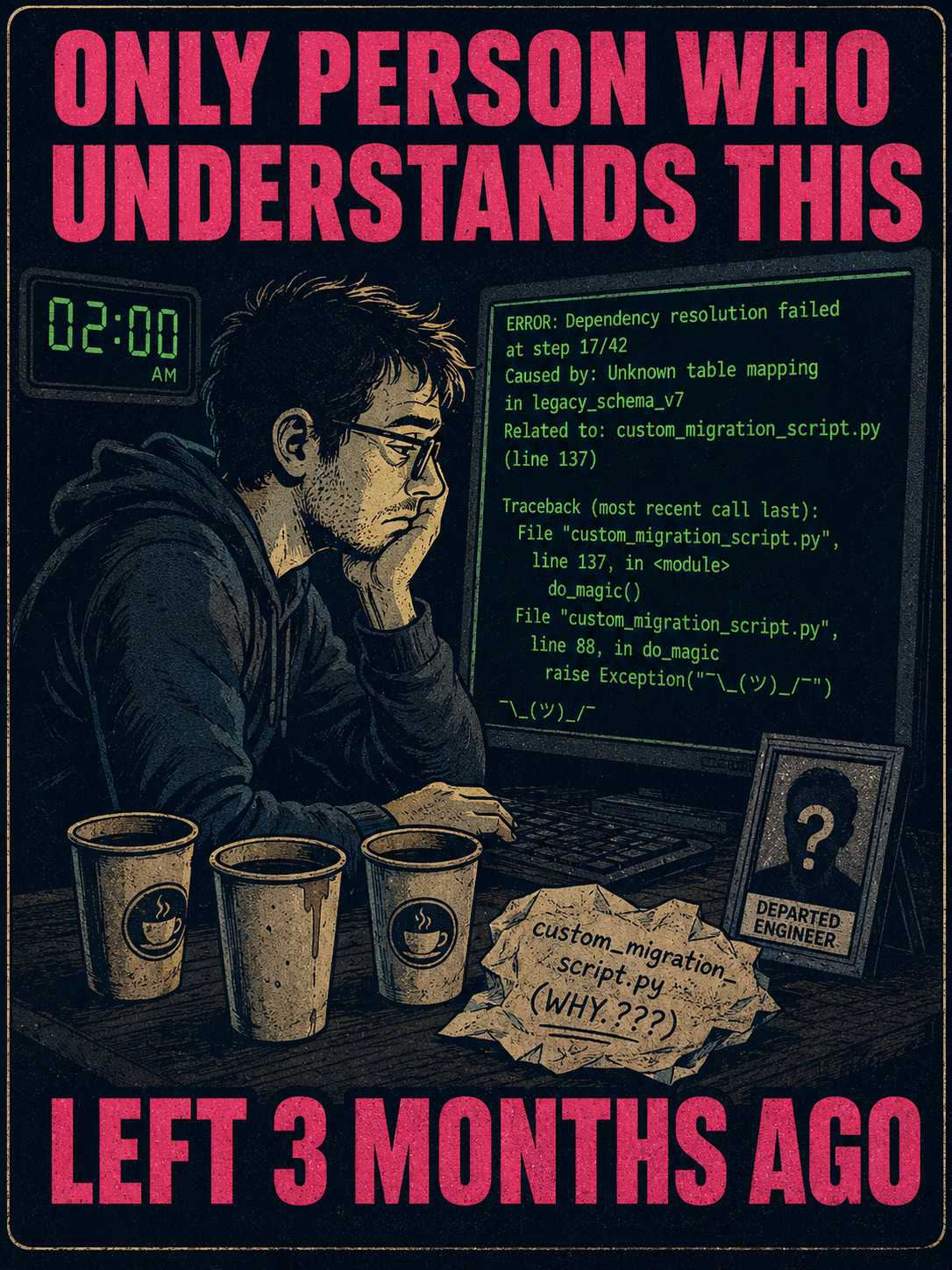
This is the real cost of knowledge loss. When senior engineers leave, they don't just take their technical skills. They take the tribal context, the historical rationale for strange architectural choices, and the mental map of where the landmines are buried. The cost doesn't show up in HR metrics. It shows up in extended incident response times, slower onboarding for replacements, and architectural drift.
We tend to treat this as a failure of documentation discipline. It isn't. The knowledge exists in their heads because that is where it has been most useful. Formal documentation has never kept pace with the speed of development.
We know this is a problem, but our solutions are mostly performative.
The Illusion of the Exit Interview
We try to catch the knowledge on the way out.
Exit interviews are too late and too shallow. Knowledge transfer sessions in the final two weeks are rushed. Shadowing only works if you have the luxury of time and the replacement is already hired (they rarely are).
Wiki pages written under deadline pressure during a transition period are incomplete. They become artifacts that look like documentation but lack the context that makes documentation useful. They capture the "what," but they miss the "why."
Research from McGill University found that teams dealing with knowledge loss from departures typically fall into one of four patterns: they feel disoriented and make guesses, they rely on documentation that is hard to find or insufficient, they ask around hoping someone else was involved, or they recreate the knowledge from scratch. Three of those four are expensive. The fourth is just embarrassing.
These approaches capture some value, but they don't solve the structural issue. The knowledge is still fragile. It is still concentrated.
Making Capture a Byproduct, Not a Chore
The goal is not to document everything.
Trying to document everything is a recipe for burnout and abandoned wiki gardens. The goal is to extract and preserve the high-value context that would otherwise leave with the person.
This requires continuous knowledge capture as part of the development workflow itself. It cannot be a separate task that competes for time. Senior engineers are often the least likely to document because they are the most in-demand for high-priority work. Asking them to spend time writing documentation feels like trading immediate value for hypothetical future value. The guilt trip doesn't work. The incentive structure is wrong.
We have to reduce the friction.
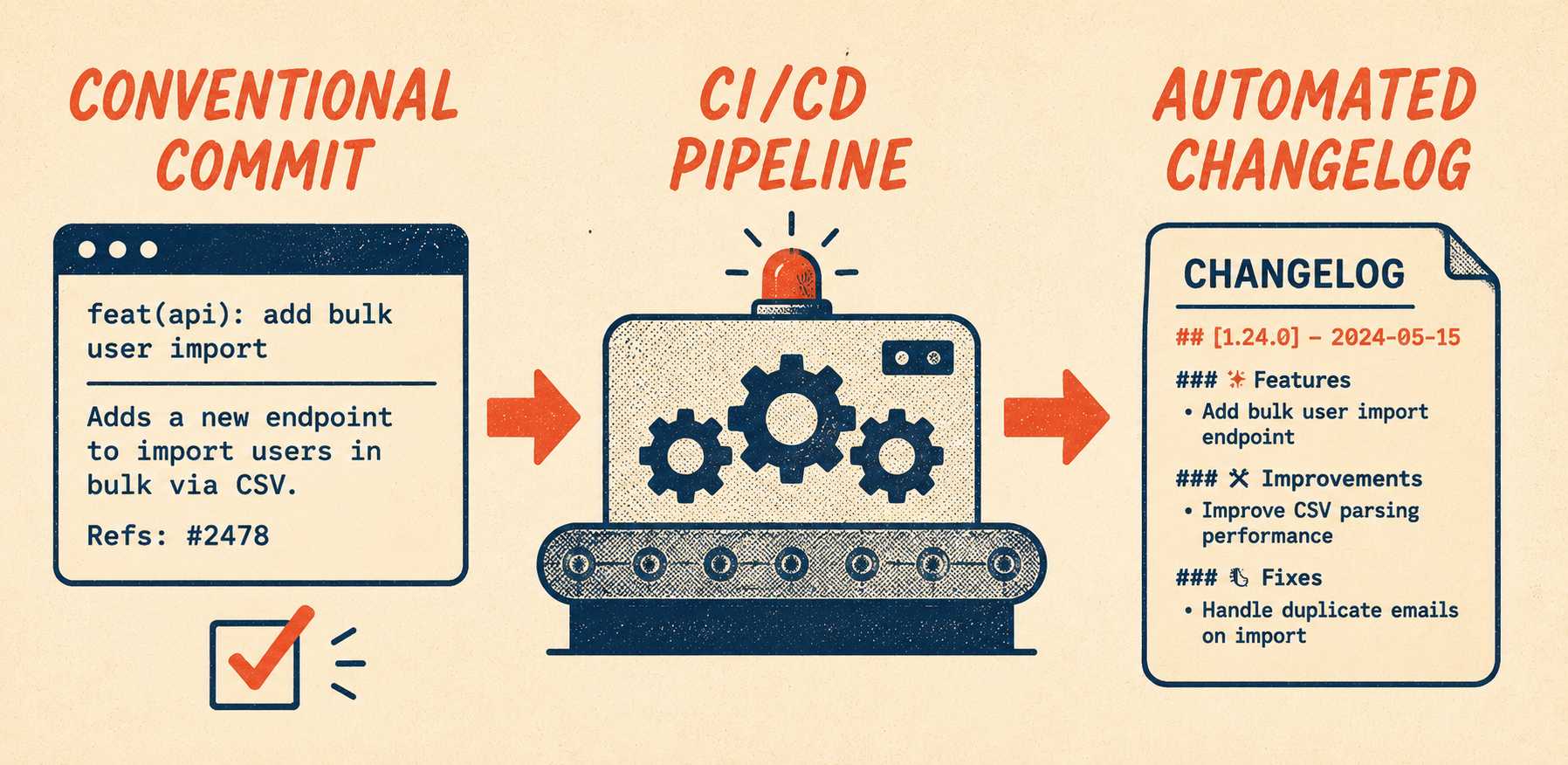
Code review comments that explain the "why" behind decisions are documentation. Architecture Decision Records (ADRs) for non-trivial changes are documentation. Automated release notes and changelogs that create a searchable record of what changed and why are documentation. Recorded technical deep-dives that can be indexed and referenced later are documentation.
The pattern is the same in each case: make knowledge capture a byproduct of work that is already happening, not a separate task that competes for time. If documentation can be generated from the work they are already doing—commit messages, PR descriptions, design docs, release workflows—the marginal cost drops dramatically.
Identifying What Actually Matters
Not all institutional knowledge is equally valuable.
If a senior engineer left tomorrow, what would we be unable to reconstruct from existing artifacts? That is the test.
System-critical knowledge that affects reliability or security is at the top of the list. Architectural context that prevents costly mistakes comes next. Customer-specific edge cases that aren't obvious from the code, and cross-system dependencies that only become visible during incidents, round out the picture.
The Ministry of Justice Digital team calls these people "linchpins." When a linchpin takes time off, the team stalls or has to divert focus. When they leave, teams panic. The goal isn't to eliminate the linchpin—it's to reduce the fragility that comes with concentration.
Distributing the Load
Documentation is only part of the answer. The other part is redundancy.
We need to distribute critical knowledge across multiple people while it is still accessible. Rotate on-call responsibilities so more engineers develop familiarity with systems under pressure. Involve multiple engineers in architecture discussions, not just the person who built the thing. Create opportunities for knowledge transfer during normal operations, not just during exit transitions.
The goal is to make knowledge less fragile by making it less concentrated. A team where three people understand a critical system is dramatically more resilient than one where only one person does—and the path from one to three doesn't require a formal training program. It requires deliberate pairing, rotation, and inclusion in the conversations that matter.
We shouldn't wait for the resignation letter to realize what we're missing. Identify the single points of failure, map the critical knowledge they hold, and implement low-friction capture tools that work within existing workflows.
When engineering teams are already documenting changes as part of their release process, Doc Holiday generates structured, searchable records of what changed and why—exactly the kind of artifact that survives a departure. A technical lead or documentation owner can then validate and enrich that output with additional context, creating a living record that compounds in value over time rather than decaying in a wiki no one reads.