How to Write Release Notes for a Product-led Growth Company


A free-tier user logs in on a Tuesday morning and notices a subtle change in the navigation bar. They click it. A modal pops up explaining that the reporting dashboard has been completely rebuilt. The user does not care about the rebuild; they care that the modal is blocking their work. They dismiss it, ignore the new dashboard, and go back to what they were doing.
This happens thousands of times a day in product-led growth companies. Engineering teams ship features designed to drive retention and expansion. Users ignore them. Support teams field questions about why things moved, while product managers stare at adoption metrics that flatline at a median of 6.4%.
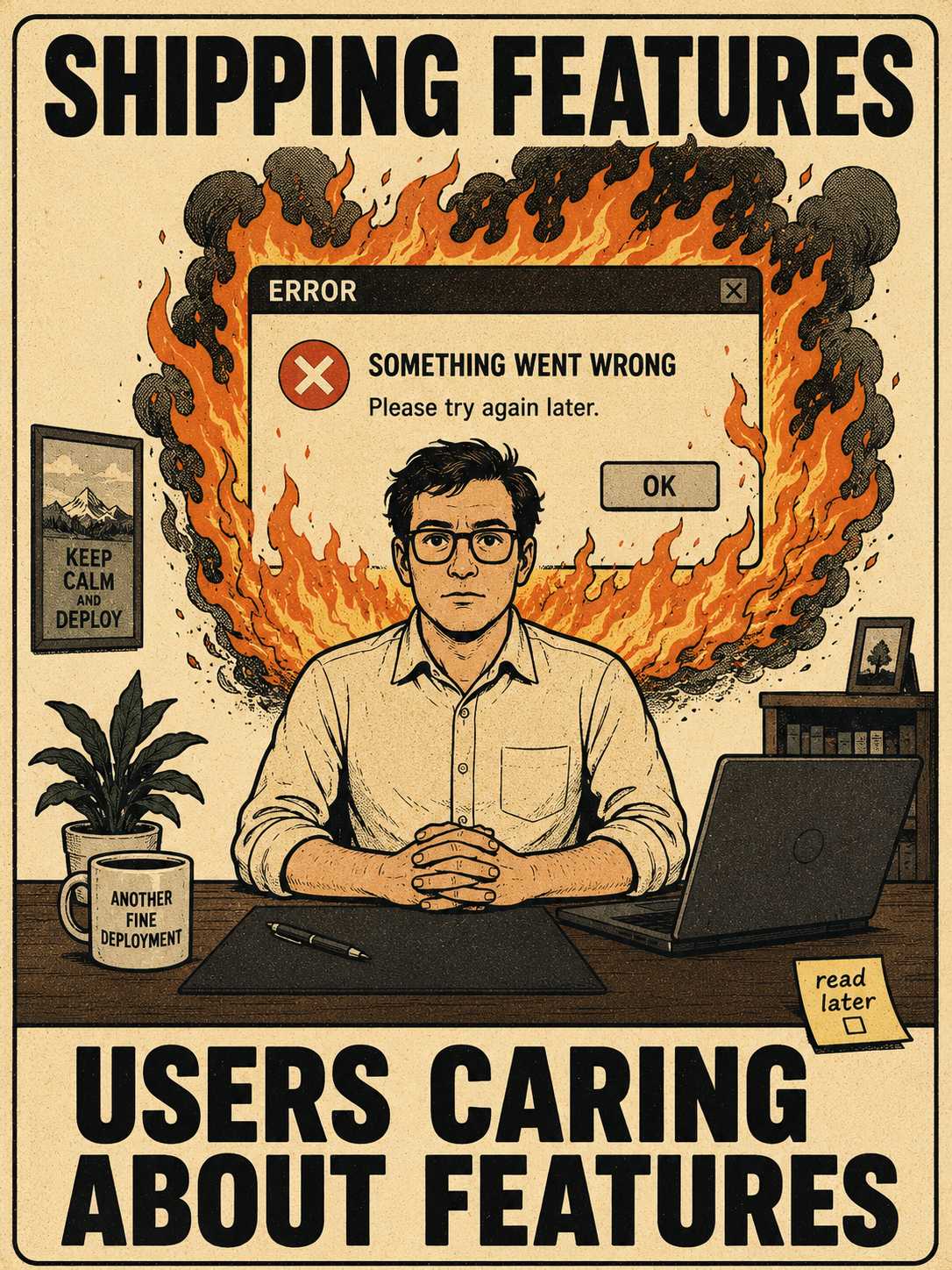
The problem is not the feature. The problem is the assumption that users will figure out why they should care.
In a sales-led company, release notes go to an account manager who contextualizes the changes for the customer. In a PLG company, release notes go directly to tens of thousands of self-serve users who have no account team, no onboarding call, and no mental model of the product roadmap. They need to know what changed, why it matters to their workflow, and what they should do next. Most release notes only answer the first question. That gap costs you engagement.
Release Notes Are Growth Infrastructure
The instinct to treat release notes as a compliance exercise is understandable. Engineering ships. Someone writes "Bug fixes and performance improvements." The Jira epic closes. Everyone moves on.
The problem is that in a PLG motion, there is no account team to fill the gap. No one is going to call your users and explain that the new dashboard feature will save them forty-five minutes a week. The release note is the call. If it reads like a commit log, the opportunity is gone.
Every release is a chance to re-engage dormant users, drive feature adoption, reduce support load, and reinforce the value narrative that brought users in the first place. Customers who adopt new features regularly are 31% less likely to churn than those who don't. That is not a marginal improvement. That is the difference between a cohort that renews and one that quietly disappears.
Release notes are the primary vehicle for communicating ongoing value to users who are past onboarding but not yet power users. They re-surface the product for users who have gone quiet. They reduce support volume by preemptively explaining changes — proactive changelog updates are one of the most direct ways to eliminate the "is this bug fixed yet?" category of tickets entirely. They create hooks for upsell by showcasing features tied to paid tiers.
A well-written release note in a PLG context is not a changelog entry. It is a micro-campaign.
The Five Questions Every Update Must Answer
A release note that actually drives adoption does not start with the code. It starts with the user's workflow. Each entry should answer five specific questions, and the order matters.
What changed? This is the baseline, but the translation matters enormously. "Refactored the data ingestion pipeline to support concurrent webhooks" is accurate. It is also practically useless to the person who just wants to know why their dashboard now updates in real-time instead of on a five-minute delay. The engineering description belongs in a commit message. The user-facing description belongs in the release note.
Who should care? Not every release is for every user. A free-tier user does not care about enterprise SSO. A power user does not need hand-holding on a UI refresh. Segmented campaigns achieve 30 to 50 percent higher click-through rates than unsegmented ones. Even basic segmentation by plan type reduces noise and improves relevance. If you are announcing a feature that only matters to admins, say so in the first sentence.
Why does this matter to their workflow? Connect the feature to a user outcome, not a technical capability. If you introduce a new integration, do not list the API endpoints. Explain that users can now pull their customer data directly into their CRM without manually exporting CSV files every Friday. The feature is the mechanism. The outcome is the message.
What should they do next? Include a clear call to action. Try it now. Watch a demo. Upgrade to unlock it. If the feature requires setup, tell them exactly where to click first. A release note without a CTA is a press release nobody asked for.
Where can they learn more? Link to docs, video walkthroughs, or help center articles that reduce friction. The release note is the hook; the documentation is the safety net. Users who want to go deeper should never have to search for it.
The five-question framework is not a template to fill out mechanically. It is a discipline for thinking about the user before writing a single word.
Cadence, Format, and Where In-App Wins
Should you publish every change or batch them? The answer depends on your shipping velocity and user sophistication, and there is no universal right answer.
High-velocity PLG products often benefit from weekly digests that group minor changes and highlight one or two major updates. This prevents notification fatigue while maintaining a visible cadence of improvement. Lower-velocity products can publish per release but should still apply the five-question framework to every entry, regardless of how small the change seems.
Format matters as much as frequency. In-app notifications, email digests, dedicated changelog pages, and Slack or Discord announcements all work in PLG contexts. But in-app usually wins because it reaches users in the moment of product usage, when the message is most relevant. Contextual tooltips and well-placed modals drive 3 to 5 times higher feature adoption compared to email announcements alone. Email still has a role — particularly for re-engaging users who haven't logged in recently — but it should amplify in-app communication, not replace it.
The companies with the best changelogs treat them as a consistent habit, not an occasional event. As Releasepad's analysis of top SaaS changelog practices shows, Linear gives every entry a dedicated page with a clear headline describing the user benefit, a brief explanation of the change, and a visual. Figma leans on embedded videos and before-and-after comparisons. Loom writes release notes that sound like they came from a friendly teammate, not a documentation team. The format differs. The discipline is the same: lead with user impact, make it visual when you can, and keep the tone consistent with the product's personality.
Segmentation Is Not Optional at Scale
One-size-fits-all release notes fail in PLG because the user base is too diverse to address with a single message.
A free-tier user exploring the product for the first time has completely different needs from a power user who has been on the platform for two years. An admin configuring SSO does not care about the same update as an analyst building dashboards. Sending both the same release note is not neutral — it actively trains users to ignore your communications.
Segmentation does not require complex infrastructure. Even basic segmentation by plan type significantly improves engagement. Tier-based segmentation lets you use release notes as an upsell vehicle: a note that says "This feature is available on Pro and above" tells free users exactly what they would gain by upgrading, without requiring a sales conversation. That is a PLG expansion motion embedded directly in the changelog.
Role-based segmentation is equally valuable. If a new feature is primarily relevant to team admins, targeting that segment specifically means the note lands with the person who can actually act on it. The admin enables the feature. The team benefits. The release note did its job.
For products with usage data, behavioral segmentation is even more powerful. Users who have never touched the reporting module probably do not need a detailed note about a new chart type. Users who open reports every day absolutely do. The more precisely you can match the message to the user's actual behavior, the more the release note functions as a personalized nudge rather than broadcast noise.
The Translation Layer Nobody Owns
Writing good release notes at PLG scale is hard because engineering teams ship fast and often lack the bandwidth or skill to translate technical changes into user-facing value narratives. This is where most PLG companies break down.
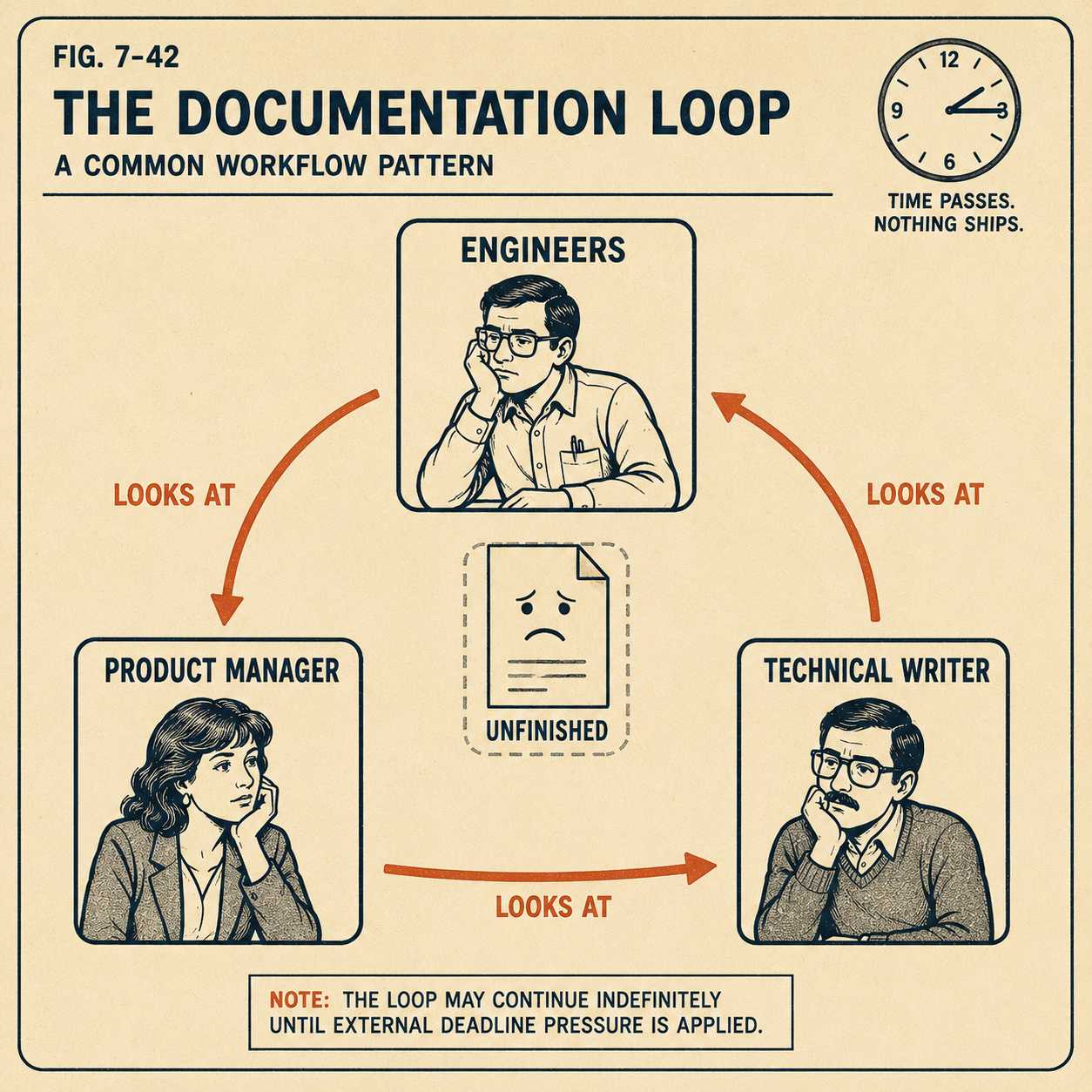
The product team knows what shipped. The marketing team knows how to message value. But nobody owns the translation layer, so release notes either do not get written or they read like Git commit messages. The pattern is predictable: a sprint ends, someone asks who is handling release notes, the engineers look at the product manager, the product manager looks at the technical writer, and eventually someone writes something that technically describes the change without explaining why anyone should care.
Successful PLG companies solve this through structure. Some use dedicated release communications owners — a role that sits between product and marketing and is accountable for the translation. Others use templates that enforce the five-question framework, making it impossible to publish a note that does not answer "who should care" and "what should they do next." Others use automated systems that generate first drafts from engineering artifacts and route them for human review and refinement.
The last approach is where the leverage is. When AI generates first drafts directly from code commits, and a writer reviews them in a centralized dashboard, the translation layer stops being a bottleneck. Edge cases get flagged. Patterns feed back to improve the output over time. The process becomes scalable without becoming impersonal.
The key word is managed. Unmanaged AI produces drafts that are technically plausible but contextually wrong — it can describe what changed without understanding why it matters to a specific user segment. Managed AI, with human review built into the workflow, produces drafts that are accurate and fast, and that get better with each release cycle.
That is the operational model Doc Holiday is built around: AI generates output directly from engineering workflows, and the structure for validation, refinement, and publishing is already there. For PLG teams that are shipping fast and need release notes to function as growth infrastructure rather than an afterthought, the bottleneck is almost never writing skill. It is process. Fix the process, and the writing follows.