How to Communicate API Changes to Enterprise Partners


It happens quietly at first. A developer on your team notices that an old endpoint is slowing down the database. They refactor the query, tighten the validation logic, and deploy the update. The tests pass. The build is green.
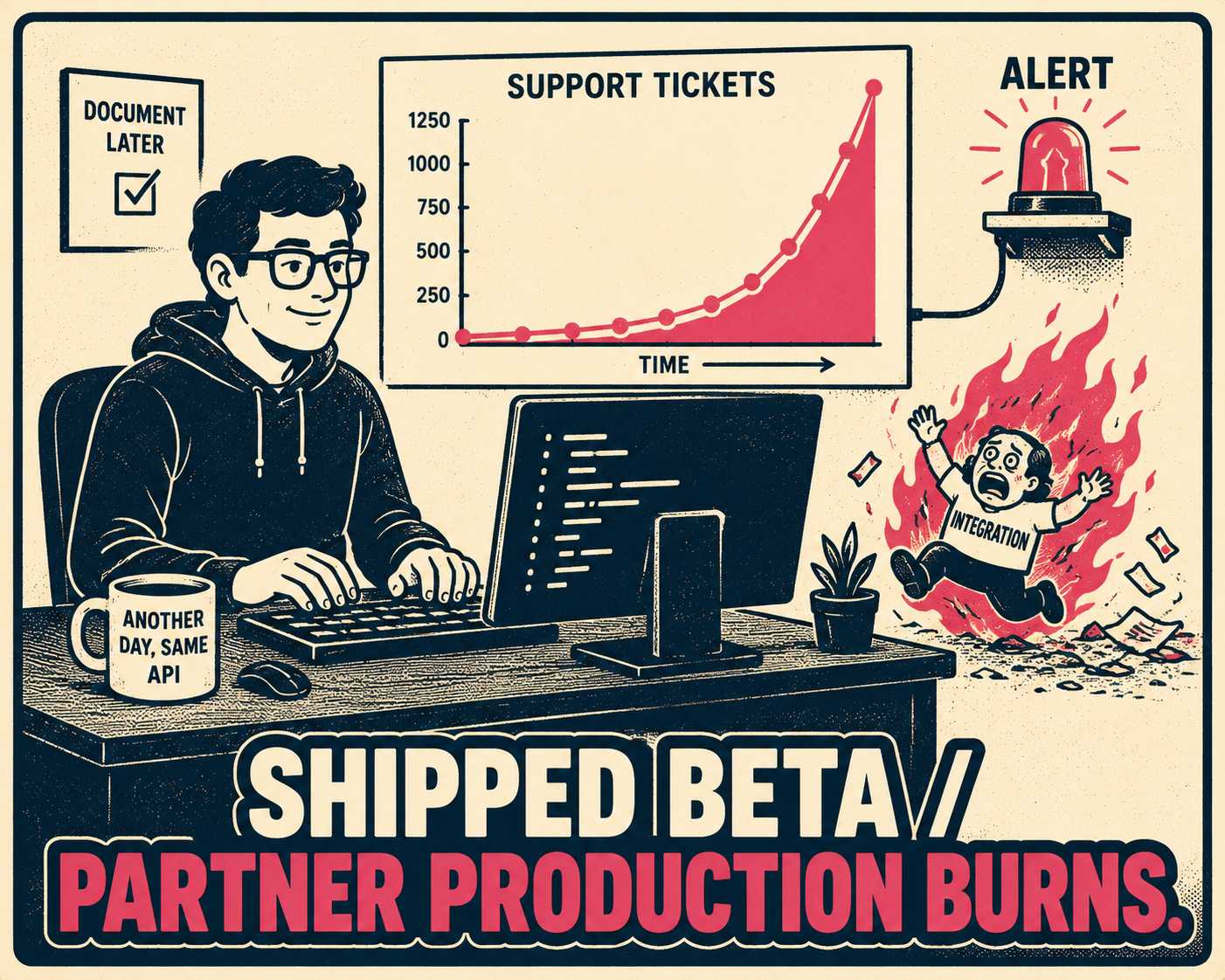
Then, three hours later, the support queue lights up. A major enterprise partner's integration is failing. They aren't getting the new validation error; their system is just timing out because it doesn't know how to handle the new response format. Their production infrastructure is broken, and they are losing money by the minute.
This is the reality of building APIs for enterprise partners: when you change your API, you are changing their infrastructure. The threshold for acceptable communication is much higher than internal release notes. Poor communication doesn't just frustrate developers; it breaks production systems, costs engineering time, and erodes trust at the contract level, as CMU research on the cost of breaking changes has documented.
If you've been handed responsibility for partner communications after a bad rollout, you don't need principles. You need a repeatable system. Here is the operational playbook for communicating API changes without breaking trust.
The Timing and Notice Windows
How much advance notice you give depends entirely on the type of change. The most common mistake is treating all changes equally, or worse, assuming that a change is minor just because it took an hour to code.
For breaking changes (anything that removes an endpoint, changes a response structure, or adds a required parameter), enterprise partners need a minimum of 60 to 90 days. Some platforms, like Twilio, provide a full year's notice. This isn't because the migration takes a year to build. It's because enterprise teams plan their engineering roadmaps quarters in advance. If you give them 30 days, you are forcing them to drop planned work to fix an integration that was working perfectly yesterday.
Non-breaking but behavior-altering changes (like stricter rate limits or modified pagination) still require 30+ days. Additive changes (new endpoints or optional parameters) can be announced closer to release, but the documentation must be ready on day one.
The Channel Strategy
Email is not enough. Relying solely on email guarantees that the person who built the integration three years ago will get the notice, but the team currently maintaining it will not.
Enterprise partners require a multi-channel approach. You need direct email to technical contacts, a dedicated changelog or partner portal, and in-app notifications if your platform has a dashboard. For your largest integrators, you need a Slack channel or regular sync calls.
The goal is redundancy. Engineers don't all check the same place, and high-priority changes get lost in general announcement noise. If a partner misses a breaking change notice, it's not their fault for not reading the email; it's your fault for not ensuring the message was received.
The Content Requirements
A good change announcement answers five specific questions. It doesn't just say "what changed." It explains "why it changed," "what breaks if you don't act," "what action is required," "code examples showing before/after," and "exactly when this goes live."
The difference between a breaking change announcement and an enhancement announcement is structural. A breaking change announcement requires a migration path, a deprecation timeline, and often a compatibility shim. An enhancement announcement requires clear documentation of the new behavior and opt-in instructions if applicable.
If you cannot provide a clear "before and after" code example, the change is not ready to be announced.
The Versioning and Deprecation Policy
If you don't have an API versioning strategy, you need one. A versioning strategy lets partners upgrade on their timeline while giving you room to evolve the platform.
Stripe, for example, uses date-based versioning. When a partner makes their first API call, they are pinned to that version. They can upgrade when they are ready, but they are never forced to accept a breaking change they haven't tested.
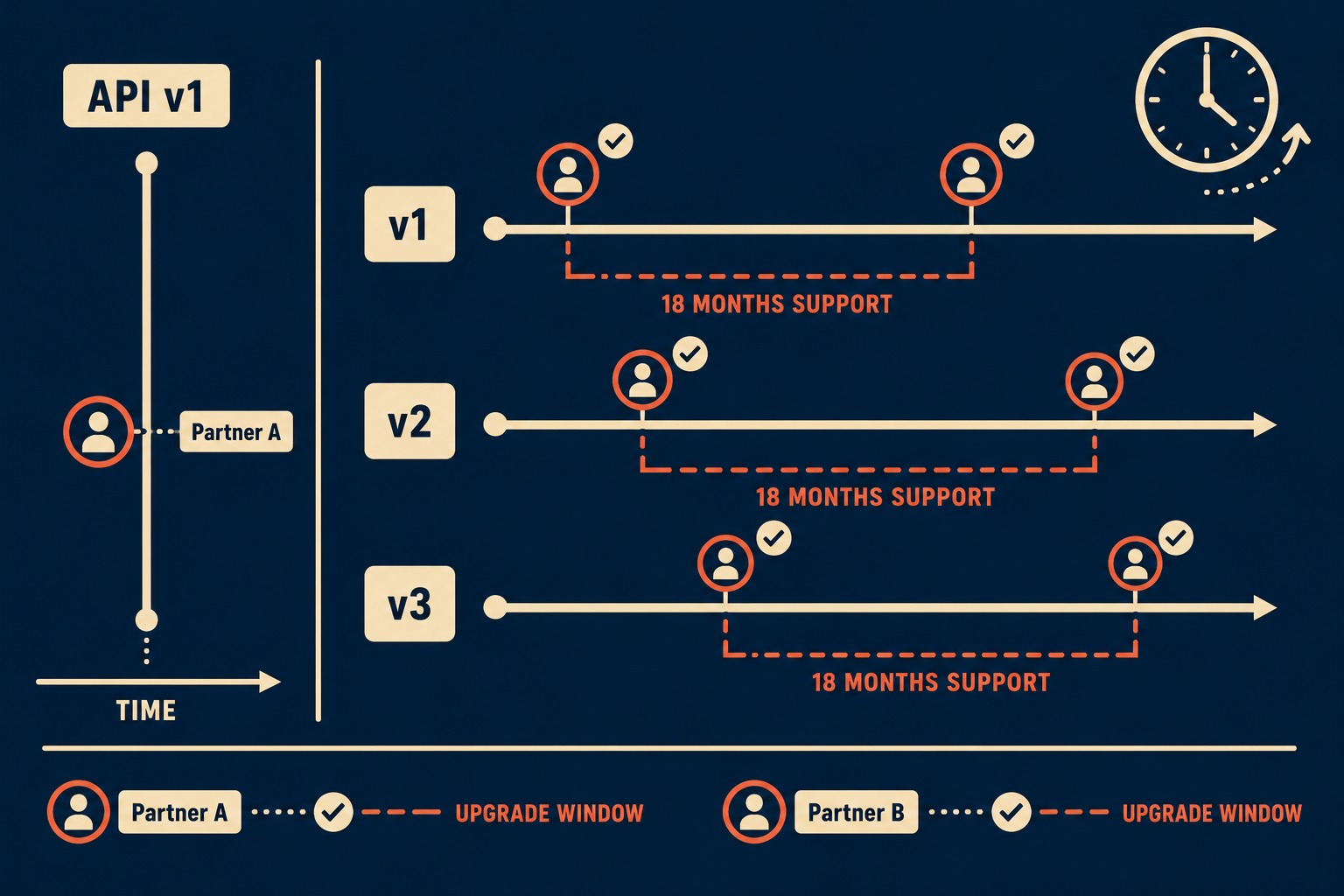
Your deprecation policy must cover version support windows and how to communicate end-of-life timelines. "We'll support the old version forever" is not a viable strategy at scale. It creates technical debt that eventually slows down all feature development. A standard enterprise window is 18 to 24 months of support for an old version after a new one is released.
The Documentation Synchronization
The change announcement and the updated API documentation must go live together. If partners get the email but the docs still show the old behavior, you've failed.
This is harder than it sounds. Research shows that documentation drift, where the code changes but the documentation doesn't, is a primary cause of integration failures. You have to coordinate documentation updates, example code, SDKs, and sandbox environments so everything reflects the new reality on launch day.
If your documentation is out of sync with your release, your partners will build their migrations based on incorrect assumptions, and their integrations will break anyway.
The Feedback and Validation Loops
Enterprise partners should not learn about breaking changes from a launch email. You need to build a preview or beta program where your largest partners test changes in a sandbox before production release.
This validation loop gives you time to react. If a major partner says a change will break their integration in a way you didn't anticipate, you have the option to delay, redesign, or proceed with a longer deprecation timeline. It shifts the dynamic from a vendor dictating terms to a partnership navigating a shared technical challenge.
The Emergency Breaking Change
Sometimes you have to break things on short notice. A security vulnerability is discovered, a legal requirement changes, or a critical infrastructure component fails.
When communicating an emergency breaking change, acknowledge the disruption immediately. Explain why it's non-negotiable. Provide a migration path, even if it's imperfect, and assign a dedicated support contact to help affected partners through it.
The worst thing you can do during an emergency change is go silent after the announcement. You have broken their system; you must be present to help them fix it.
The Operational Reality
Most of this communication burden comes down to producing accurate, partner-ready documentation for every release. You need API references, migration guides, and changelogs that explain not just what changed, but what action is required.
This is where Doc Holiday fits into the workflow. It can generate initial output from your engineering workflow, which your team then validates and tailors before anything goes to partners. It doesn't replace the judgment call about whether a change is breaking, and it doesn't replace the relationship management with your top five integrators. But it gives your platform team or senior technical writer the structure to review the documentation, tailor it to partner needs, and route it through the right channels. It removes the bottleneck of manually producing and synchronizing the documentation every partner depends on — without removing the human review that makes that documentation trustworthy.