How to Write Sunset Documentation Without Losing Your Customers


You hit send on the email. The product is shutting down. You have given them six months. You have offered a migration path. You have done everything right.
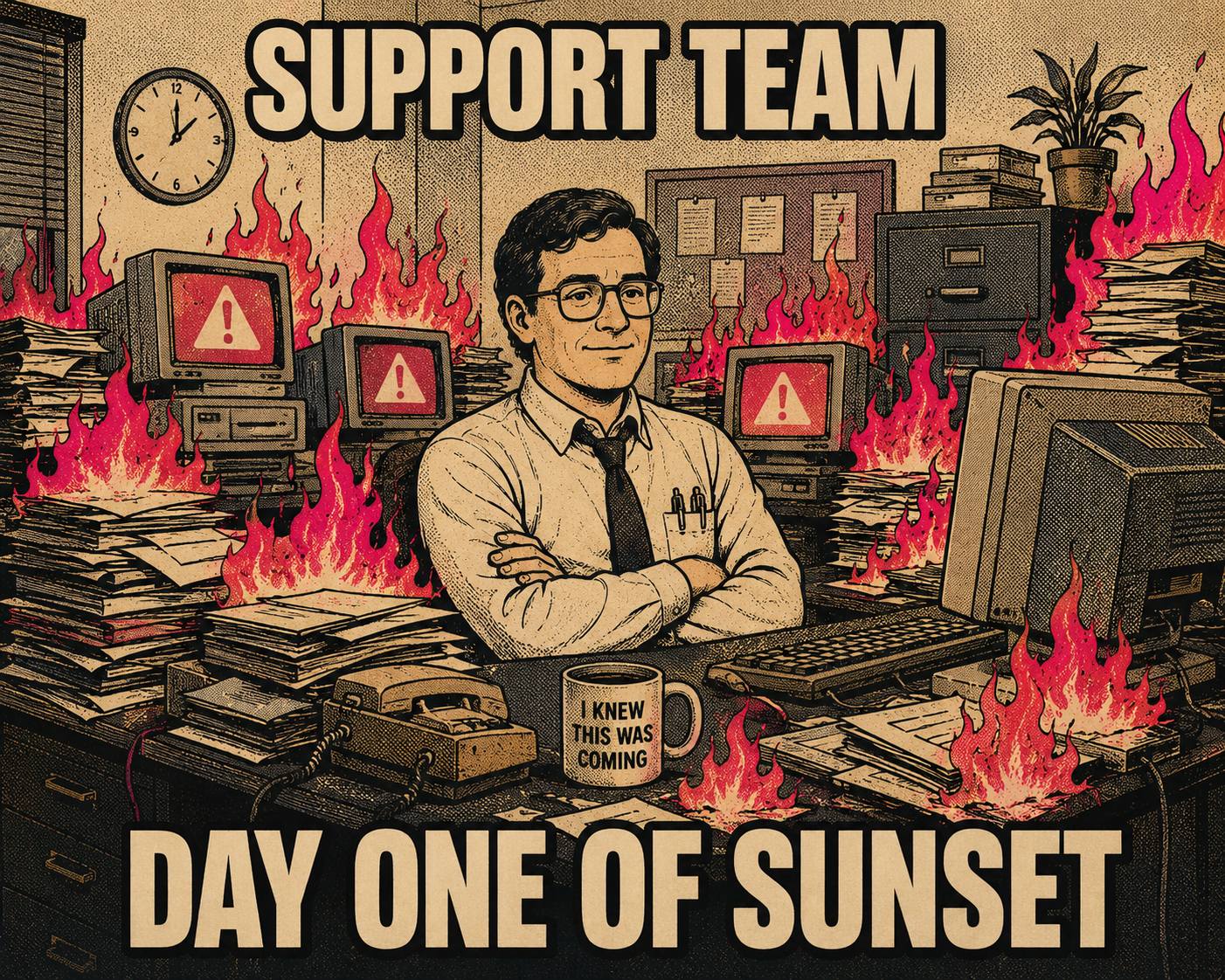
And then the support queue melts down.
Sales reps are getting angry calls from high-value accounts who feel blindsided. Users are posting on Hacker News about how they can never trust your company again. The engineering team is fielding frantic questions about API mapping that they thought were answered in the FAQ.
Sunsetting a product is a high-stakes communication problem that happens to involve technical work. When you tell customers their product is dying, you are not trying to make them happy. You are trying to make them feel informed, respected, and capable of acting.
Botched end-of-life (EOL) communication has measurable business consequences. It drives up support costs, hands your competitors an easy win, and directly impacts churn across your entire portfolio. Acquiring a new customer costs significantly more than retaining an existing one, and poor communication during a transition is a fast track to losing them entirely.
It requires a structured approach.
The Anatomy of a Bad Goodbye
Vague language backfires. Overly apologetic language backfires.
When you tell a customer a product is going away, they do not want corporate hand-wringing. They want certainty. They need to know exactly what is happening, when it is happening, and what they need to do next.
The initial notice must include specific dates. It must detail the affected features. It must outline the support windows and provide clear instructions for data export. And it should come from product leadership, not just a generic support address. Pragmatic Institute's product end-of-life framework holds that sunset communication must address all customer touchpoints deliberately, rather than treating the shutdown as a messy footnote.
If you are shutting down an API, for instance, you need to be explicit about the timeline. The Internet Engineering Task Force even formalized the Sunset HTTP header to signal when a URI will become unresponsive. That is how seriously the engineering community takes this.
Pacing the Inevitable
You cannot send one email and assume the job is done.
You also cannot email them every week and cause fatigue.
The communication cadence needs to be deliberate. A milestone-based approach works best. Ninety days out, you send the initial notice. Thirty days out, you send a reminder focused on migration. The final week is for urgent, tactical alerts.
Each message has a specific job. The first is awareness. The second is action. The third is a final warning. Phasing out a product gradually, rather than abruptly pulling the plug, prevents customers from feeling blindsided and gives them time to adjust their own internal operations.
You have to balance the urgency of the shutdown with the reality of your customers' internal processes. Technical migrations involve procurement, development cycles, and internal approvals. If you do not give them enough runway, they will not migrate to your new product. They will migrate to a competitor.
Building the Bridge to Somewhere Else
If you have a replacement product, you have to build the bridge.
This means feature parity tables. It means migration guides. It means API mapping and data transfer tooling. You have to make moving to the new product easier than evaluating a competitor. Sentry's SDK deprecation playbook mandates that every deprecation warning include a replacement API, a code example of the migration, and copy-pastable documentation. Stripe's versioning infrastructure is designed around the same principle: API upgrades should be lightweight and should never trap users on old versions without a clear path forward.
If there is no replacement, you still have an obligation. Provide export documentation. Data portability is a fundamental right under GDPR, and customers expect to be able to retrieve their data in a structured, machine-readable format. Make it easy for them to get their data out.
Recommend credible alternatives. It does not make you look weak. It makes you look like a partner who cares about their success even when you can no longer serve them.
Preparing the Front Lines
Your support team is about to get hit.
They will see a surge in edge-case questions. They will deal with angry users. They need to be prepared.
Document the known migration blockers before the announcement goes out. Triage high-value customers who need custom assistance. Build a dedicated FAQ, and update it as real questions come in.
If your support team is scrambling for answers, your customers will feel the chaos. Poor documentation directly drives churn, especially during critical transition periods where customers are already deciding whether to stay or leave.
The Single Source of Truth Problem
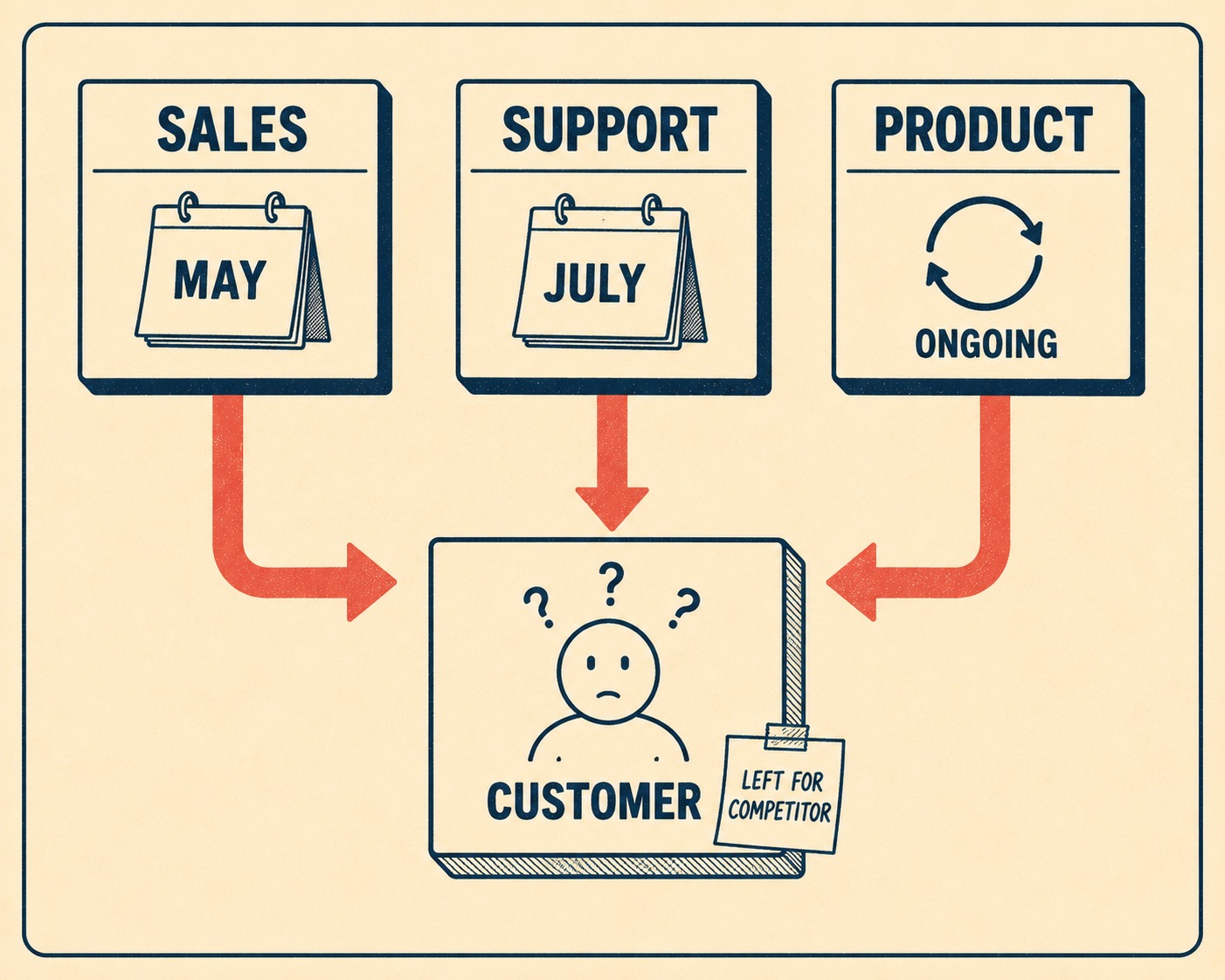
Sunset communication breaks down when sales, support, and product are not saying the same thing.
A customer gets an email saying the API shuts down in May. Their account manager tells them they can get an extension until July. The support docs still say the product is fully supported.
This is a disaster.
You need a single source of truth. All teams must reference the same timelines. Responses to common questions must be scripted. Contradictory information destroys trust faster than the shutdown itself.
Trust is fragile. Customers who feel disrespected will churn, and they will take their future business elsewhere. They will also post warnings in public communities, damaging your reputation. When a product is decommissioned without a clear transition plan, it erodes brand trust, and rebuilding that trust is far more difficult than managing the sunset correctly the first time. Microsoft's multi-year transition from Skype to Teams shows how providing clear choices (migrate or export) can move hundreds of millions of users without destroying the brand relationship.
Acknowledge the inconvenience. Do not over-apologize. Provide agency. Treat this as a trust preservation exercise.
Keeping all this communication straight is an operational nightmare. Timelines shift. Support windows get extended. Manually updating the FAQ, the email templates, and the in-app messaging across different systems is a failure mode waiting to happen.
This is where automation matters. Doc Holiday generates the core EOL deliverables (notices, FAQs, migration references, and support scripts) directly from your engineering workflows. It provides the structure to keep all versions aligned as timelines change. AI drafts the updates, humans validate them in a central dashboard, and the system ensures consistency across every channel. You get to focus on managing your high-value customers, instead of chasing outdated copy across five different tools.