How to Write Release Notes for a White-label Product


You ship a new API endpoint. The deployment goes perfectly. The code is clean, the tests pass, and the feature is live. You hit send on the release notes.
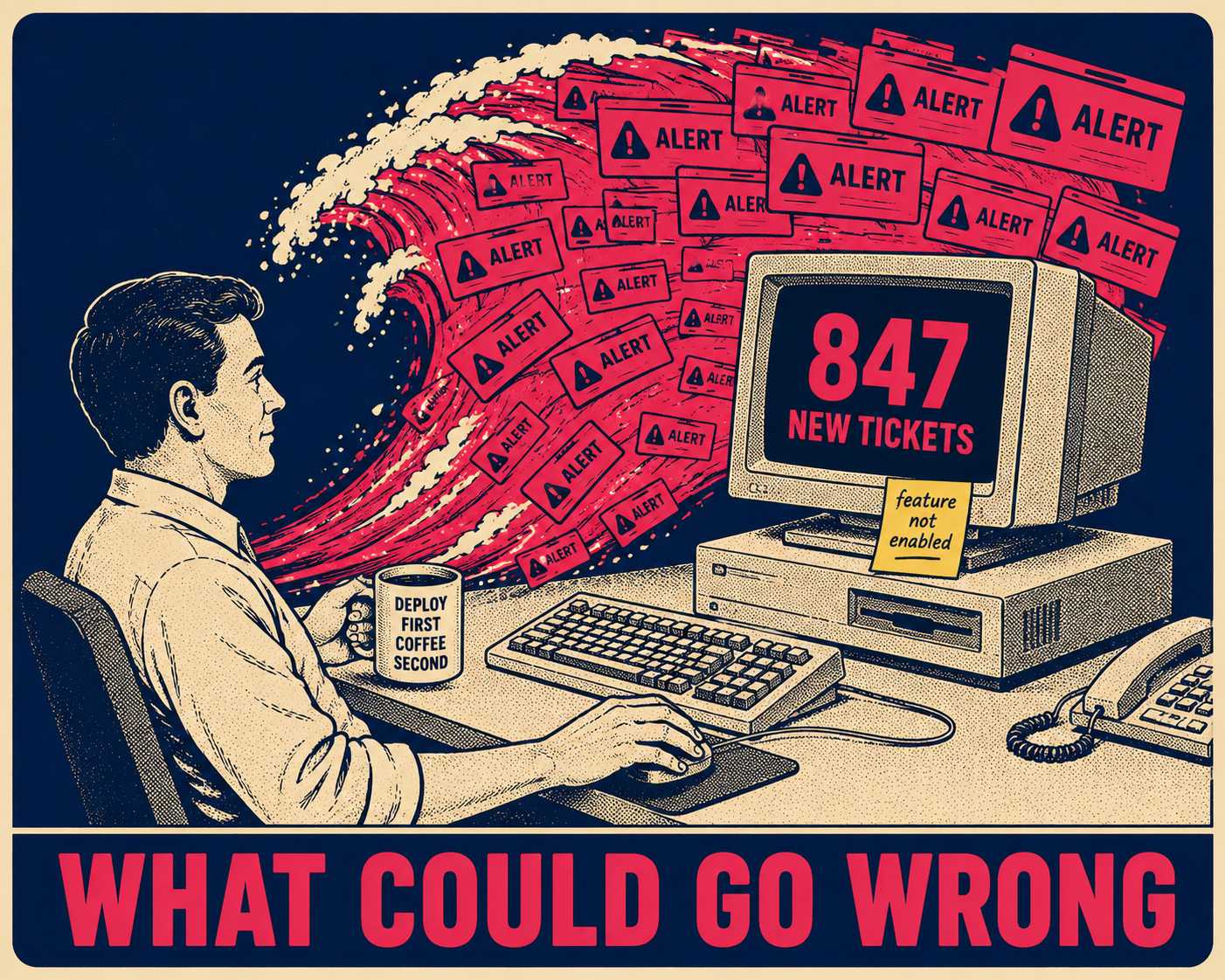
Two hours later, your support queue is on fire.
The problem isn't the code. The problem is that you provide white-label software to 200 different customers. Only 40% of those customers have the new module enabled. You just blasted a generic update to everyone, and now 60% of your recipients are confused, annoyed, or submitting support tickets asking why they can't find the feature you just told them they have.
This is the core operational challenge of white-label software. There is a fundamental disconnect between what you ship and what gets communicated.
A single release might affect some customers but not others. Feature flags, entitlement tiers, and custom configurations mean that your product is not a monolith. Not every customer sees the same software.
Writing one set of release notes and sending them to everyone creates confusion, support load, and brand misalignment. If you manually customize notes for every customer, you are drowning in repetitive work.
The rest of this article is about building a system that handles that without hiring three more people to rewrite the same update 50 times.
The Megaphone Problem
Standard release note templates break when you have a 1-to-many relationship between the product and the customer instances.
When you build a standard SaaS product, your release notes are a megaphone. You stand on a box and announce what changed. Everyone hears the same thing, because everyone is looking at the same product.
White-label products are different. Your customers rebrand and resell the platform under their own name. They have different feature sets enabled. They operate under different brand guidelines.
If you send a generic update, you break the illusion. If you send a highly technical update to a customer who requires executive summaries, you violate their contractual expectations.
Research on software documentation consistently shows that vague or imprecise release notes lead to inadequate understanding. Users need to know the implications of a change. If they have to translate your internal implementation into their own workflow, they will give up and file a ticket instead.
Industry benchmarks suggest a single B2B SaaS support ticket costs between $25 and $35 to resolve. If your generic release notes confuse 1,000 customers, that is $30,000 in support costs before anyone has even looked at the new feature.
Tagging the Audience
Audience segmentation is the foundation of targeted communication. If you don't have a system that tracks which customers can see which features, your release notes are guesswork.
You need to structure your customer base. This means tagging customers by entitlement tier, enabled modules, deployment model (SaaS vs. on-prem), and custom feature flags.
Feature flags are not just for continuous delivery. They are the core of a modern entitlement management system. They allow you to create special access levels or variable experiences based on the customer's context.
When your communication system is tied to your feature flag and entitlement data, you stop guessing. You know exactly who has the new API endpoint enabled, and you only send the update to them.
The Brand Voice Complication
White-label customers often have contractual requirements about how communication is presented.
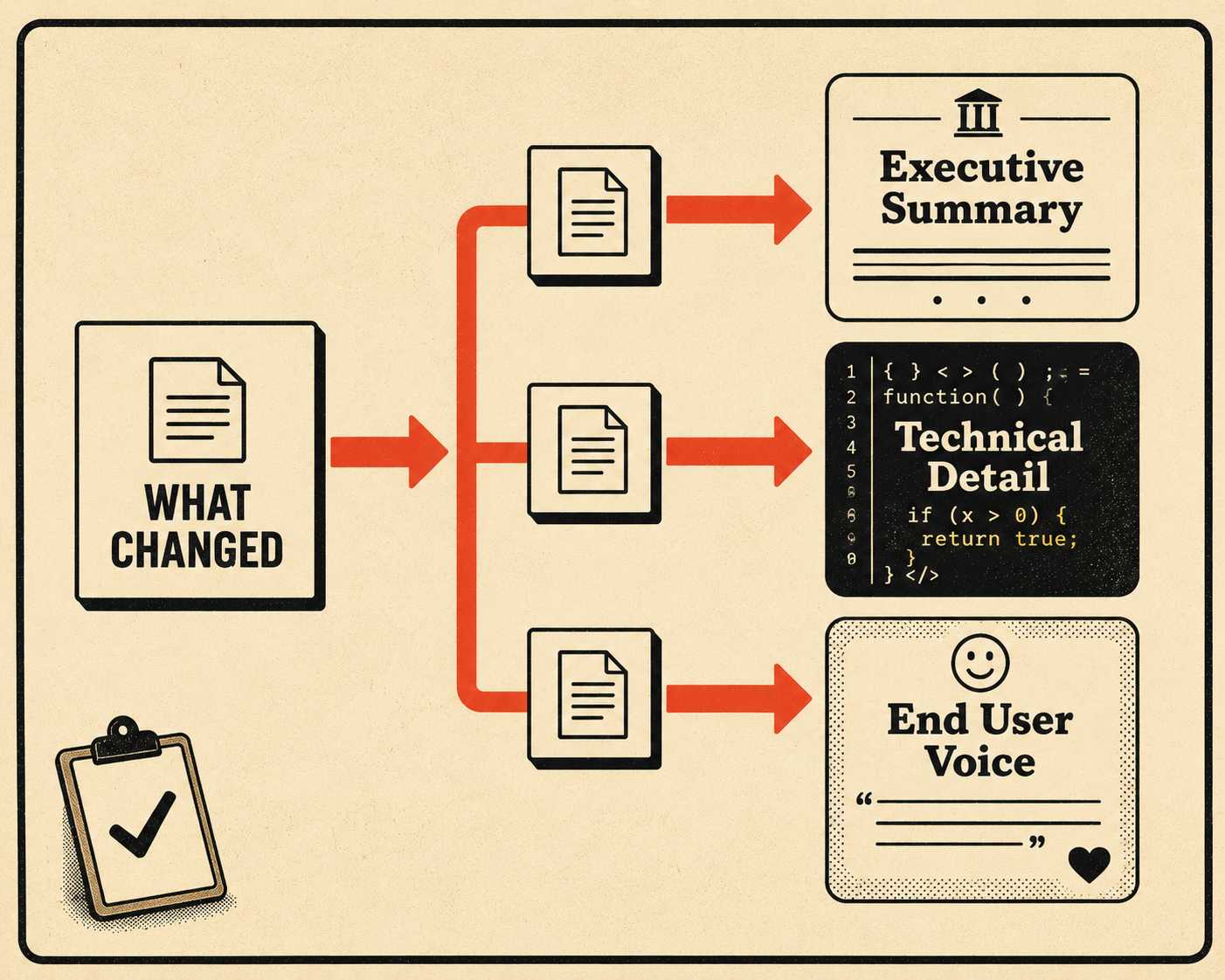
Some want deep technical detail. Some want high-level executive summaries. Some require that release notes never mention you, the upstream vendor, at all.
There is also a critical distinction between the release notes you send to the white-label customer (your direct client) and the release notes your customer sends to their end users. The latter often need to be ghostwritten in their specific brand voice.
You cannot rewrite these from scratch every time. You need modular note templates that can flex across brand voices.
The strategy is to separate the factual payload (what changed) from the presentation layer (how it sounds). The payload is generated once. The presentation layer is adapted per segment.
Managing the Stragglers
Many white-label products allow customers to stay on older versions or opt into features selectively.
This creates a versioning nightmare. A customer on v2.3 cannot receive notes written for v2.5. They will look for buttons that don't exist.
You have to version-control your release notes.
When you communicate breaking changes, you have to be especially careful. If an API deprecation only affects customers on the Enterprise tier who use a specific integration, sending that deprecation notice to your entire Free tier will cause unnecessary panic.
The solution is to tie the release note distribution to the deployment state. If a customer has not received the deployment, they do not receive the note.
Building a Pipeline That Actually Works
This is where you build a sustainable system.
A sustainable release note pipeline does not rely on a product manager remembering who gets what. It relies on structured transformation.
The pipeline pulls feature metadata from your product roadmap or ticketing system. It cross-references that data with customer entitlement records. It generates targeted drafts based on those entitlements. And it allows a human to review and approve those drafts before sending.
The goal is to eliminate manual per-customer writing while preserving accuracy and brand alignment.
Recent work on LLM-powered release note generation found that systems which aggregate context from code, commits, and pull requests produce release notes that outperform manually written ones on completeness and organization. The data is already in your engineering workflow. The gap is the transformation step.
The Before and After
Consider the before state. A product manager writes one set of release notes. The support team spends three days manually editing 30 variations for different customer tiers. They send them out. They still get tickets from confused customers because they missed a feature flag dependency.
Now consider the after state.
The system generates segmented drafts based on actual customer entitlements. The product manager reviews and approves five core variations that cover the entire customer base. The notes go out the same day. Support ticket volume drops because customers only see updates relevant to their specific instance.
The right system gives your product or support lead the ability to manage communication at scale, with oversight.
You don't need to hire three more people to manually rewrite the same update 50 times. You need a documentation engine that understands your engineering data and knows how to turn it into targeted customer communication.
Doc Holiday generates release notes, API references, and changelogs directly from engineering workflows. It provides the structure to segment, customize, and validate output across customer tiers, turning a massive manual translation problem into a scalable, managed process.