How to Write Release Notes for a Database Schema Change


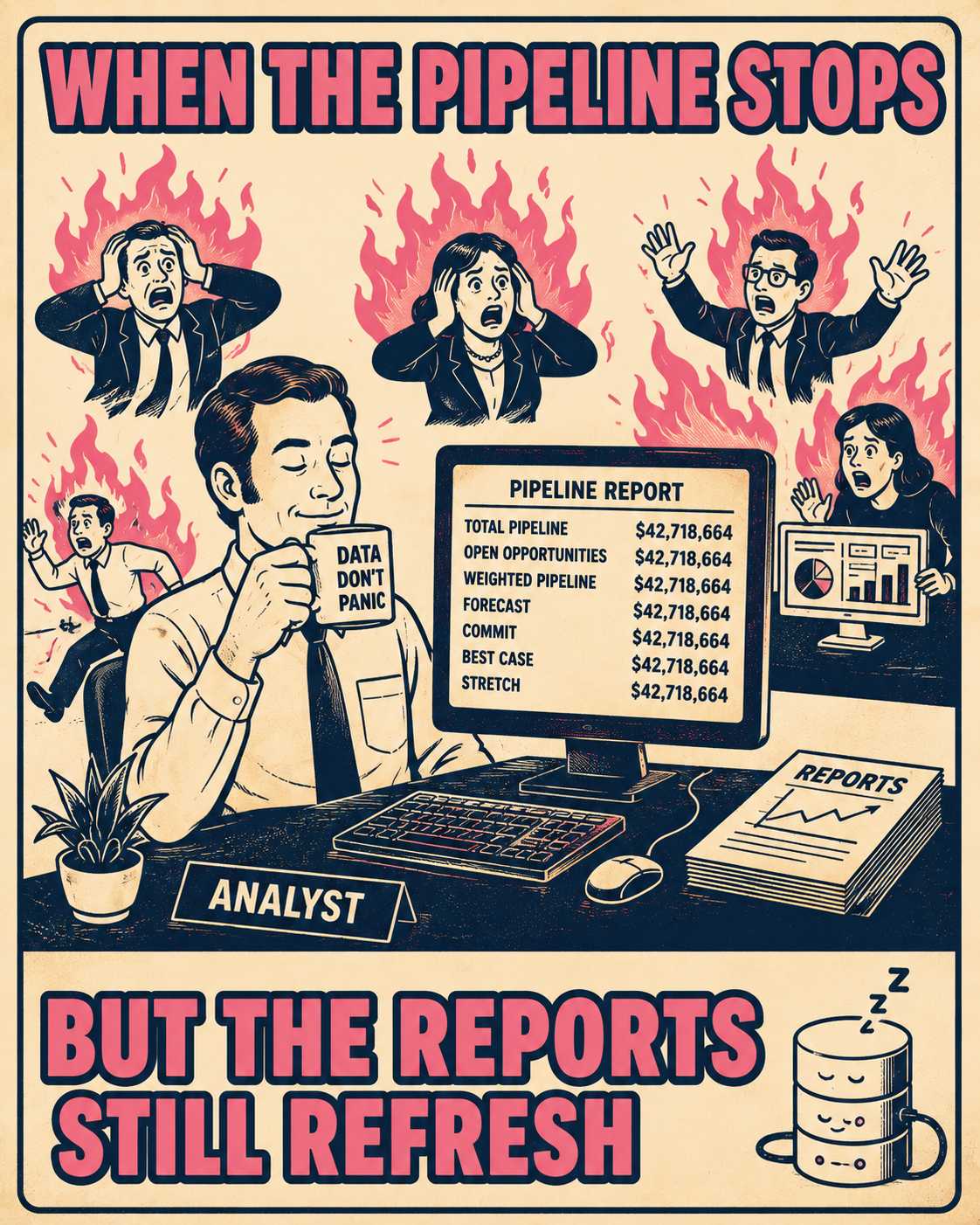
It's 4:57 PM on a Friday, and an analyst notices something odd. The numbers in the weekly revenue dashboard look exactly like last week's. Not similar. Identical.
The data pipeline has been running. The data hasn't changed in seven days. Nobody had a clue until now. The culprit? An upstream database engineer added a NOT NULL constraint to a widely-used table over the weekend. The migration succeeded. The downstream ETL job failed silently.
This is what happens when database schema changes are treated as internal engineering tasks rather than public API updates.
Schema change release notes matter more than typical software release notes because the blast radius is different. When a button moves in a UI, users get annoyed. When a database schema changes without warning, it cascades through data pipelines, breaks integrations without throwing a single error, and hits teams outside engineering who don't monitor code repositories. A botched communication can mean customer-facing downtime or corrupted analytics that nobody catches for days.
If you're changing a database schema that downstream consumers rely on, you need to write release notes. And those notes need to translate technical changes into operational impact, not just describe what the SQL did.
Why Schema Changes Are Uniquely Dangerous
A database schema is a contract. When you change it, you're changing the terms of that contract for every consumer who depends on it.
Even seemingly harmless changes can cause catastrophic downstream effects. Adding a new column might seem safe, but if a downstream system relies on a SELECT * query, that new column can break transformations and dashboards. Changing a column type from an integer to a UUID requires dropping the original column and fixing foreign key references, which breaks compatibility for any application expecting an integer. Renaming a column is, in practice, equivalent to dropping it and adding a new one from the perspective of downstream consumers.
The worst failures are the silent ones. Schema drift occurs when source schemas change without downstream updates. The pipeline continues to run. The data is wrong, missing, or stale. Nobody notices until the CFO asks a question in a board meeting.
This is why tooling alone isn't enough. Migration frameworks like Flyway, Liquibase, or Alembic generate migration files. Those files are instructions for the database engine. They are not release notes. They don't tell the data engineering team that their pipeline is about to break, and they don't tell the API client team that their integration needs to be updated before Tuesday.
What a Schema Change Release Note Actually Contains
Good schema change documentation tells downstream consumers exactly what is happening, when it is happening, and what they need to do about it.
Every schema change release note should cover six things:
- The exact change: Table names, column additions or removals, type changes, and constraint modifications. Be specific. "Updated users table" is not useful. "Added last_name VARCHAR(255) NOT NULL DEFAULT '' to users" is.
- The timeline: Migration start time, expected duration, rollback window, and any maintenance window that applies.
- The blast radius: Which services, APIs, or queries are affected. If you know which teams consume this table, name them.
- The required action: What downstream consumers need to do. SQL migration scripts, ORM model updates, query rewrites. Include examples where possible.
- The backward compatibility status: Is this change backward compatible? If not, what is the deprecation timeline for the old structure?
- The rollout phases: If the change is staged, document each phase and what consumers need to do at each step.
The difference between a commit message and a release note is the difference between "Added last_name column to users table" and "On Tuesday at 2:00 AM UTC, we are adding last_name VARCHAR(255) NOT NULL DEFAULT '' to the users table. Downstream consumers must update their ORM models to include this field before Friday. The name column will be deprecated in 30 days."
The first version tells you what happened. The second version tells you what to do about it.
The Coordination Problem Nobody Documents
The hardest part of a schema change isn't the SQL. It's the coordination.
Schema changes often require synchronized updates across multiple services. Deploy the database change before the application code is ready, and the application breaks. Deploy the application code before the database change is ready, and the application breaks. Coupling them together doubles the risk and makes rollback nearly impossible.
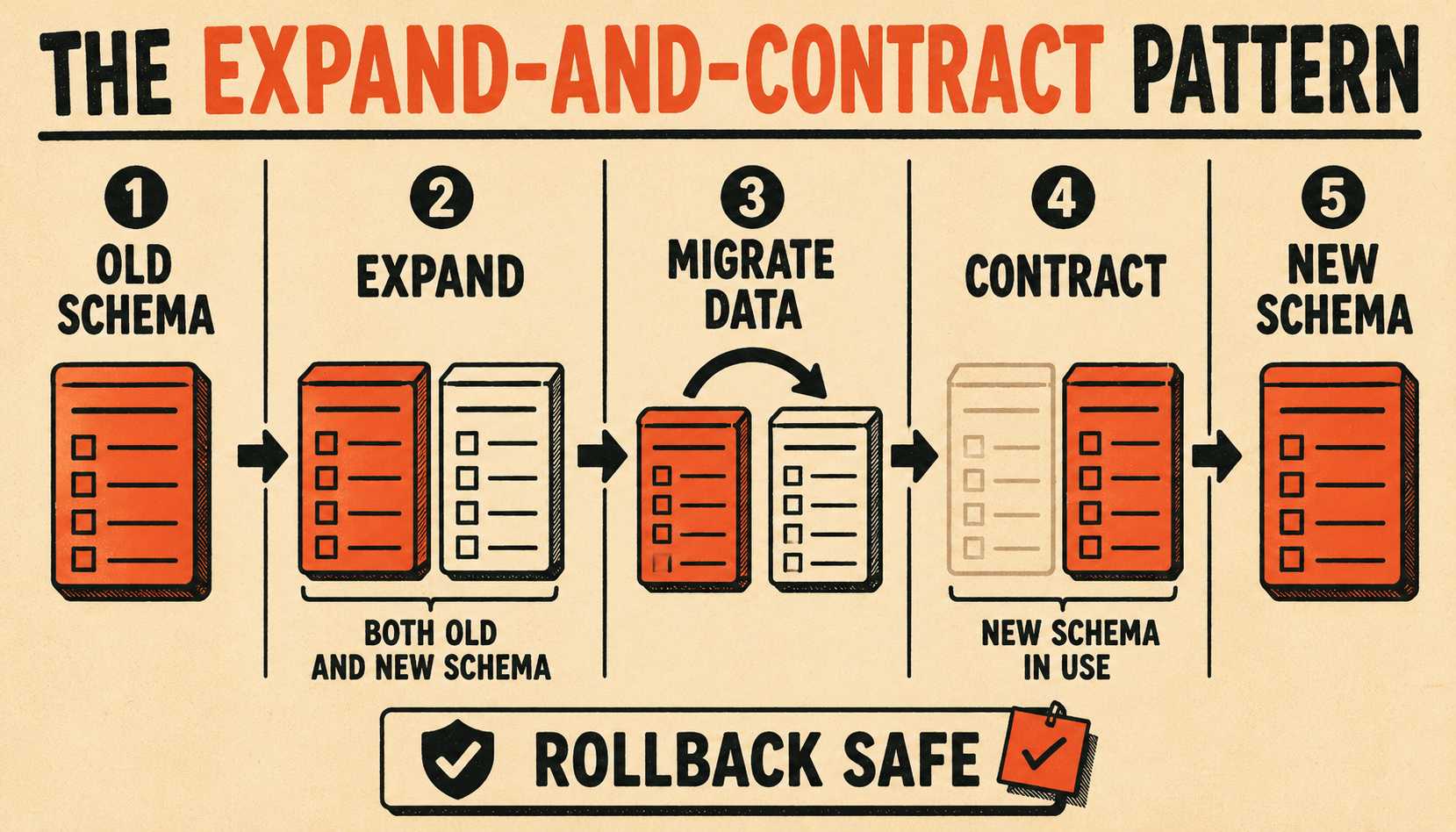
The standard solution is the expand and contract pattern. You expand the schema by adding the new structure alongside the old one. You update the application to write to both. You migrate the historical data. You update the application to read from the new structure. Finally, you contract the schema by removing the old structure.
Stripe's subscription migration is a well-documented example of this in practice. The refactoring of code paths that mutate subscriptions spanned thousands of lines across multiple services, with every step designed to keep both tables consistent at every point in the process.
This multi-staged approach ensures that each step is backward compatible and that a rollback at any point doesn't cause data loss. But it only works if every dependent team knows exactly when they need to deploy their updates relative to the schema migration. That's what release notes are for.
If your schema serves external APIs or data contracts, the stakes are even higher. Schema changes in that context require the same discipline as API versioning: major versions signal breaking changes, consumers need advance notice, and you have to support both old and new schemas during the transition window.
An empirical study of 32,425 release notes across 1,000 GitHub projects found significant discrepancies between what release note producers think they're communicating and what consumers actually need. The gap is even wider for schema changes, where the consumers aren't just reading the notes for interest but acting on them under time pressure.
How to Land the Plane
Schema change documentation is high-stakes and time-sensitive. The migration window is tight. The consequence of miscommunication is immediate production impact.
You can't rely on manual code reviews and ad-hoc Slack messages to manage this at scale. The risk of human error is too high, and the blast radius is too wide.
Doc Holiday generates structured release notes and API documentation directly from database migration files and schema definitions, giving teams a way to ensure schema changes are documented consistently with the same rigor applied to code releases. It provides templates for impact assessment and downstream action items, making it easier to catch breaking changes before they deploy rather than after the CFO notices the dashboard hasn't moved in a week.