How to Write Release Notes for an Acquisition Integration


It is Monday morning, two weeks after the deal closed.
You are looking at two distinct codebases that are supposed to be one platform by the end of the quarter. A rebranding effort is halfway deployed. The support queue is filling up with users from the acquired company who are trying to figure out if their daily workflows are about to break.
You are not shipping a normal release. Standard release note templates break down here because the changes are structural, not incremental.
During an acquisition integration, release notes are not just product updates. They are strategic communication. They manage user anxiety during a period of genuine uncertainty. Users need to know what is being kept, what is being deprecated, when they need to act, and whether they need to find a new tool.
The First Announcement Is Not Business as Usual
The first release notes after an acquisition should acknowledge the transition explicitly. Do not pretend this is a standard sprint cycle.
Address branding changes immediately. If the acquired product is being renamed or absorbed, say so clearly. If user accounts are migrating, provide the timeline. If certain features are being evaluated for sunset, be honest about the review process.
Vagueness creates ticket volume. When users don't know what is happening, they assume the worst and email support. Bain & Company's research on M&A integration found that failed acquisitions pointed to integration as a primary problem 83% of the time — and unclear communication to customers is one of the fastest ways to compound that failure.
Explain the Path Forward for Overlapping Features
When two products merge, feature sets overlap. Your release notes need to explain the path forward for each capability.
If a feature from the acquired platform is being replaced by a feature from the parent platform, the release note must include migration instructions. A deprecation warning is not enough. Treat this update as a mini onboarding flow embedded directly in the changelog.
Link to comparison documentation. Give users a clear action item. The Keep a Changelog standard puts it plainly: when people upgrade, it should be "painfully clear when something will break." That bar is even higher when the change is not a version bump but a platform consolidation.
Turn Migration Releases Into Task Lists
Integration often requires users to take action. They might need to move to a new domain, accept new terms, re-authenticate, or migrate data.
These releases need checklists, not summaries.
The release note should function as a task list. Tell the user what they must do, by when, and what happens if they ignore it. If the migration is reversible during a grace period, include rollback instructions.
Explain Why You Are Killing Features
When acquired features are being deprecated, release notes must include both the technical change and the business rationale.
Users are more tolerant of sunsetting when they understand why it is happening. If a feature is being killed because the parent platform has a better version, say that. If it is being killed because maintaining two codebases is unsustainable, say that. As the Google Software Engineering book's chapter on deprecation notes, "having two systems to accomplish the same thing might not seem like a pressing problem, but over time, the costs of maintaining them both can grow substantially." That is a rationale users can understand and accept.
Always provide export options if user data is involved.
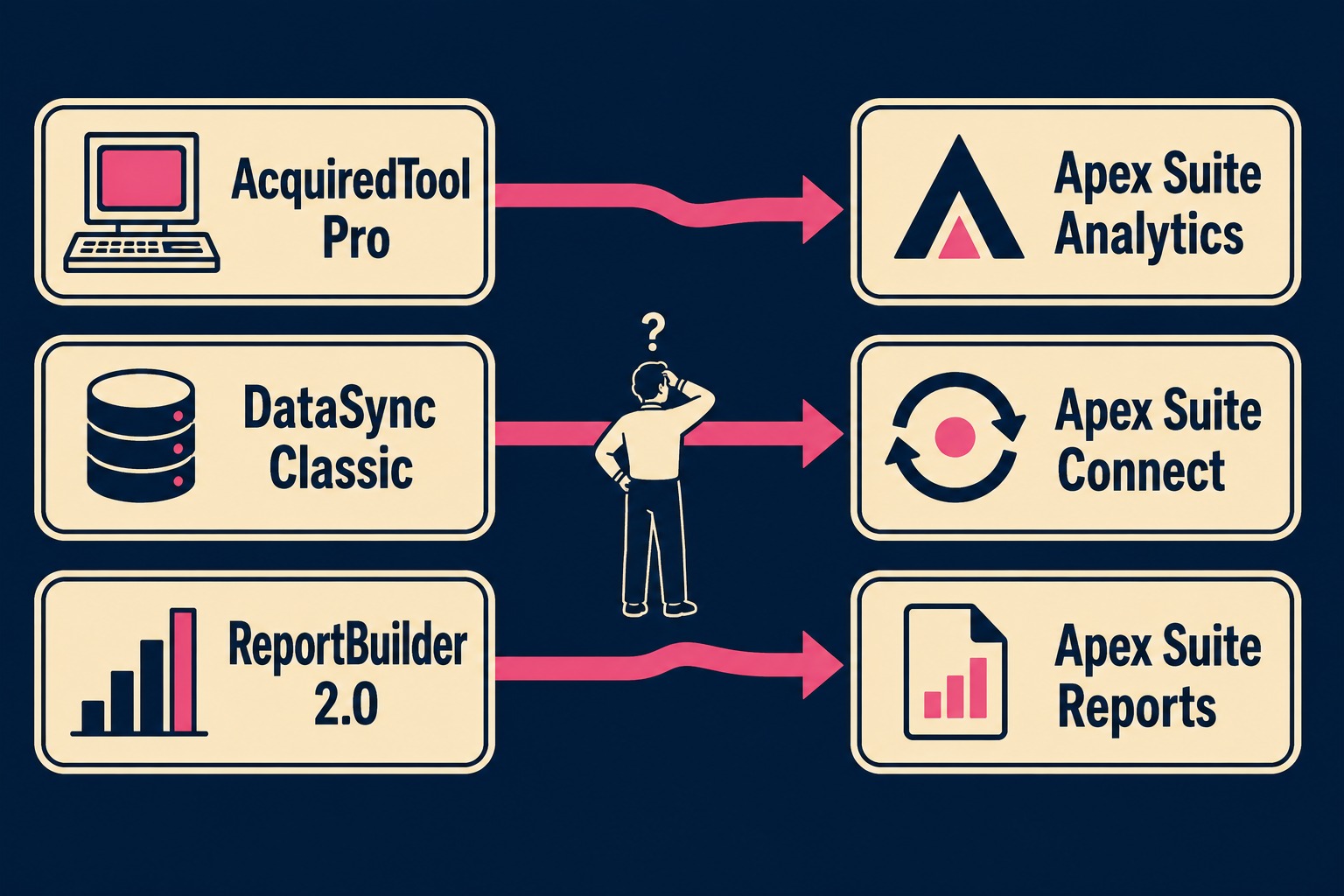
Map the New Names to the Old Names
Acquisition integrations often involve renaming products, features, or API endpoints mid-stream.
Release notes during this period need a glossary section that maps old names to new names. Do not assume users will remember that the tool they used yesterday is now called something else today.
Repeat the mapping in every release until the transition is complete.
The Coordination Problem Nobody Owns
This creates a structural problem for documentation teams. Acquisition integrations are incredibly documentation-heavy at exactly the moment when the team is most under-resourced.
The acquiring company's documentation team is absorbing the acquired company's backlog, learning an unfamiliar codebase, and managing two user bases with different expectations. The acquired company's documentation team may be gone, on the way out, or demoralized.
The integration timeline is set by executive mandate, not by documentation readiness.
Furthermore, these release notes require input from multiple teams who are not used to working together. The acquiring company's product team may not know which features the acquired user base relies on. The acquired company's support team has institutional knowledge that is not yet documented.
Release notes during integration must pull from both sides. Someone needs to own the single source of truth.
Generating this volume of changelog content in a compressed period (feature mappings, migration guides, deprecation notices, API updates) is a severe capacity problem. Writing all of this manually is nearly impossible when documentation teams are in flux. This is the operational problem Doc Holiday was built to handle. It generates structured release notes directly from engineering workflows, giving lean teams the structure to validate and scale output without rebuilding headcount.