How to Keep a Tettra Knowledge Base Current With Product Releases


An engineering team ships a major update on a Friday afternoon. By Tuesday morning, the support queue is filling up with tickets. Users are confused because the onboarding materials reference a dashboard layout that no longer exists, and the internal knowledge base still confidently explains how to configure a feature that was deprecated over the weekend.
Tettra is excellent for building process wikis and capturing institutional knowledge during onboarding. When engineering ships weekly or daily, internal docs fall behind within days. Support answers become unreliable. The knowledge base becomes a liability instead of a resource.
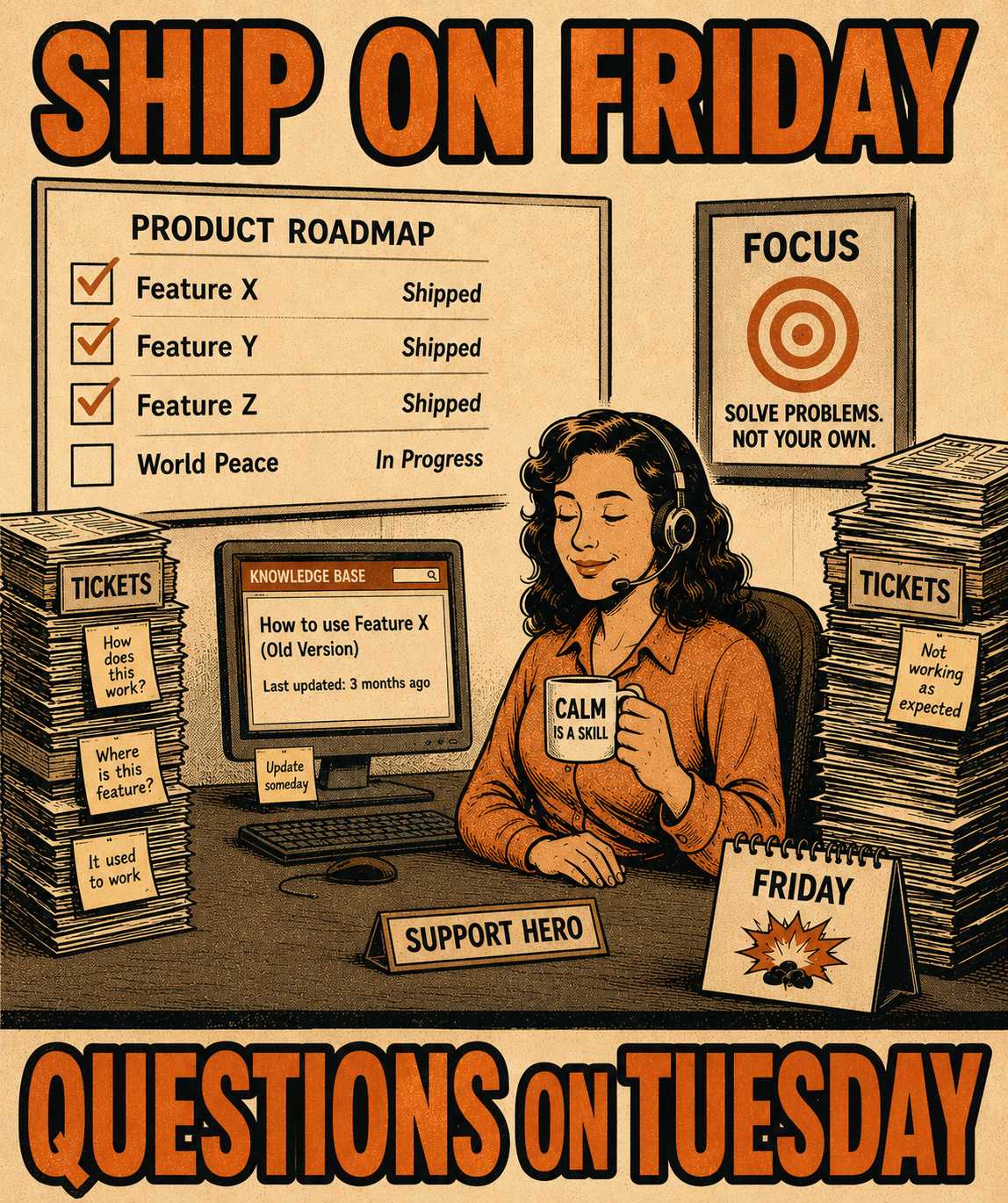
The core challenge is a workflow problem, not a tooling problem. Tettra is a collaboration tool, not a release-tracking system. It has no native concept of product versions, no automated ingestion from engineering workflows, and no structured way to deprecate outdated content. Keeping it current requires deliberate process design around Tettra's actual capabilities, not workarounds that treat it like something it isn't.
When engineering velocity outpaces documentation velocity, the gap between the two is knowledge drift. If your team relies on Tettra while the product changes rapidly, you need a practical system that doesn't require constant manual rework. The solution isn't to ask engineers to write more wiki pages. The solution is to build a maintenance workflow that accepts Tettra's limitations and optimizes for the moments when documentation actually needs to change.
Not Every Release Is an Emergency
Map release types to Tettra update triggers. Not every release needs the same response. A feature flag toggle doesn't require a full doc rewrite. A UI redesign does. Treating every code commit as a documentation event is the fastest way to burn out the team responsible for maintaining the wiki.
Define categories for changes. Breaking changes require immediate updates because they actively mislead users. Additive features need new content, but the existing docs remain technically accurate. Backend changes that don't affect user-facing workflows can be ignored entirely.
Assign ownership for each category before the release happens. The concept of a Directly Responsible Individual (DRI) is crucial here. If everyone is responsible for updating the docs, no one is. Assign a specific person to own the documentation update for a specific release type. The DRI doesn't necessarily have to write the update themselves, but they are accountable for ensuring it gets written before the release is considered complete.
The Handoff Nobody Wants to Own
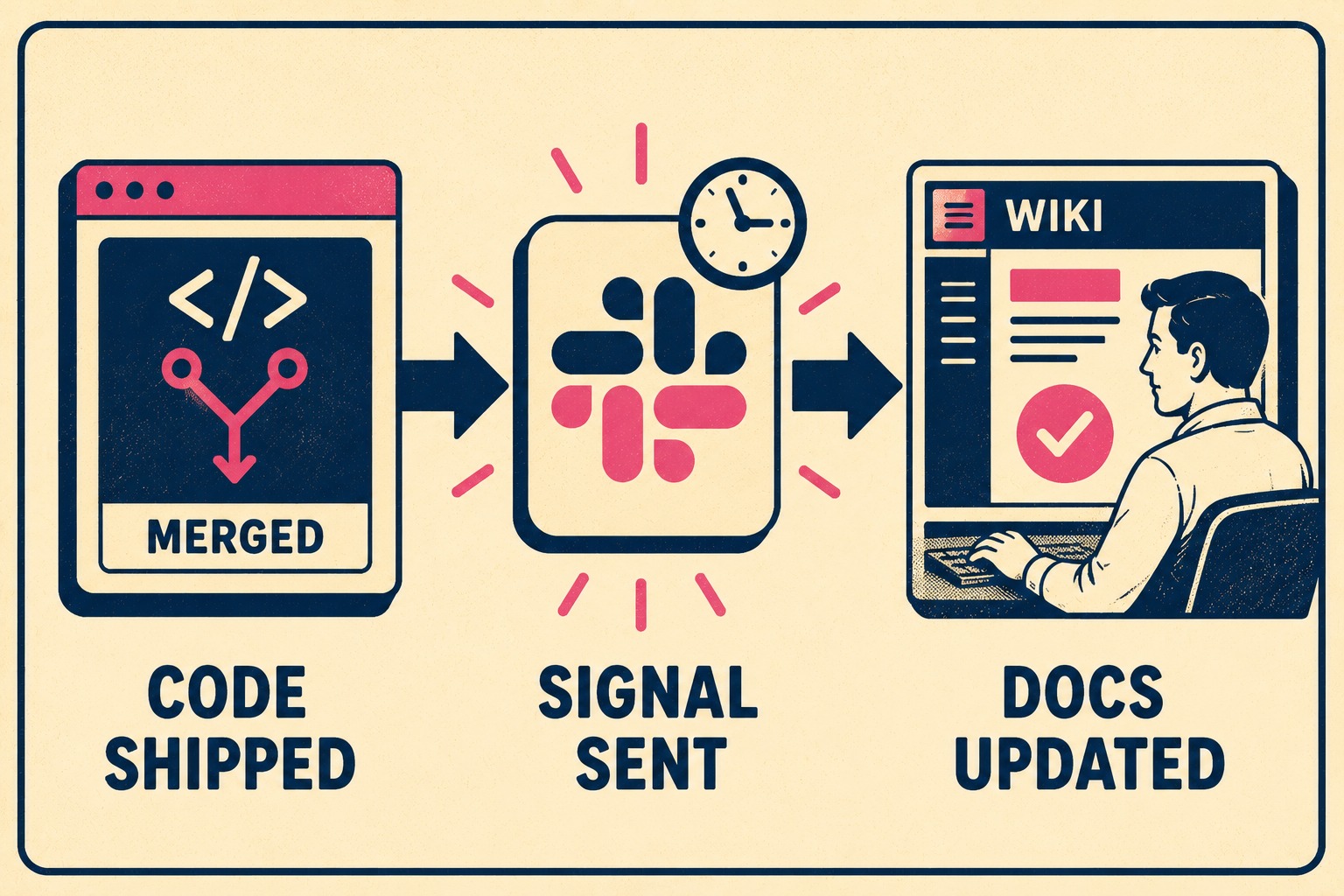
The weakest link in any documentation process is usually the moment engineering marks something shipped and no one tells the people maintaining the wiki. The product changes, but the knowledge base stays exactly the same.
Build a lightweight handoff. It could be an automated Slack reminder triggered by a merged pull request, a dedicated channel where internal release notes get posted, or a weekly sync where product managers walk through what shipped. The specific mechanism matters less than the fact that it exists and happens reliably.
The goal is a predictable signal, not a perfect one. Consistency beats comprehensiveness here. If the team knows exactly when and how they will be notified about product changes, they can schedule the documentation work. If the signal is erratic, the documentation will be too.
When to Declare Bankruptcy on Old Pages
Tettra doesn't auto-archive old versions, so you need a human system to clean up the mess. Leaving outdated instructions live in a knowledge base is worse than deleting them entirely. A missing page prompts a question; a wrong page prompts a mistake.
When a feature changes, don't just add new content. Mark the old content as obsolete. Tettra's verification feature forces a recurring check on critical articles, ensuring someone looks at the page and confirms it still matches the shipped product.
Create a "Deprecated Features" section so outdated instructions don't linger in search results, confusing new hires who don't know the history of the product. If a page hasn't been touched in six months and the product has shipped twenty releases since then, assume it's stale and audit it. Sometimes the best documentation update is hitting the delete button.
Your Support Team Knows What's Broken
Support reps notice doc drift faster than the people maintaining Tettra. They are the ones talking to users, answering questions, and discovering that the step-by-step guide they just linked to no longer matches the application interface. Atlassian's KCS methodology shows that teams building knowledge capture into the support workflow see a 30–50% increase in first-contact resolution — because the people closest to the problem are also the ones keeping the docs accurate.
Enable suggested edits so frontline teams can flag problems without waiting for a docs owner to catch them. Route those suggestions to someone with authority to validate and merge the changes quickly. If suggestions sit in a queue for weeks, the support team will stop making them.
This creates a feedback loop where the people using the docs most frequently become early-warning sensors for staleness. It distributes the maintenance burden across the organization instead of centralizing it on a single technical writer or product manager who is already stretched too thin.
Treat Docs Like Code, Not Like Favors
Integrate Tettra updates into release milestones, not ad hoc requests. If updating Tettra is a favor someone does after shipping, it won't happen reliably. Favors get dropped when deadlines loom.
Make it a gate. The release isn't done until Tettra reflects the change. When documentation is part of the definition of done, it stops being an afterthought and becomes a requirement for shipping.
Treat internal documentation with the same rigor as customer-facing release notes. Both are user-facing, just for different audiences. If you wouldn't ship a new API without updating the external developer docs, you shouldn't ship a new internal tool without updating the internal wiki. The cost of bad internal documentation is just paid in support escalations and wasted engineering time instead of lost customers.
The Structural Limit of a Wiki
This workflow works until it doesn't. If your team is shipping multiple times a week, manual Tettra updates become a bottleneck. The process described here buys you time and reduces chaos, but it doesn't solve the underlying gap between a collaboration wiki and a product that changes daily. You are still relying on humans to manually synchronize two separate systems.
The teams that close that gap most reliably are the ones that connect documentation directly to the engineering systems where product changes actually originate — pull requests, release tags, commits. GitHub's automatically generated release notes illustrate the principle: surface structured change data from the workflow itself, rather than reconstructing it after the fact.
Doc Holiday takes that architecture further. It ingests engineering workflows directly — code commits, product specs, ticketing systems — and generates release notes, changelogs, and API references from that source data. A technical writer or product ops lead then reviews, refines, and approves before publishing. The advantage isn't just speed. It's that the documentation starts from the same ground truth as the product, which means the gap between what shipped and what the docs say closes at the source rather than downstream.
For teams still operating in Tettra, the goal is to reduce time-to-update and eliminate silent drift. That means process design, clear ownership, and treating internal docs as a product output, not a side project.