What Support Teams Need From Release Notes (and Never Get)


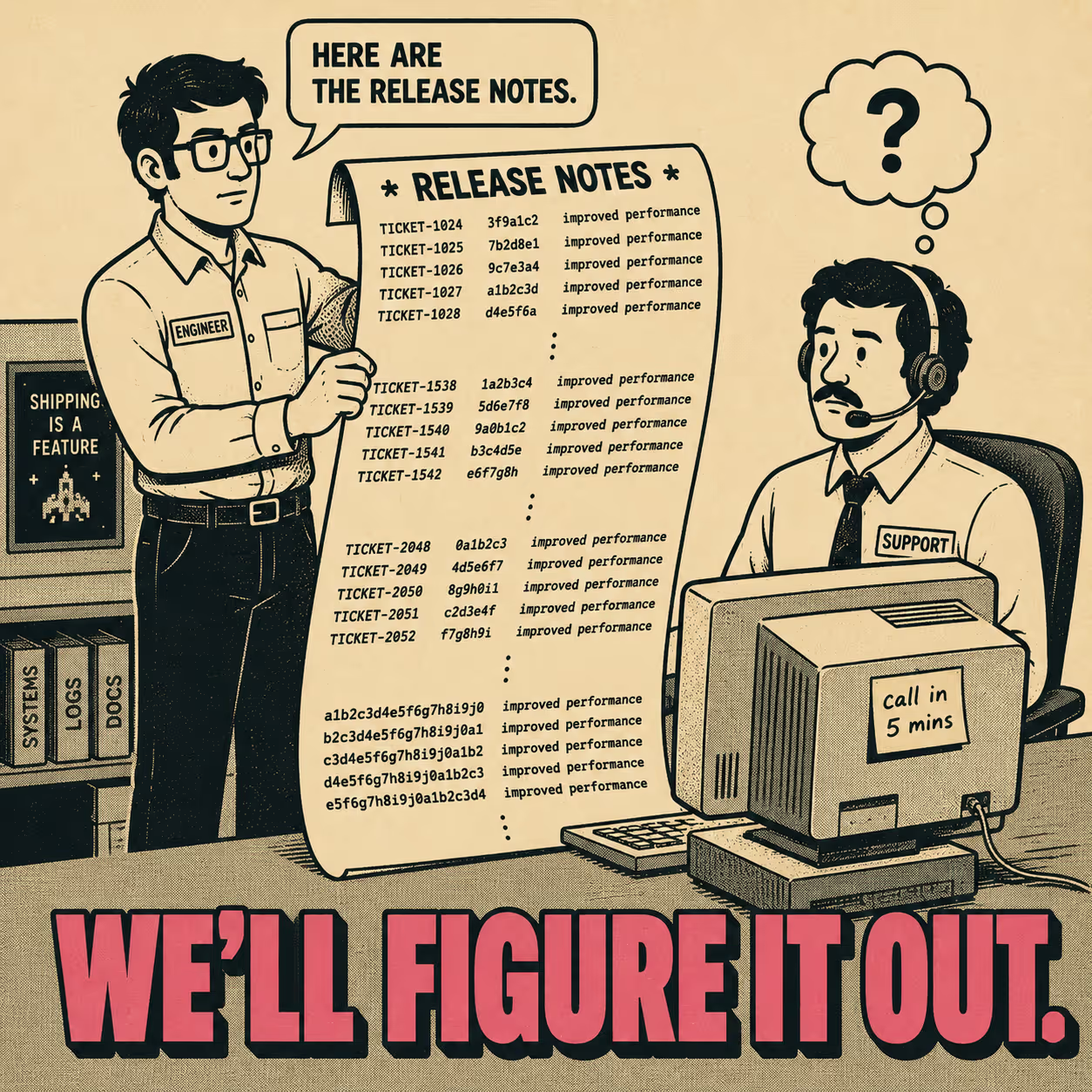
Five minutes before a customer call, a support agent opens the latest release notes.
She is looking for one thing: what changed, and how does it affect the user she is about to talk to. What she finds is a list of Jira ticket numbers, a few commit message summaries, and a line that says "improved performance of the data ingestion pipeline." The customer on the call is going to ask why her dashboard stopped refreshing. The release notes have nothing to say about that.
This is not a rare edge case. It is the default state of most software release documentation. Release notes are written by engineers, reviewed by product managers, and handed to support teams who are expected to translate them into something useful on the fly. They cannot. The information they need was never in the document to begin with.
The operational cost compounds fast. Tickets escalate because agents cannot answer confidently. Customers call back. Engineers get pulled into Slack threads to explain what they shipped, which they thought they were done explaining. The support team guesses at workarounds and sometimes guesses wrong. A release that went smoothly from engineering's perspective creates a week of friction for everyone else.
The problem is not that engineers write poorly. It is that they are writing for themselves.
The Gap Nobody Officially Owns
Release notes, in most organizations, are generated from the same artifacts engineers use to track their own work: commit messages, pull request descriptions, Jira tickets. Those artifacts are written for the people who will read them in the context of the codebase. They assume the reader knows what the authentication microservice does, what "refactored" implies, and why a performance improvement in the data ingestion pipeline might affect downstream behavior.
Support teams do not have that context. They have a customer on the phone.
Research on release note practices confirms this structural mismatch. A 2025 study from Peking University found that existing automated release note tools "fail to consider the diverse needs of various audiences and project domains," producing notes that leave specific user groups without critical details while overwhelming others with irrelevant technical information. The same study found that users of end-user software tools prioritize information about behavioral changes and known issues, while developers want breaking changes and dependency updates. These are different documents. Most organizations ship one.
The timing problem makes it worse. Support teams typically receive release notes at the same time as users, or shortly before. That is not enough time to update knowledge base articles, brief agents, or identify which customer segments will be affected. A support-driven release readiness framework requires documentation, training, and monitoring to be in place before launch, not distributed alongside it.
When that preparation doesn't happen, engineering absorbs the cost. Research on engineering interruption patterns suggests that context switching from reactive support questions can consume a substantial share of an engineer's productive time. The people who shipped the feature spend the next week re-explaining it.
What the Notes Actually Need to Say
Support teams need four things that standard release notes almost never include.
Customer-facing language. Not "refactored the authentication microservice to use OAuth 2.0" but "users will see a new login screen and will need to re-authenticate." The technical fact is the same. The framing is completely different. Support agents need the second version because that is the sentence they will say out loud to a confused customer.
Known issues and workarounds. If a release ships with a known limitation, support needs to know about it before customers do. The specific scenario where the bug appears. The workaround, if one exists. The expected timeline for a fix. Transparency here is not a liability; it is the difference between a support agent who sounds prepared and one who sounds like they are making things up.
Troubleshooting paths. When something breaks, what should an agent check first? What information should they collect before escalating? What error messages are expected versus unexpected? This is the information that reduces unnecessary escalations and ensures that when a ticket does reach engineering, it arrives with the right diagnostic context already attached.
Scope of impact. Which users are affected? Is this a change that hits all accounts or only specific configurations? Is there a migration step? Support agents need to know who to proactively contact and who can safely be told nothing changed for them.
None of this requires engineering to write more. It requires the documentation process to capture different information.
One Source, Not Three Documents
The solution is not to ask engineers to write better customer-facing documentation. As Rachel Andrew has argued, the problem is treating engineers as the documentation strategy in the first place. Engineers should validate technical accuracy. They should not be responsible for translating that accuracy into support guidance and user-facing announcements.
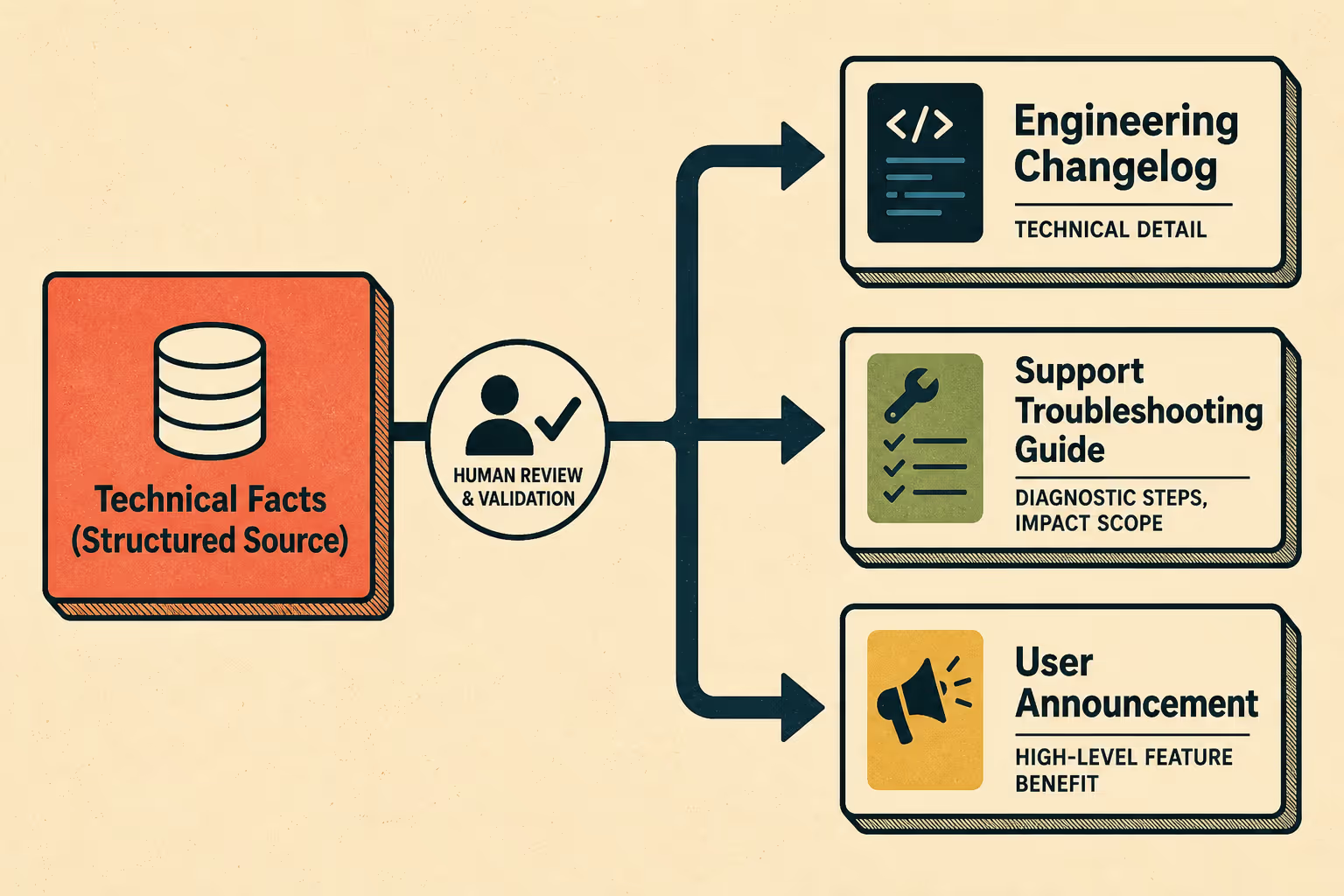
What works is a single-source documentation workflow that captures the technical facts once and renders them for multiple audiences. The underlying change is the same. The presentation adapts. Engineers get the technical changelog. Support gets the troubleshooting guide and customer impact summary. Users get the high-level feature announcement. Same facts, different lenses.
This is not a new idea in technical writing. Tom Johnson's work on rethinking release note workflows explores how AI-assisted generation can produce audience-specific documentation from a single structured source, with human review ensuring accuracy before anything ships. The key word is structured. Unstructured AI generation produces the same verbose, context-free output as unstructured human generation. Structure is what makes the output usable.
The DORA research program has consistently found documentation quality to be a predictor of software delivery performance, not a trailing indicator. Teams that invest in documentation infrastructure ship faster and recover from incidents more quickly. The documentation is not separate from the operational system; it is part of it.
Anyway. The practical implication is this: if support teams are consistently unprepared for releases, the fix is not a better briefing email. It is a documentation system that generates what support needs as a natural output of the engineering workflow, not as a manual translation step someone has to remember to do.
That is what Doc Holiday is built for. It generates customer-facing explanations, known issues, and troubleshooting context alongside technical release notes, from the same source. When a technical writer or support operations lead reviews and validates that output, the result is release documentation that actually works for the people who have to use it. Not three documents written by three different people. One structured process that produces all three.