How to Write Release Notes a Sales Team Can Actually Use


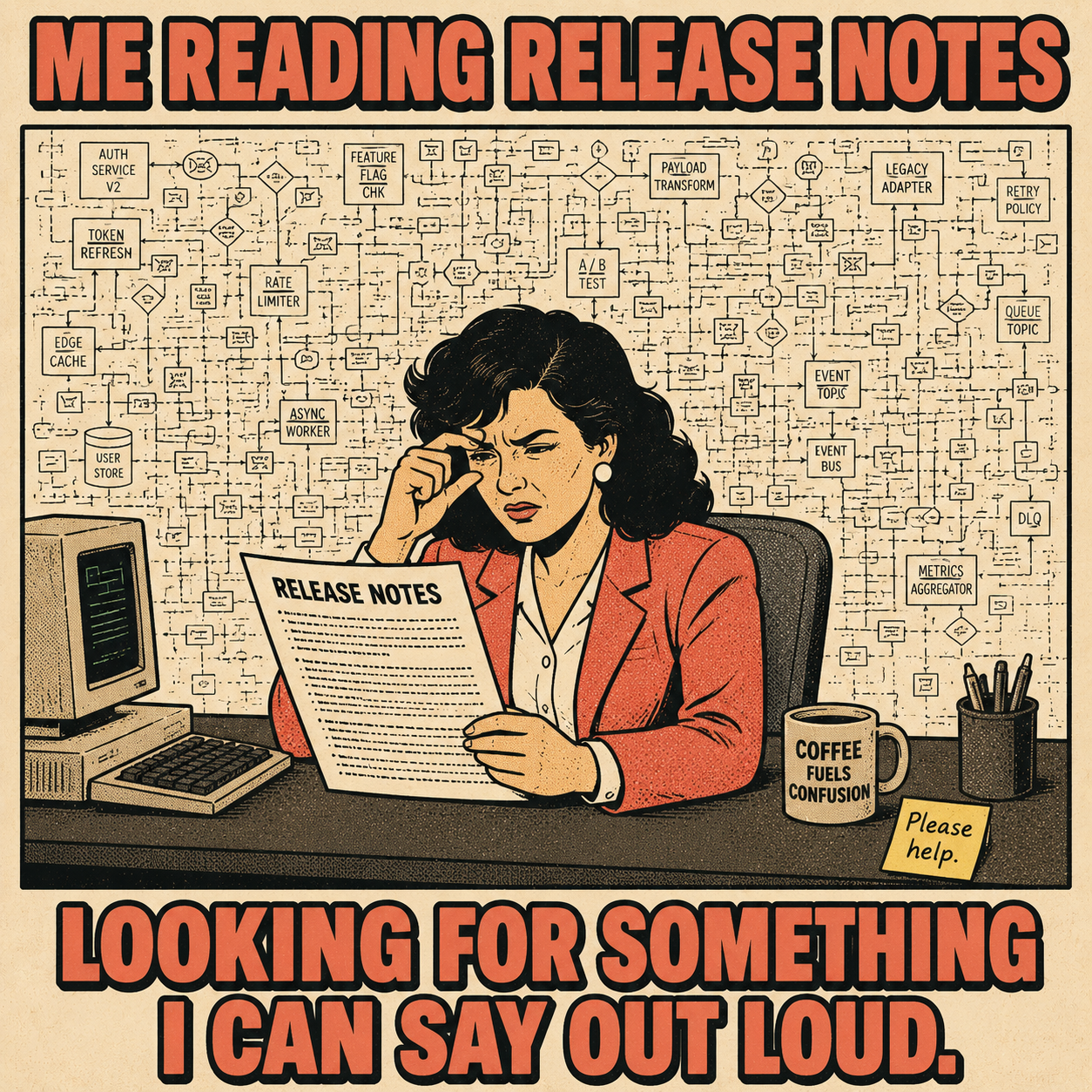
A sales rep opens the company's latest release notes forty-five minutes before a call. She's looking for something she can say to a CFO who asked last week whether the new reporting module handles multi-currency consolidation. The notes say: "Refactored the FX conversion pipeline to support ISO 4217 currency codes with configurable rounding modes."
She closes the tab.
The problem isn't that she ignored the release notes. The problem is that the notes answered a question no one in sales is asking. Engineers wrote them for engineers. The rep needed something she could say out loud to a finance executive without sounding like she was reading from a spec sheet.
Sales-ready release notes solve this by doing one thing differently: they lead with customer impact, not implementation detail. Before the technical description, before the configuration options, before the edge cases, there's a sentence that answers "what does this mean for the deal I'm working on?" Everything else is secondary.
That's the whole framework. The rest is execution.
Why the Standard Format Fails Before the Rep Even Opens It
Huthwaite International's research on new-product launches found something uncomfortable: when selling new products, salespeople consistently asked fewer questions, spent more time describing features, and ran calls that were longer but less effective. The failure wasn't motivation. Sellers were enthusiastic. The failure was that they'd been handed product information in a format that trained them to lead with capabilities instead of problems.
Release notes are a significant part of that information diet.
The standard changelog format is optimized for accuracy and traceability, which are exactly the right priorities when you're writing for engineers who need to understand what changed in the codebase. But Forrester's research on executive buyer behavior found that only 20% of salespeople successfully create value in executive meetings, partly because they communicate in terms of products and services rather than business outcomes. A note that says "added support for OAuth 2.0" is accurate. It is also useless to a rep sitting across from a CISO.
There's also a scanning problem. A rep preparing for a call doesn't read documentation. She scans for something she can use in the next hour. If the most relevant sentence in the release notes is buried in paragraph four of a technical description, it might as well not exist. LaunchNotes' analysis of the product communication gap puts it plainly: closing the gap requires audience-aware messaging embedded into the release process, not bolted on afterward.
The audience for a changelog is not the audience for a sales brief. Treating them as the same document is the root cause of the problem.
What a Sales-Ready Note Actually Contains
The distinction April Dunford draws between differentiated value and objection handling is useful here. Differentiated value is why a customer chooses you over the alternatives. Objection handling is why they don't disqualify you. Both matter in a sales conversation, but they matter at different moments, and a sales-ready release note needs to be explicit about which one a given feature provides.
A feature that adds SOC 2 Type II compliance isn't why anyone buys your product. But it's why certain deals don't die in procurement. A rep needs to know that, and she needs to know it in one sentence, not after reading three paragraphs about your security architecture.
Here's what the same feature looks like in two formats:
Engineer-focused:
Implemented SOC 2 Type II audit logging across all API endpoints. Log retention configurable from 30 to 365 days. Supports SIEM integration via syslog and webhook.
Sales-ready:
Enterprise security review unblocked. Customers with SOC 2 requirements can now complete vendor security reviews without exceptions. Use this when a deal is stalled in IT or legal procurement. Say: "We completed our SOC 2 Type II audit last quarter. Your security team can request the report directly."
The technical description isn't wrong. It's just not what a rep needs forty-five minutes before a call.
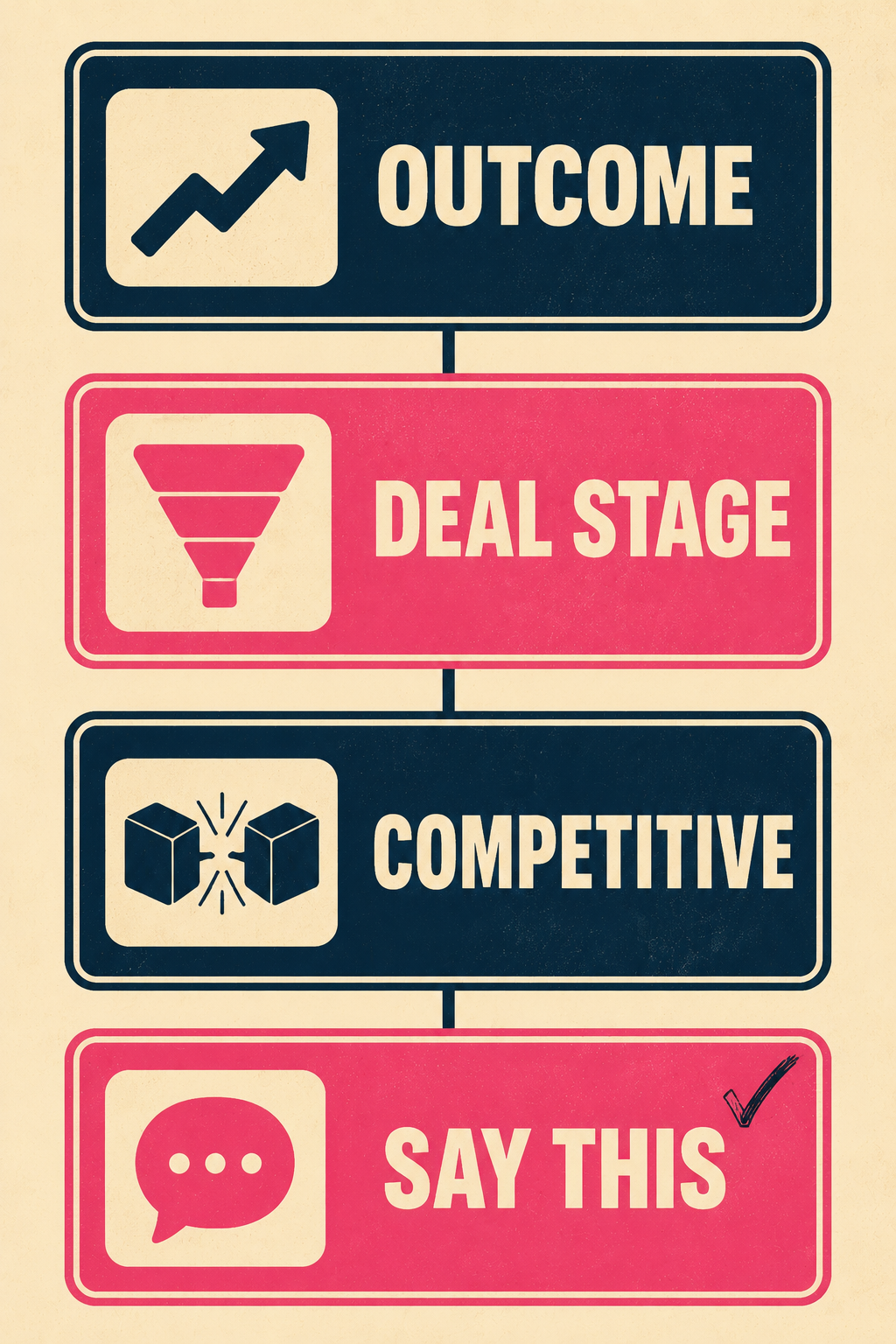
A sales-ready note has four components. First, a bolded outcome headline that names the business result, not the feature. Second, a one-sentence deal-stage indicator: which deals does this unblock, and at what stage? Third, a competitive hook if the feature closes a gap against a named competitor. Fourth, a "say this" line, a literal phrase the rep can use in conversation without translation.
The "say this" line is the part most teams skip, and it's the part that matters most. HBR's research on selling new products found that customers need to feel they have the right information, not just receive it. A rep who can say something specific and confident in a meeting creates that feeling. A rep who has to paraphrase a changelog entry doesn't.
The Process That Makes This Repeatable
The format above doesn't require a new team. It requires a new handoff.
Most release notes are written by engineers or product managers at the end of a sprint, reviewed for technical accuracy, and published. The sales-ready layer needs one additional step: a product marketer or technical writer who reads the technical note and asks four questions before it ships.
What business problem does this solve? Which customer persona cares most? Which deals does this affect, and at what stage? What's the one thing a rep should say about this on a call?
That's it. Four questions. The answers become the sales-ready header. The technical description stays exactly as written below it.
Ownership matters here. Engineers should not be writing the sales-ready layer. They're optimizing for accuracy, not for a CFO conversation. Product marketing owns the translation. But product marketing can only do that translation if they're in the release process before the notes ship, not after.
The workflow looks like this: engineering writes the technical note, product marketing adds the sales layer during the same release cycle, and the combined note ships to both the changelog and the sales enablement channel simultaneously. Not sequentially. Simultaneously.
For the sales enablement side, the distribution format matters as much as the content. A Slack channel that posts new release notes with the sales-ready header visible in the preview is something a rep will actually read. A PDF attached to an email is not. A CRM field that tags open opportunities with relevant new features, triggered when the deal stage matches the feature's deal-stage indicator, is even better. The rep doesn't have to go looking; the information finds the deal.
Measuring whether it's working is straightforward. Track which release notes get opened in your enablement platform (most platforms expose this). Survey reps quarterly on which features they're actively using in conversations. And look for correlation between feature releases and deal acceleration in the accounts where that feature is most relevant. If a feature that unblocks enterprise security reviews ships in Q2, and Q3 shows faster close rates in deals that were stalled in IT procurement, that's the signal you're looking for.
The Highspot framework for content effectiveness puts it simply: content effectiveness equals the number of closed deals influenced by content divided by total deals. Release notes that don't show up in that numerator aren't enabling anything.
Anyway. The hard part isn't writing a better release note. The hard part is building the process so that writing a better release note is someone's actual job, with a deadline, in the same sprint cycle as the feature itself.
If your release workflow already generates technical output, Doc Holiday produces both the technical and customer-facing versions from the same engineering workflow. The structure is there so a product marketer or technical writer can validate the sales narrative without waiting for a separate rewrite cycle after the feature has already shipped.