Writing Release Notes That Reduce Support Tickets


Here is a number worth sitting with: the average B2B SaaS support ticket costs between $25 and $35 to resolve, according to industry benchmarks. If a single release confuses 1,000 customers, that is $30,000 in support costs before anyone has fixed a single bug.
Most teams treat release notes as a compliance checkbox. They write a quick list of what shipped, aimed at internal stakeholders who already know what changed. The actual audience is customers who need to understand what is different, why it matters to them, and what they need to do differently. When release notes fail that audience, support channels absorb the confusion.
The best release notes answer questions before they are asked.
The Translation Problem
Customers do not care that you refactored the authentication module. They care that login is now faster, or that they need to re-authenticate.
The gap between what engineers write and what customers need is not a matter of effort. It is a matter of audience. When you write technical changes as user-facing outcomes, you reduce the cognitive work required to understand the update. The Nielsen Norman Group notes that when cognitive load gets too high, users are more likely to make mistakes or feel overwhelmed. If a customer has to translate your internal implementation into their own workflow, many of them will give up and file a ticket instead.
The fix is mechanical. Write the change twice in your head: once as what happened in the codebase, and once as what the customer will experience. Only publish the second version.
Here is the same change written both ways:
Internal version: Refactored authentication middleware to support OAuth 2.0.
Customer version: You can now sign in using your Google or Microsoft account.
The first version is accurate. The second version is useful. Stripe, which ships nearly one update every minute, writes its entire changelog in user outcomes. Every entry reads like "Businesses in Australia can now offer PayTo direct debits," not "Integrated PayTo API endpoints for AU region." At that volume, the discipline is not optional.
The Questions You Already Know They Will Ask
If you changed a workflow, explain what happens to existing data. If you deprecated a feature, explain the migration path.
A study of 32,425 release notes across 1,000 GitHub projects found significant discrepancies between how release note producers and users perceive the same documents. Vague and imprecise release notes lead to inadequate understanding of current changes. Users need to know the implications of a change, not just the fact that it happened.
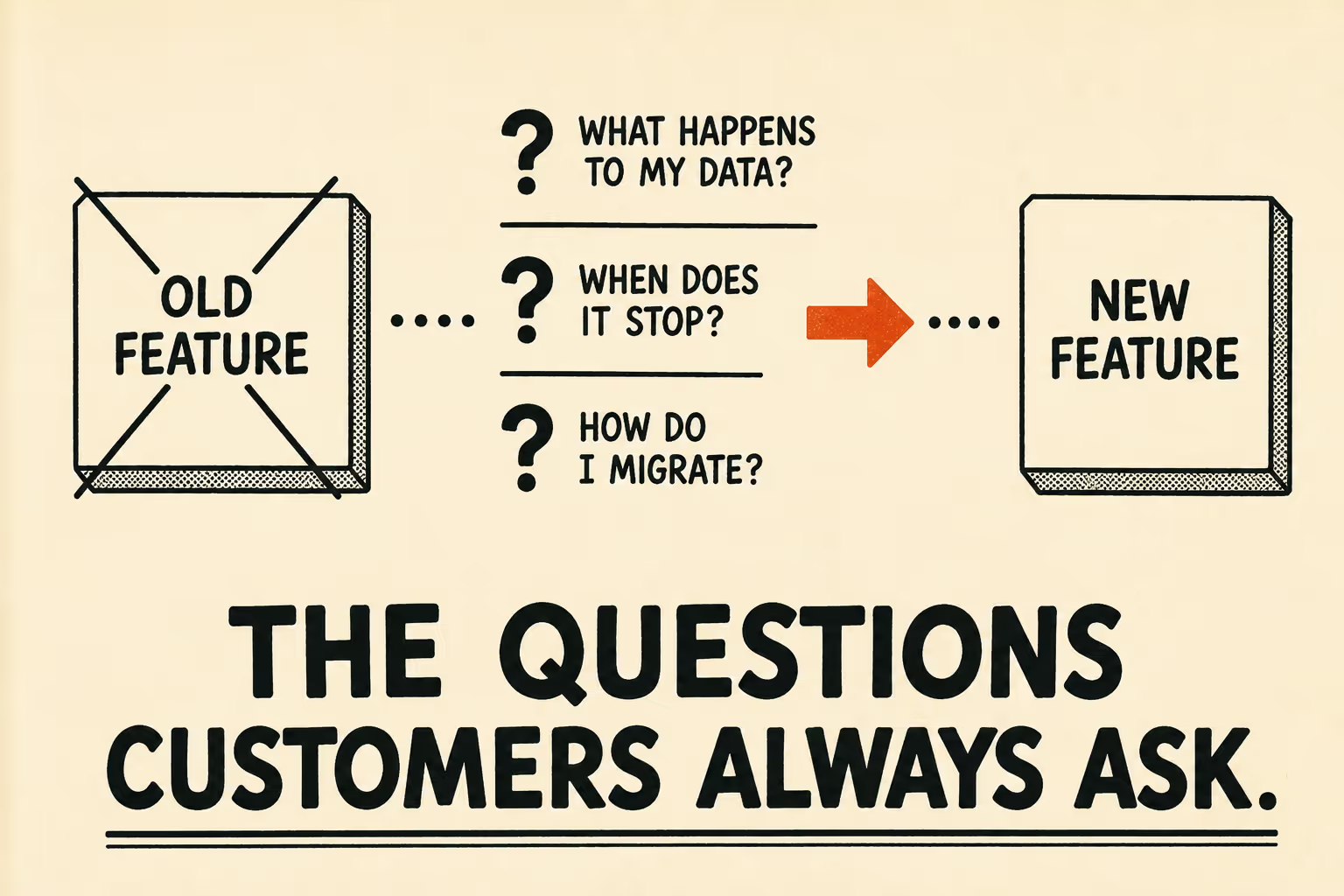
When you deprecate an API or a feature, the follow-up questions are entirely predictable: What happens to my existing data? When does the old version stop working? How do I migrate? If your release notes do not answer these questions, your support team will have to. Repeatedly. At $30 a ticket.
The practical test: before publishing, list every question a confused customer might ask about this change. If the release notes do not answer each one, they are not done.
A related finding from research on app store release notes, which analyzed 69,851 releases and 67.7 million user reviews, is that apps with more informative release notes tend to have higher average user ratings. Customers notice when you respect their time.
The Plain Language Problem
Unfamiliar words cause confusion and misunderstandings. The Nielsen Norman Group's guidance on technical terminology makes this point clearly: jargon is relative. What is obvious to your engineering team might be incomprehensible to your users.
If you must use a technical term, provide a plain-language alternative alongside it. Research on plain language implementation consistently shows that readers achieve greater comprehension when documents are written simply. This is not about talking down to users. It is about respecting their time. They are reading your release notes to find out if they need to change their behavior, not to learn your internal architecture.
One useful heuristic: read the release note aloud and ask whether a customer who does not know your codebase would understand it. If the answer is no, rewrite it.
The Review Step Most Teams Skip
The end user should never be the first person to test your documentation.
Equal Experts makes this point directly: when users can find answers easily, there is less burden on support staff. Before you publish release notes for a major change, have someone who did not build the feature read them. Ask them what they think the change does and what actions they need to take. If they are confused, your customers will be too.
This is the same logic as user testing a feature before shipping it. The documentation is part of the product.
The Scale Problem
Writing good release notes takes time. An empirical study of release note generation shows it can take up to 8 hours for an experienced developer to draft a release note document. For large-scale projects, maintainers may need to synthesize information from thousands of commits for a single release.
Most teams ship multiple releases per week. The volume problem is real. This is why many teams end up with thin, technically accurate but practically useless notes. They are not cutting corners out of laziness. They are cutting corners because the alternative is spending two days per week writing documentation.
The k15t guide on release notes puts it plainly: well-written release notes reduce the number of support tickets and workload, increase customer satisfaction, and build trust. The problem is that achieving this at scale requires either a lot of time or a system that removes the time constraint.
Doc Holiday generates release notes directly from engineering workflows, then provides a validation layer for reviewing and refining the output before it ships. The draft comes from the commit history; the quality check comes from the team. That structure is what makes it possible to scale release note quality without proportionally scaling the hours spent on it.
Release notes are a support cost decision, not just a communication task. Every question left unanswered is a ticket filed, a conversation required, and time lost. The best release notes are the ones customers read once and never have to ask about.