What to Include in Release Notes for Enterprise Customers?


Picture this: your enterprise customer's security team discovers, three weeks after the fact, that you pushed a patch addressing a known authentication vulnerability. They didn't find out from your release notes. They found out because something in their SIEM started throwing alerts that didn't match the behavior they'd documented. Now they're filing a support ticket. But what they're actually doing is building a case for why they shouldn't renew.
This is the gap between how most engineering teams think about release notes and what enterprise customers actually need from them.
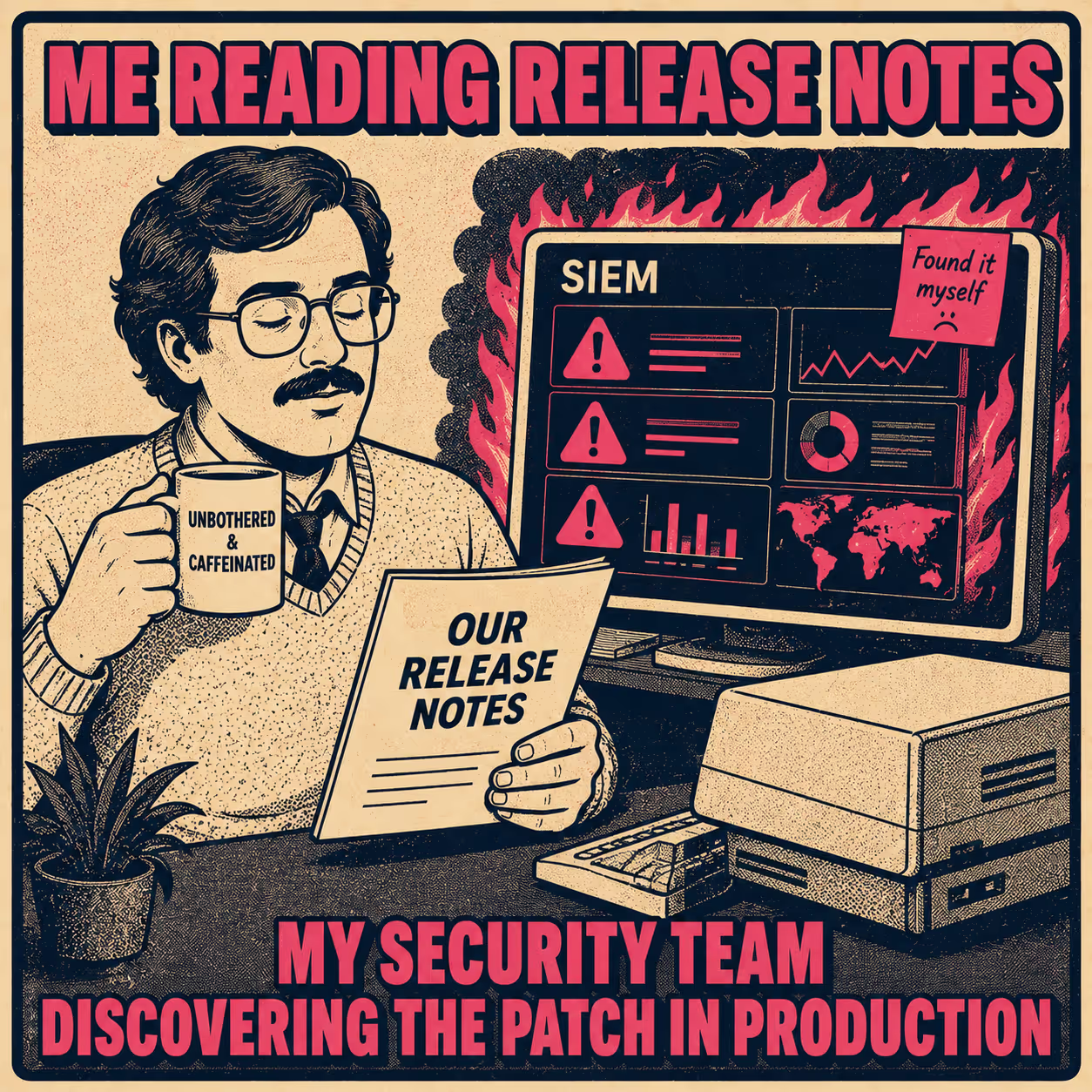
Enterprise release notes aren't a category of software documentation. They're a category of business document that happens to describe software changes. The audience isn't a developer who wants to know what's new. It's a security team validating that your patch didn't introduce a new attack surface. It's a compliance officer checking whether a breaking change affects their SOC 2 audit trail. It's a procurement manager deciding whether you've met the communication SLAs in your contract. These are different readers with different stakes, and the release note format that works for a consumer SaaS product will fail all of them.
So: what do you actually include?
The short answer is that enterprise release notes need four things that most release notes don't have: a structured security impact statement, explicit breaking change classification with a migration timeline, version and API compatibility information, and a timestamp that proves communication happened before the change went live. An empirical study of release note production and usage found that enterprise users consistently prioritize non-functional requirements (security, performance, compliance) over feature descriptions, while consumer users show the opposite preference. The format most teams use by default is optimized for the wrong audience.
What Enterprise Customers Are Actually Reading For
When an enterprise customer opens your release notes, they're usually doing one of three things.
First, they're checking whether anything in this release requires them to do something. A new feature is interesting. A deprecated endpoint is urgent. A security fix may require them to update their own documentation, notify their own customers, or file something with their compliance team. The release note needs to make that distinction immediately visible, not buried in paragraph three.
Second, they're building an audit trail. Under SOC 2 Common Criteria 8, service organizations must demonstrate that changes to production systems are authorized, documented, tested, and communicated to impacted stakeholders. Your release note is evidence in that audit. If it doesn't have a publication timestamp, a clear description of what changed, and a statement about security impact, it doesn't satisfy the auditor's checklist. The auditor will ask for documentation of the change lifecycle, and "we posted a changelog entry" is not the same as "we have a structured artifact that maps to our change management controls."
Third, they're managing their own integrations. Enterprise customers often have complex, custom integrations built on your APIs. When you change a field name, remove an endpoint, or alter an authentication flow, you're creating work for their engineering team. Salesforce's API end-of-life policy gives customers at least one year of advance notice before support for an API version ends. That's not generosity; it's a contractual expectation that enterprise buyers have come to require. If your release notes don't include deprecation timelines, you're not just being unhelpful; you may be in breach of your MSA.
The Three Things That Will Get You in Trouble
The first is treating security fixes like feature updates. When you patch a vulnerability, enterprise customers need to know the severity, the affected versions, and whether the fix has any behavioral side effects. Best practices for security advisories include a CVE identifier (or internal equivalent), a CVSS score so security teams can prioritize, and a clear statement of which versions are affected. Burying "security improvements" in a bullet point is the kind of thing that ends up in a post-incident review when something goes wrong.
The second is announcing breaking changes without a runway. Enterprise customers can handle breaking changes. What they can't handle is a breaking change that gives them two weeks to update integrations that took six months to build. API deprecation best practices call for 6 to 12 months of advance notice for endpoint removal, and longer for major version sunsets. Stripe's versioning model handles this by requiring customers to explicitly opt into a new API version, so the breaking change only affects them when they're ready. Not every team can implement that architecture, but the communication principle is the same: give customers enough runway to make the change on their own schedule.
The third is publishing release notes that can't be ingested by enterprise tooling. Large customers run their changes through IT Service Management workflows. They want to pull your release notes into ServiceNow or Jira Service Management, trigger their own internal change advisory board review, and generate their own audit records. A PDF or a blog post doesn't do that. Structured, machine-readable changelogs (JSON, structured Markdown with consistent field names) let enterprise customers automate the ingestion. This is increasingly a procurement requirement, not a nice-to-have.
Why the Bottleneck is Usually the Process, Not the People
Most teams that struggle with enterprise release notes don't have a writing problem. They have a workflow problem.
The typical release note process looks like this: a sprint ends, a deployment goes out, and then someone (usually a technical writer, sometimes a PM) chases down engineers to figure out what actually changed. By the time the release note is drafted, the engineers have moved on to the next sprint, the context is half-remembered, and the security team's input never made it in because no one thought to ask them.
The result is a release note that describes features accurately enough but misses the security classification, omits the deprecation timeline, and has no machine-readable structure. It satisfies the internal "we published something" requirement without satisfying any of the contractual requirements the enterprise customer actually cares about.
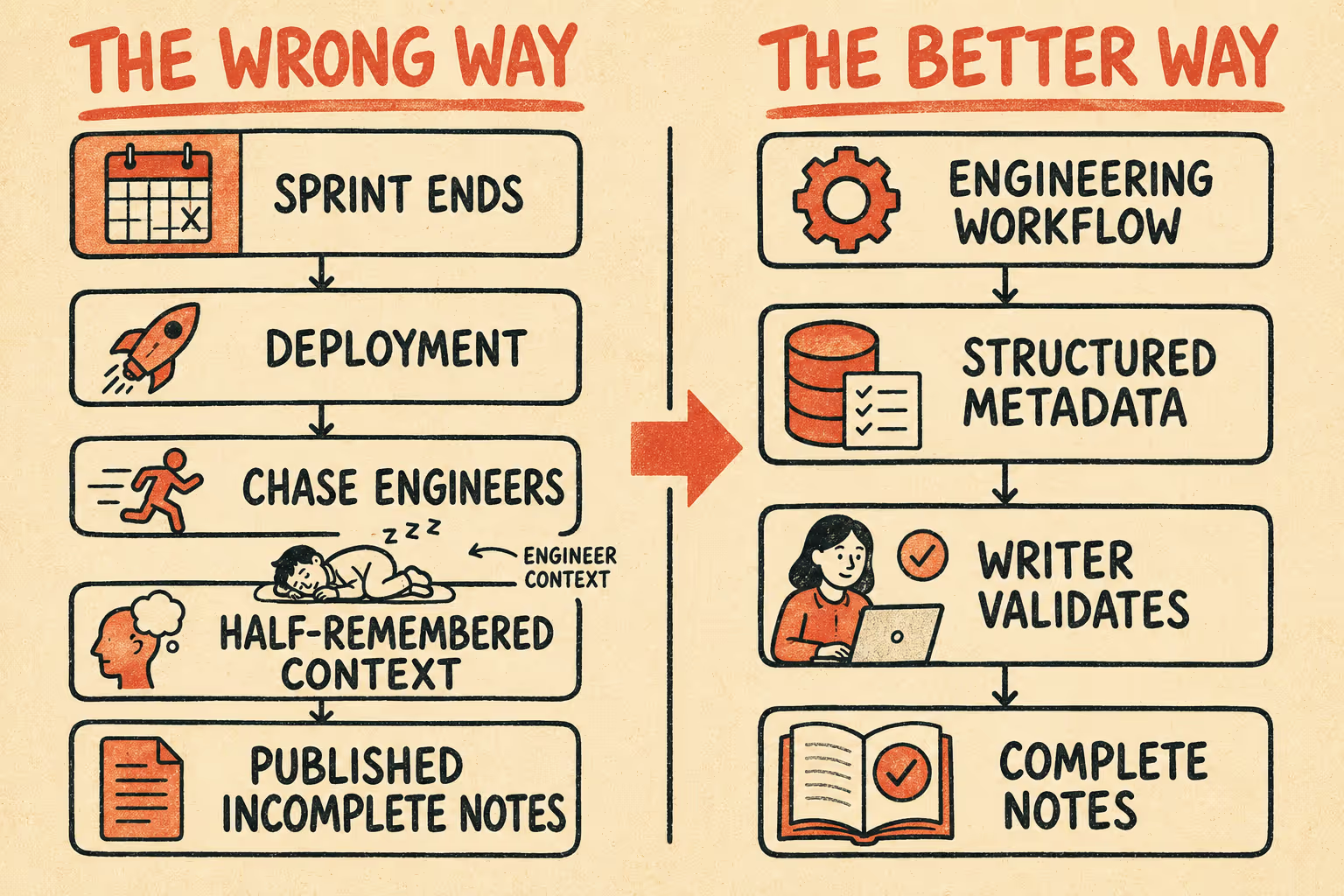
The fix isn't hiring more writers. It's generating the structured draft from the engineering workflow itself, before the context evaporates. Commit messages, pull requests, and ticket metadata contain most of what a compliant enterprise release note needs. The writer's job should be validation and judgment, not archaeology.
Anyway. That's the operational shift that actually closes the gap.
Doc Holiday generates structured release notes pulled directly from engineering workflows, with built-in fields for security impact, breaking changes, and API versioning. The output gives your technical writer or technical PM the structured artifact to validate and approve, rather than a blank page to fill in from memory. The release note that comes out the other end is the one your enterprise customers are contractually expecting, not the one that ends up in their post-incident review.