How to Write Release Notes That Highlight Business Value


A product manager sits down to write the sprint's release notes and types: "Added support for multi-region failover configuration." She stares at it. It is accurate. It is also completely useless to the VP of Sales who needs to explain to a prospect why the platform is now enterprise-grade, or to the customer success manager who needs to tell a nervous enterprise account why their data is safer than it was last quarter.
The problem is not that the note is wrong. The problem is that it is written at the wrong layer of abstraction.
Release notes fail most audiences because the people who write them are closest to the code, and the people who need to act on them are furthest from it. Research analyzing 32,425 release notes across 1,000 GitHub projects found that producers and consumers of release notes have fundamentally different expectations: developers document what changed in the implementation; stakeholders want to know what changed for them. That gap does not close on its own.
The fix is a translation layer. Here is how to build one.
The Wrong Layer of Abstraction
Engineers document changes at the level where they work: functions, endpoints, configuration flags, schema migrations. That is the right level for the engineer who needs to integrate the change. It is the wrong level for everyone else.
Google's technical writing curriculum frames this as an audience problem: every piece of technical communication should be calibrated to what the reader already knows and what they need to do next. A release note written for a developer audience assumes familiarity with the system's internals. A release note written for a business audience assumes familiarity with the business problem the system is solving.
Most release notes are written for the first audience and distributed to the second.
The cognitive mechanism behind this is well-documented. The "curse of knowledge" is a bias where experts systematically underestimate how much context non-experts are missing. Once you know that "multi-region failover" means the platform can survive a data center outage without losing a customer's data, it feels obvious. To the VP of Sales, it is not obvious at all, unless someone translates it.
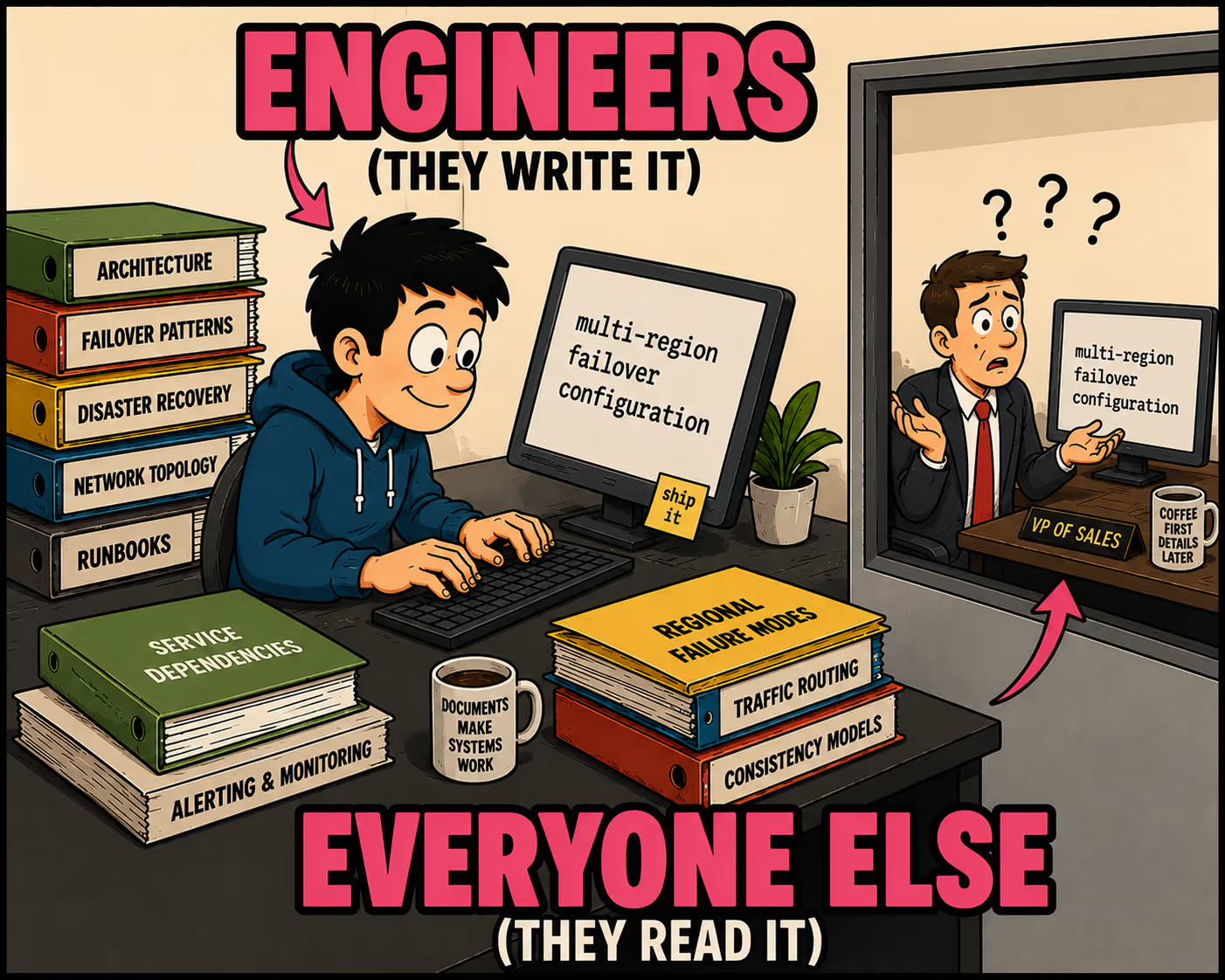
The translation is not simplification. It is reframing. The technical fact stays true; the frame shifts from what changed in the code to what changed for the person using the product.
The So-What Test, Applied by Stakeholder
The most useful diagnostic for a release note is a simple question: so what?
For every item in a release, ask three things: who benefits, how do they benefit, and what can they now do that they couldn't do before? If the answer requires technical context to understand, you are still writing for engineers.
Simon Willison, whose release note practice is widely cited in the developer documentation community, argues that good release notes require the author to think about the reader's situation, not just the feature's mechanics. The note should answer the question the reader is actually asking, which is rarely "what did you change?" and almost always "does this affect me, and how?"
The translation looks different depending on who is reading.
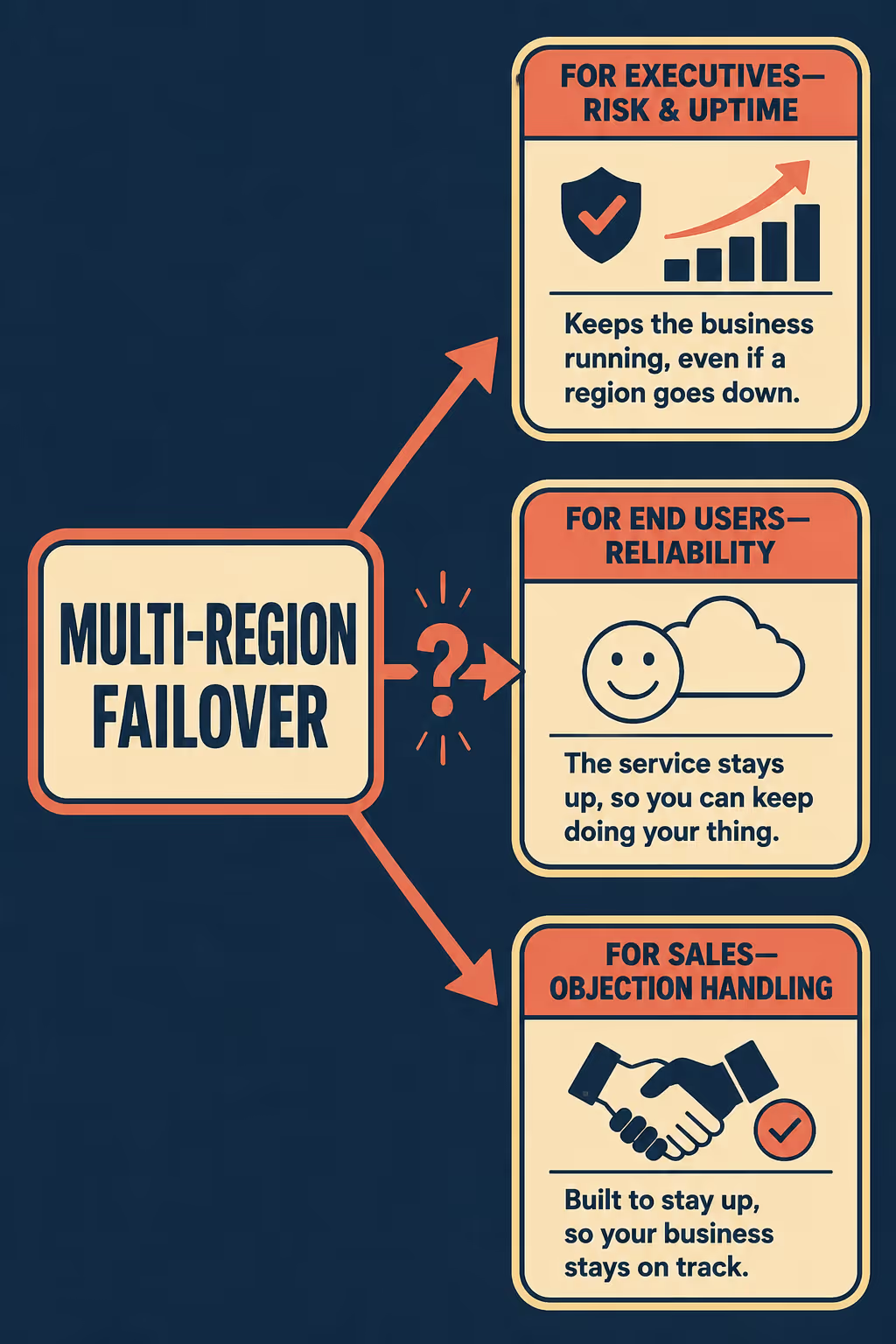
For executives and board-level stakeholders, the frame is risk, revenue, and competitive position. "Multi-region failover" becomes: "The platform now meets the uptime requirements for enterprise contracts in regulated industries." That is a sales motion and a risk reduction story in one sentence.
For customers and end users, the frame is workflow and reliability. The same change becomes: "Your data is now automatically protected against regional outages, with no action required on your end." They do not need to know how failover works. They need to know it works for them.
For sales and customer success teams, the frame is objection handling and expansion. "We now support the SLA requirements your enterprise procurement team asked about last quarter" is a release note that closes deals. Atlassian's structured release notes program found that 50% of administrators felt they had inadequate information about product changes, and that structuring release notes to reach the right audience at the right time produced a 300% increase in engagement.
For compliance and legal teams, the frame is regulatory coverage. A change that adds audit logging is not a feature; it is evidence of SOC 2 alignment or GDPR readiness. That framing matters when a customer's security team is reviewing a vendor questionnaire.
The Keep a Changelog convention provides a useful structural starting point by categorizing changes as Added, Changed, Deprecated, Removed, Fixed, or Security. But categories alone do not do the translation work. A "Security" label on a change tells the reader what type of change it is. It does not tell them what it means for their risk posture.
A practical checklist for each release item:
- Who is the primary audience for this change?
- What problem does this change solve for that audience?
- What can they now do, or stop worrying about, that they couldn't before?
- If this change affects compliance, security, or contractual obligations, is that stated explicitly?
- Does the note make sense to someone who has never read a commit message?
If you can answer those five questions, you have a release note. If you cannot, you have a commit log entry.
Where This Breaks Down in Practice
The framework above is not complicated. The reason most teams do not follow it is operational, not conceptual.
Writing business-oriented release notes requires someone who understands the technical change well enough to translate it accurately, knows the business context well enough to frame it for the right audience, and has the writing skill to do both without producing either jargon or vague marketing copy. That is a specific combination of skills. Research on release note production in practice found that the most common failure mode is not incorrect information but missing information. Producers leave out context that consumers need because the context feels obvious from inside the engineering team.
Wu et al.'s 2024 analysis of release note challenges on GitHub identified four dimensions of release note problems: content, presentation, accessibility, and production. The production dimension is the one that gets least attention. It is not enough to know what good release notes look like; you need a repeatable process for generating them at the pace software ships.
Many teams have cut the headcount that used to handle this. Tom Johnson's 2024 technical writing trends analysis noted that companies were slowing hiring of technical writers and expecting AI to compensate, while simultaneously discovering that the non-writing coordination work that produces good documentation does not automate easily. The result is a documentation gap that shows up most visibly in release notes: either too technical to be useful outside engineering, or too vague to be credible inside it.
Stripe's 2024 API release process redesign is instructive here. They rebuilt their changelog not just to list changes, but to explain which changes apply to which integration, provide step-by-step upgrade guidance, and give developers the context to act. The investment was in the production system, not just the output format. The changelog became a tool for a specific audience doing a specific job, not a record of what the engineering team shipped.
That is the structural insight. Release notes that highlight business value are not produced by writing better individual notes. They are produced by building a system that extracts the right information from the engineering workflow and formats it with the right audience frame already applied.
The tension here is real: doing this well at scale requires either a skilled person embedded in the release process or a system that does the extraction and first-pass framing automatically, with a skilled person reviewing the output. Most teams have neither right now.
Doc Holiday generates structured release notes directly from commits and pull requests, with the business framing applied at the output layer. A senior writer reviews in a dashboard, flags edge cases, and validates that the stakeholder framing is accurate. The system handles the extraction; the human handles the judgment. That combination is what makes business-oriented release notes sustainable at the pace modern software ships.