How to Eliminate Documentation Debt at Scale


Six months after a service ships, a new engineer asks in Slack where the API docs are. The answer, more often than not, is that there aren't any. Or there are some, but they describe the version from eight months ago. Or they exist in three different places and none of them agree.
That gap (between what your teams have shipped and what's actually documented) is documentation debt. And if you're a CTO or VP of Engineering trying to figure out how to close it without launching a multi-quarter initiative that will stall out by Q3, the answer is simpler than most people make it: you have to change where documentation gets created, not how hard people try.
The Gap You're Already Measuring
Documentation debt isn't a vague concept. You can see it in the numbers you're already tracking.
Support ticket volume is one signal. When developers can't find accurate API references, they open tickets. Research on API documentation consistently shows that complete, accurate documentation is the single biggest factor in API adoption decisions, more than price, more than performance. When it's missing, the cost shows up in your support queue.
Onboarding time is another. Google's research on developer ramp-up found that documentation quality directly affects how long it takes new engineers to become net productive. When documentation is poor or missing, senior engineers become the documentation, and that's a context-switching tax that compounds across the whole team. Studies on developer interruptions show that recovering full focus after an interruption takes around 23 minutes. Multiply that by the number of "where's the doc for X?" questions your team fields in a week.
API confusion is the third signal. When internal teams can't figure out how to integrate with each other's services, they either build redundant solutions or they slow down. Both are expensive.
These aren't soft metrics. They're the operational cost of documentation debt, and they show up in the same dashboards you already review.
Why It Keeps Happening Even When You're Paying Attention
The reason documentation debt accumulates in well-run engineering organizations is structural, not cultural. Documentation lives outside the shipping workflow.
Engineers are measured on shipping features. Documentation is a separate task that gets created after the feature is done, by someone who may or may not have been close to the work, in a tool that may or may not be connected to the codebase. By the time the documentation exists, the feature has moved on. By the time the feature ships again, the documentation is already stale.
Traditional solutions don't fix this. Documentation sprints create a burst of activity that decays immediately when the next sprint begins. Confluence mandates generate compliance theater: pages that exist but aren't maintained. Dedicated tech writer assignments help, but the writer-to-engineer ratio becomes unsustainable as the organization grows. A mapping study on documentation in continuous software development identified the core problem clearly: documentation is frequently treated as waste, productivity is measured solely by working software, and documentation quickly falls out of sync with the codebase.
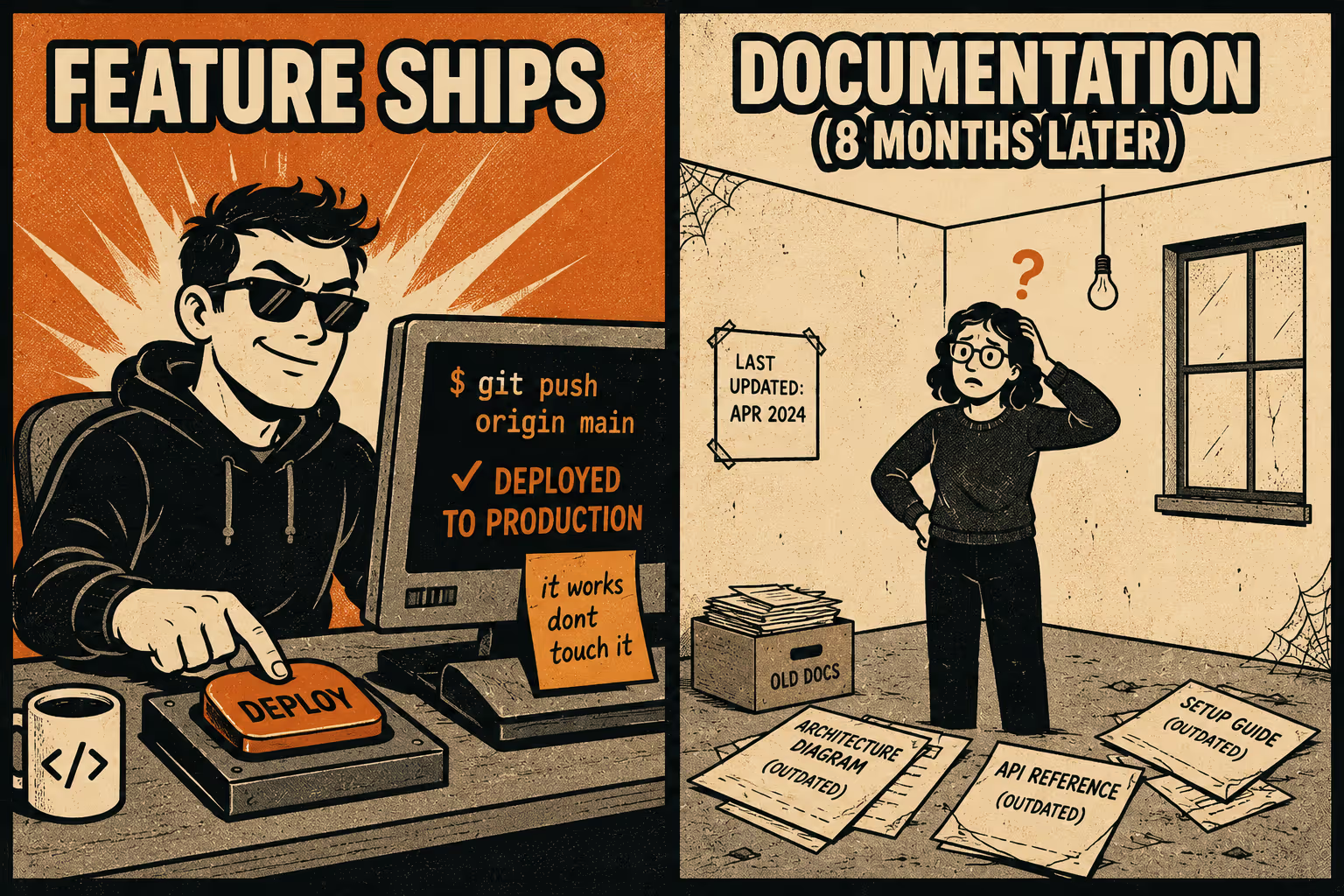
The common thread in all of these failed approaches is that they treat documentation as a downstream activity. Something that happens after the work, not as part of it.
What a System That Actually Works Looks Like
The fix is architectural. Documentation generation has to be part of the release process, not a follow-up task.
This is what "at scale" actually means: a system that works across multiple products, teams, and release cycles without requiring a proportional increase in headcount. It means that when a developer merges a pull request, the system automatically analyzes the diff, the commit messages, and the associated tickets, and generates a draft of the changelog and API updates. That draft gets reviewed before the release goes live. Documentation stays current by default.
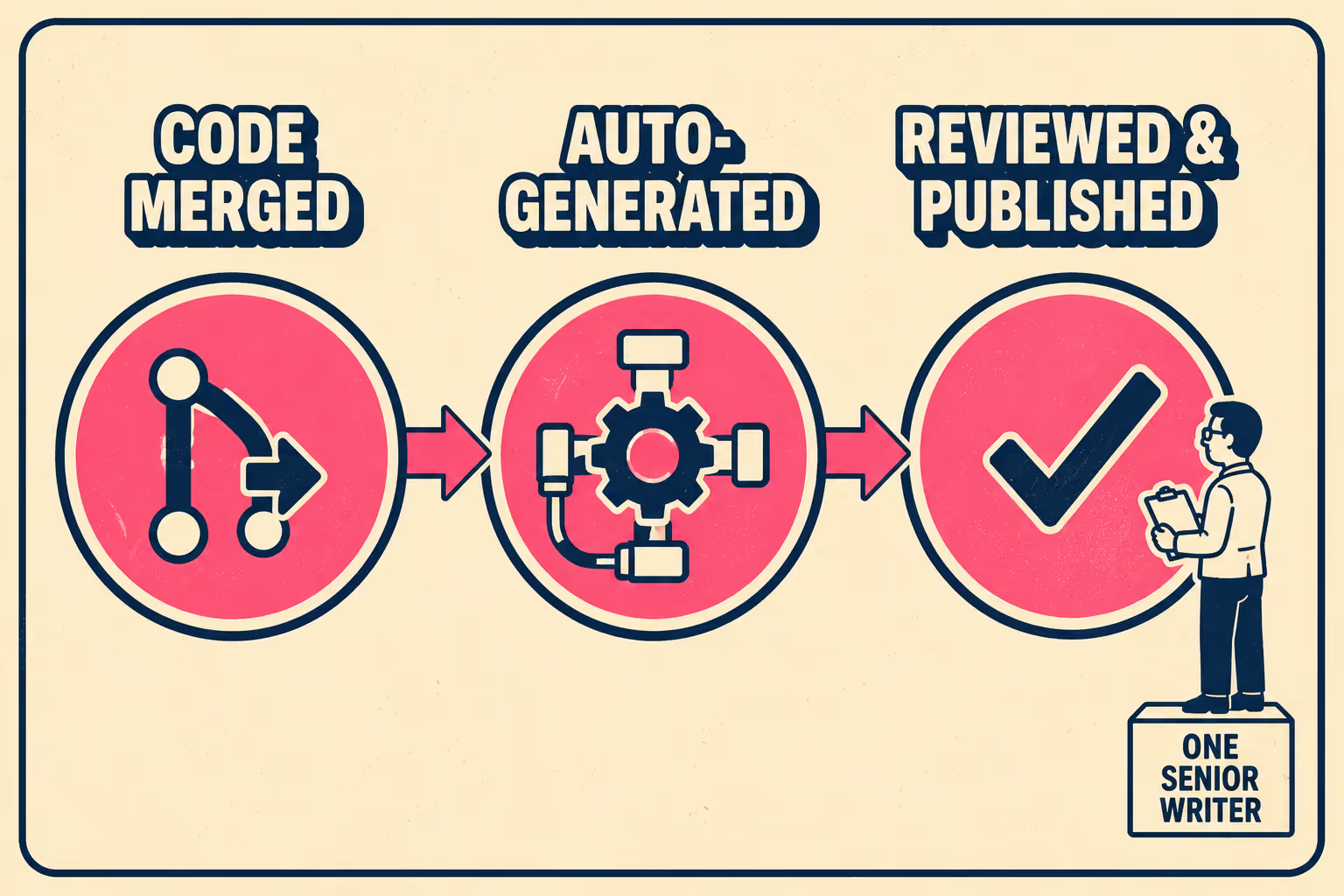
Squarespace's engineering team described this shift precisely when they moved to a docs-as-code workflow: docs and code are versioned together in Git, pull request review covers both, and changes flow through the CI/CD pipeline to production. The simplicity of keeping documentation up-to-date, they found, comes from making it part of the same approval process as the code itself.
The human role in this system is not eliminated; it's elevated. Instead of engineers writing documentation from scratch, a senior writer or technical lead reviews AI-generated drafts for accuracy, flags edge cases, and feeds corrections back into the system. Research on automated release note generation found that practitioners want exactly this: automated techniques that save time and improve coverage, with human oversight for quality. The model works. The bottleneck has always been the infrastructure to support it.
Recent work on LLM-based commit message and documentation generation shows that fine-tuned models can produce semantically accurate documentation directly from code diffs. The same research emphasizes that human review remains important for quality assurance, not because the AI output is unreliable, but because a reviewer catches the edge cases that make documentation genuinely useful rather than merely technically correct.
The practical checklist for getting there:
- Move documentation generation into the CI/CD pipeline so it triggers on merge, not after release
- Generate API references directly from OpenAPI specs and type definitions, not from memory
- Treat changelogs and release notes as structured outputs of the release process, reviewed before go-live
- Assign one senior writer to review and validate AI-generated drafts rather than write from scratch
- Feed corrections back into the system to reduce recurring errors over time
The last point matters more than it sounds. A system that learns from corrections gets better over time. A system where corrections disappear into a wiki stays broken.
Anyway. The reason most documentation initiatives stall is that they ask engineers to change their behavior. The approach above asks the system to change instead. Engineers keep shipping. The documentation follows automatically. Someone reviews it before it goes live.
Doc Holiday is built for exactly this workflow, generating API references, release notes, and changelogs directly from engineering artifacts, with a structured system for validation and publishing that makes the one-senior-writer-managing-AI-output model operationally real rather than aspirational.