The Hidden Cost of Outdated Help Centers (and How to Fix it Without Adding Headcount)


If you ran a software company, and your engineering team shipped a brilliant new feature that customers had been begging for, you would expect a few things to happen. You would expect support tickets to drop. You would expect sales demos to get easier. You would expect users to actually use the thing you built.
Instead, the feature ships, and the support queue immediately fills up with people asking how to use it. The sales team complains that prospects are confused because the website says one thing and the product does another. The engineers, who spent weeks building the feature, wonder why no one is adopting it.
The answer is usually sitting in the help center. It is outdated. It is missing the new feature entirely, or worse, it describes the old way of doing things.
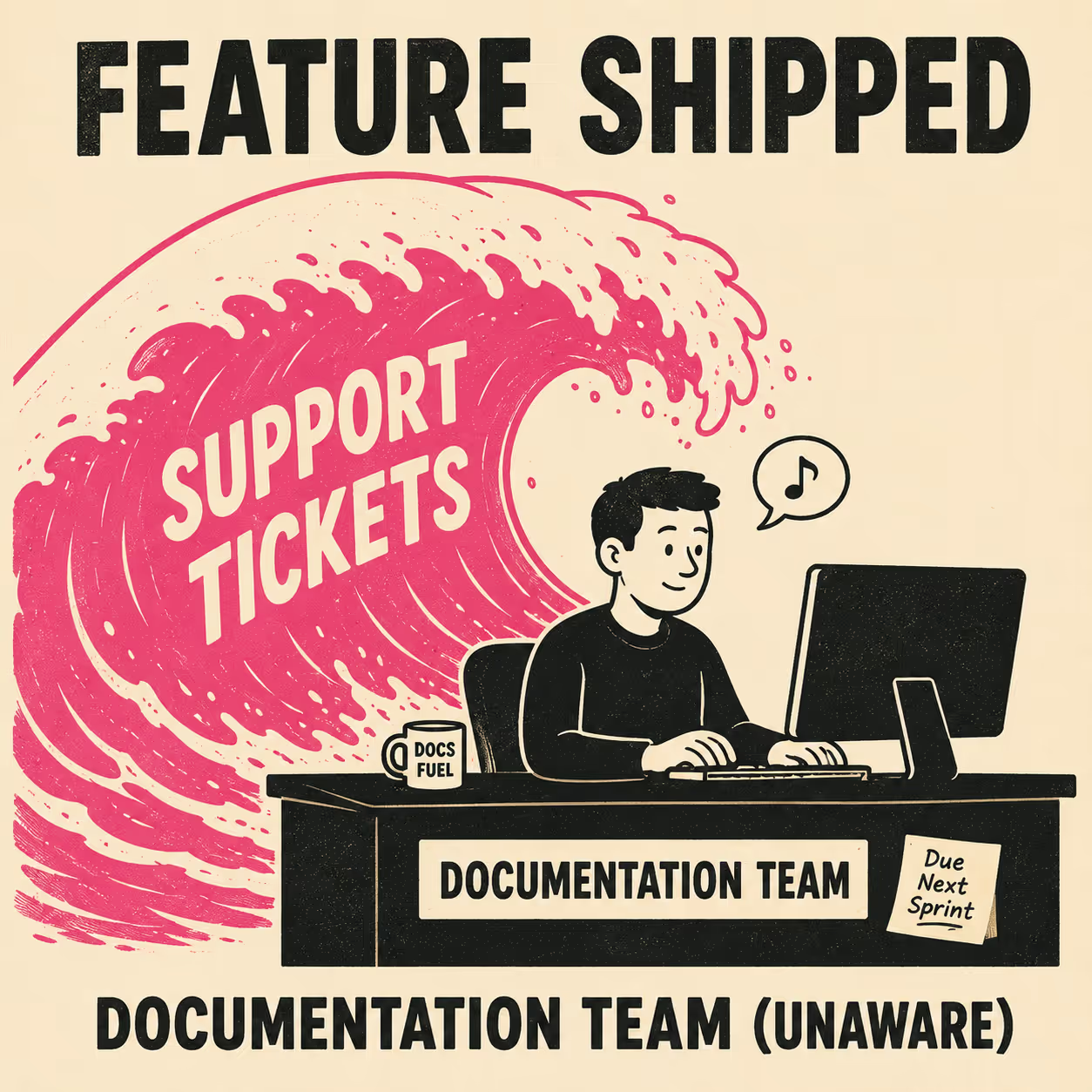
Help centers fall behind because documentation updates aren't treated as part of the release process. They're treated as post-release cleanup. By the time a feature ships, the people who built it have moved on to the next sprint. Support gets the tickets. The help center sits outdated for weeks.
Anyway. We can all now deploy code multiple times a day, and seem to be having trouble figuring out how to explain what that code actually does.
Why the Gap Keeps Growing
Engineering velocity has increased dramatically. Elite teams now deploy multiple times per day. Documentation practices have not kept pace. The result is a widening gap between what the product does and what the help center says it does.
The same DORA research found that high-quality documentation leads to 25% higher team performance relative to low-quality documentation. SRE practices have 1.4x more impact on organizational performance when high-quality documentation is in place. Documentation isn't a nice-to-have. It's infrastructure.
When help centers lag behind releases, the damage is specific and measurable. Support volume spikes because users can't self-serve on new features. A Gartner survey of 5,728 customers found that only 14% of customer service issues are fully resolved in self-service. The most common reason: in 43% of cases, customers couldn't find content relevant to their issue. Outdated content is functionally invisible.
Customer trust erodes. When documentation contradicts the actual UI, users lose confidence in the product itself. Frustration with poor or missing documentation is a leading cause of developer churn and dissatisfaction.
Sales demos get harder. B2B buyers complete 70% of their buying journey doing independent research before they ever speak to a sales rep. If they find stale help center content during that research phase, the deal is already in trouble before the first call.
Engineering loses confidence. When documentation is consistently outdated, engineers stop trusting it as a resource and stop contributing to it. The knowledge that should flow from engineering into the help center stops flowing at all.
The Fix Is a Process Change, Not a Headcount Change
The traditional model (one writer per product area, everyone writing from scratch after release) doesn't work when release velocity increases. The sustainable model requires treating documentation as a release dependency, not a post-release task.
Make documentation a gate for release. A feature is not done until the documentation is updated. This sounds obvious. It is almost never implemented. The Definition of Done in agile teams should explicitly include documentation criteria alongside code review, testing, and QA sign-off. Documentation drafts should be reviewed in the same sprint as feature completion. Release checklists should include content sign-off. QA processes should verify help center accuracy alongside functional testing.
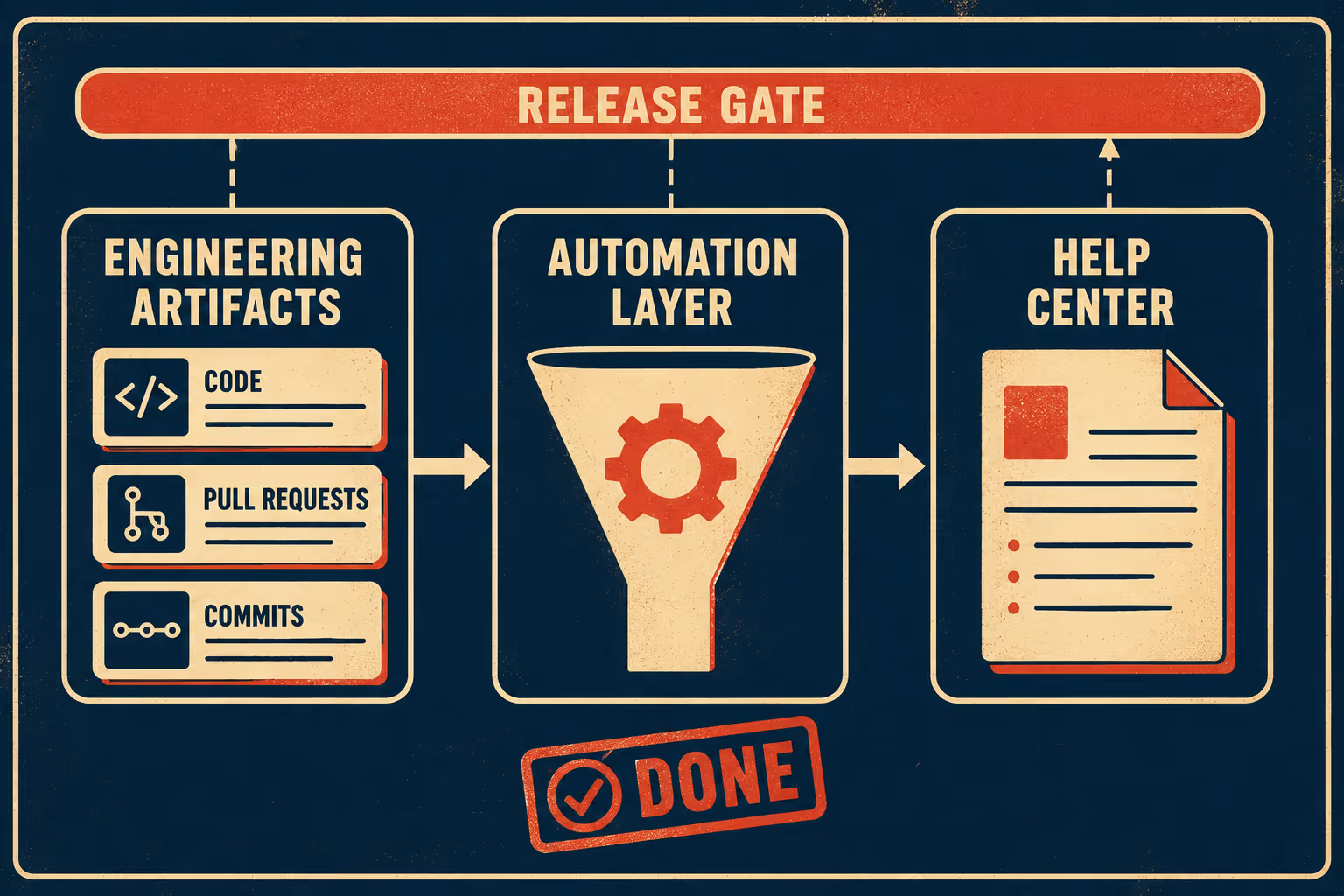
When documentation is a gate, it stops being an afterthought. The people who built the feature are still available to review the draft. The context is fresh. The review takes 20 minutes instead of two weeks of archaeology.
Automate the parts that don't require editorial judgment. Release notes, feature summaries, and API documentation can often be generated directly from engineering workflows. The raw material is already there: requirements, acceptance criteria, commit messages, pull request descriptions. Research from the University of Saskatchewan found that release note contents draw from issues (29%), pull requests (32%), and commits (19%) in existing repositories. The data exists. The problem is that no one has connected it to the help center.
The job of documentation is shifting from authoring original text to curating and transforming existing engineering artifacts into audience-appropriate formats. A senior writer who spends their time synthesizing pull request descriptions into help center articles is doing work that could be automated. A senior writer who reviews automated output, catches edge cases, and decides what the 20% of high-traffic articles need is doing work that cannot.
Establish clear ownership. When everyone is responsible for documentation, no one is. This isn't a cultural critique; it's a structural problem. Assign a single owner for each help center category. That person doesn't write every word, but they are accountable for accuracy. They review automated outputs, coordinate contributions from subject matter experts, and ensure content meets quality standards. Without a named owner, articles drift.
Retire outdated content aggressively. Knowledge bases are living ecosystems that naturally accumulate digital dust, redundancies, and outdated information over time. A knowledge base audit is not a one-time project; it's a recurring process. Track which pages drive the most support deflection and prioritize those for accuracy. Archive articles that describe deprecated features rather than letting them accumulate. Users who find contradictory information don't just get confused; they stop trusting the help center entirely.
Scaling Without Scaling Headcount
The sustainable model is one senior writer managing automation, validating output, coordinating contributions, and focusing human effort on the 20% of content that drives 80% of support deflection. Developers already spend over 17 hours per week dealing with technical debt and maintenance issues. Adding "write help center articles" to their backlog doesn't work. The solution is to extract the documentation value from the work they're already doing, not to create a parallel documentation process that competes for their attention.
This is the operational model: engineering artifacts flow into a documentation system, automation drafts structured content from those artifacts, a lean team reviews and validates, and the help center stays current without anyone having to start from scratch after every release.
Where to Start
Audit your last three releases and identify where documentation fell behind. Was it a process gap (documentation wasn't in the Definition of Done)? A tooling gap (too much manual authoring, no connection between engineering workflows and the help center)? An ownership gap (no one was accountable for accuracy)?
Fix that gap first, then systematize the rest.
If the tooling gap is the problem, Doc Holiday generates release notes, feature summaries, and API documentation directly from engineering workflows, giving a lean documentation team the structure to validate and scale output without rebuilding headcount.